Six spots in the US where you can stay overnight at a drive-in
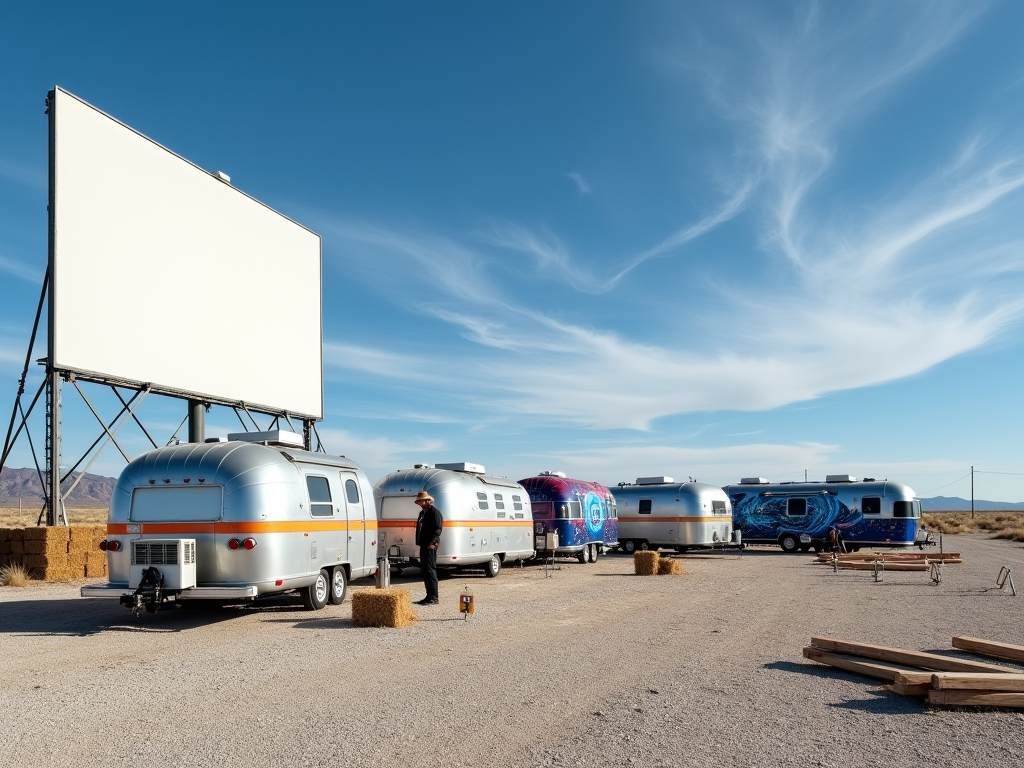
From nostalgic 1950s landmarks to stylish glamping retreats, a growing number of stays are breathing new life into one of America’s most beloved traditions, giving travellers a final taste of summer cinema under the stars.
At the Frontier Drive-Inn, guest rooms come without televisions. The reason, the property jokes, is that southern Colorado’s largest screen is waiting just beyond the door.
That screen is a remnant of the Frontier’s original incarnation as a drive-in theatre. It opened in 1955 before closing around 30 years later. These days, the old cinema is the centrepiece of a retro hotel, where visitors stay in Quonset-inspired yurts and restored vintage trailers before heading outside for movies beneath the exceptionally clear skies of the San Luis Valley.
As Labor Day on 7 September nears, the Frontier and similar destinations offer a new version of a familiar warm-season ritual: one final classic summer evening before autumn arrives.
For many generations, drive-in movies have been closely associated with American summers. The first US drive-in opened in 1933, but the concept took off after World War II. More families owned cars, suburbs expanded and the baby boom created a huge audience, helping the number of drive-ins reach almost 5,000 by the late 1950s, according to drive-in historian April Wright, director of the documentary Going Attractions: The Definitive Story of the American Drive-In Movie.
“Going to the drive-in was simply part of every summer,” Wright said.
Although their peak years are long gone, Wright believes drive-ins are not only about looking back. Many younger guests are discovering them for the first time, attracted by the atmosphere and the shared routine that surrounds watching a film outdoors.
“It has always been about being with friends and family, and making a memory together,” Wright said.
Today, a small collection of US hotels, motels and campgrounds is extending that experience beyond a single evening. Some are restoring cinemas that had been closed for years, while others offer beds and campsites in view of screens that have entertained audiences for generations. Here, the fun continues even after the credits roll.
When the Frontier was transformed into its current form, only a few pieces of the original 1950s drive-in remained, including the screen and its roadside sign. Both were carefully retained.
Frontier co-owner Luke Falcone said the screen had endured the difficult weather of the San Luis Valley and represented too much local history to remove. “With preservation work, finding something that is still intact feels like striking gold,” he said.
Despite its name, the Frontier no longer operates as a conventional drive-in. Instead of watching from parked cars, visitors sit in lawn chairs or spread blankets on the ground for crowd-pleasing films beneath the night sky. “Getting people out of their rooms and away from their cars creates a different kind of connection,” Falcone said. The movie programme favours nostalgic favourites, while the overnight accommodation has a more contemporary feel.
Roughly 15 miles (24km) from the Frontier, the Best Western Movie Manor carries the drive-in lodging concept even further: some guests can enjoy the film without leaving their beds.
The motel was constructed next to The Star Drive-In Theatre, which opened in 1955 during the nationwide drive-in boom. Many rooms look towards one of its two screens through large picture windows, and the movie sound is played directly inside. Rooms are named for film stars such as Cary Grant and Robert De Niro, while guests are also welcome to watch outside from their vehicles. More than seven decades after it first opened, The Star still presents films seasonally, generally from spring through late September.
The Sutherlin/Umpqua Valley KOA Holiday campground now stands on the former Cloverleaf Drive-In site, where its original 100ft (30m) screen remained long after the theatre stopped operating. When the present owner acquired the property in 2006, the screen was kept in place. A digital projector and FM transmitter were later installed, allowing films to return.
Movies are now shown on most weekends. Several RV spaces are positioned directly before the screen, while others include private patios aimed towards it, so guests can watch from their vehicles and hear the soundtrack through their radios in classic drive-in fashion. Tent campers and visitors in other RV sites can bring blankets or chairs to a grassy seating area beneath the screen, where audio is played through outdoor speakers.
Unlike many of these destinations, Four Brothers is not a surviving theatre from the drive-in era. The Hudson Valley venue opened in 2013, bringing back the format decades after thousands of earlier drive-ins had vanished. The family-operated business has since added mini-golf, fire pits and Hotel Caravana, where guests can spend the night in vintage trailers on the theatre grounds or set up their own tent.
Along Scenic Byway 12 in southern Utah, Ofland Escalante sits on a former drive-in site near Grand Staircase-Escalante National Monument. Visitors might spend their daylight hours hiking, exploring narrow slot canyons or travelling to Bryce Canyon and Capitol Reef national parks, then return in time for the nightly feature. “The movie begins shortly after sunset and shapes the whole night,” said Noah Ellis, chief executive of Ofland Hotels. “It is central to the stay, rather than an extra.”
The former drive-in also has a collection of vintage vehicles, including a 1957 Chevrolet and a Ford Thunderbird, lined up towards the screen. Guests collect complimentary popcorn and old-fashioned sweets at the concession stand, pick a car and settle in under the open desert sky.
“This was a drive-in long before it became a hotel, so it was important to keep real cars as part of the setting,” Ellis said. “Sitting in a line of vintage vehicles with popcorn in hand is the kind of moment people remember.” Accommodation includes updated Airstream trailers as well as several styles of cabin.
In the mountains of north-eastern Georgia, the Tiger Drive-In first opened in 1954, closed during the 1980s and remained abandoned for about 20 years. It reopened in 2004, and visitors can now stay overnight after a film in one of three vintage 1960s campervans located on the grounds. Each has a private deck facing the screen, while tent and RV camping is also available.