'The PR team hated the name': The 1,000-year-old tale behind Bluetooth
Two ancient runestones in Jelling preserve the story of the Viking ruler who helped shape Denmark – and whose name later inspired Bluetooth.
Anyone who has linked a phone to wireless headphones or paired a laptop with another device will recognise the word Bluetooth. The technology may be contemporary, but its name reaches back more than a millennium to a Viking king whose presence is still felt in Jelling, a small Danish town around 250km west of Copenhagen.
Two weathered runestones stand here, recording part of his rule and offering an early explanation for how an unusual royal nickname eventually became associated with one of the most common forms of wireless technology.
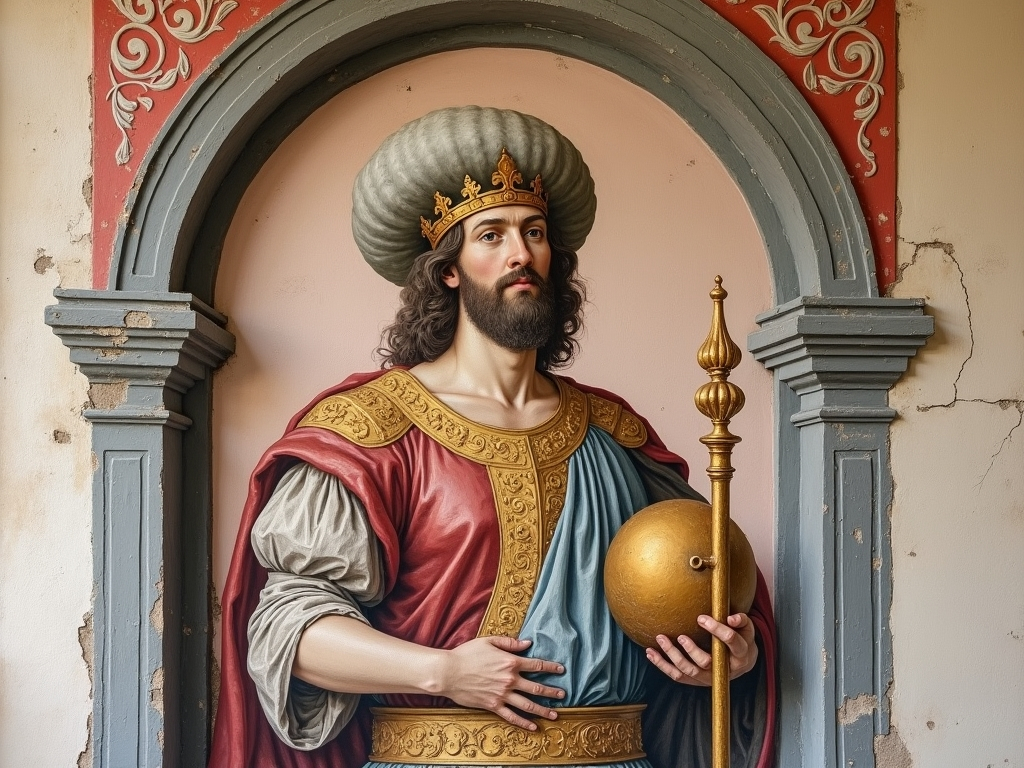
The ruler was Harald Gormsson, king of Denmark during the 10th Century. He was known as Bluetooth – Blátǫnn in Old Norse – a name first recorded roughly 150 years after his death. It is generally thought to refer to a darkened or decayed tooth.
Among Harald's most significant acts was the conversion of Denmark to Christianity, believed to have occurred around 965. The larger of the two Jelling stones, raised on Harald's orders, states that he “won all of Denmark and Norway and made the Danes Christian”. It also includes one of Scandinavia's earliest known images of Christ.
Before this period, northern Europe consisted largely of smaller regions controlled by local rulers. Adopting Christianity allowed Harald to reinforce his authority, build closer connections with Christian Europe and unite the developing Danish kingdom.
“This is the building of Denmark as a nation after 200 years of the Viking Age,” said Adam Bak, curator at the Kongernes Jelling Experience Center and Museum. “The people of the North had learned a great deal about European politics, the uses of Christianity and the centralisation of power within a state.”
Harald's family history is embedded throughout the Jelling landscape. His father, Gorm, raised the smaller and older stone to honour his wife, Thyra. The inscription is thought to include the earliest written mention of the name “Denmark” found within the country itself.
“We call it Denmark's birth certificate,” said Anne Havgaard Mikkelsen, who lives in nearby Vejle. By that description, Jelling is the country's birthplace.
Although only about 4,000 people live there today, Jelling was once a major seat of royal authority during Harald Bluetooth's reign. Originally a pagan burial ground, it became a setting where older Norse traditions and the new Christian faith existed side by side.
White posts now show where a wooden palisade once enclosed the monuments, and hundreds of ground markers reveal the outline of an enormous ship-shaped formation, perhaps created in Thyra's honour. Two burial mounds and a Christian church complete a site that, according to Bak, is not chiefly about “fierce Viking warriors and Thor and Odin”, but rather “politics and transition, the move from an old world into a new one”.
In 1994, the Jelling mounds, rune stones and church became Denmark's first Unesco World Heritage site. At the nearby Kongernes Jelling visitor centre, interactive displays explore the shift from Viking religion to Christianity, while the two runestones – Denmark's baptismal stone and birth certificate – remain sheltered behind glass.
More than 1,000 years after his death, Harald's image as a ruler who brought separate groups together gave his name an unlikely modern revival.
During the late 1990s, engineers from companies such as Toshiba, IBM, Nokia, Intel and Ericsson were working on a technology that would allow devices from different manufacturers to communicate. They needed a temporary codename for the project.
Jim Kardach, an Intel engineer from the United States, was working with Swedish colleagues when their discussions turned to Viking history. Interested in the subject, he read a book about the era, now displayed at Kongernes Jelling, and became captivated by the king credited with uniting Denmark and Norway. The comparison suited a system designed to bring together different devices.
The codename spread before the official announcement had been prepared, and Bluetooth soon became the public name.
“The public relations team disliked the name because they connected ‘Bluetooth’ with poor dental care,” Bak said. “They had many alternatives that explained the product more clearly, but they were much less memorable. Bluetooth succeeded because it was such a distinctive name.”
The rune-based logo also helped make the name instantly recognisable. The familiar symbol combines the Norse runes representing H and B, the initials of Harald Bluetooth.
For the technology's 25th anniversary in 2023, Kardach and other early figures behind the project visited Kongernes Jelling and jokingly apologised for adopting Harald's name without asking. The museum accepted their apology and granted them permission to continue using it for another 1,000 years.
“Harald enjoyed displaying his power,” said Bak. “I think he would be delighted to know that billions of people say his name every day now.”