Trump supports G7 leaders’ push for broader negotiations on Iran’s missile program
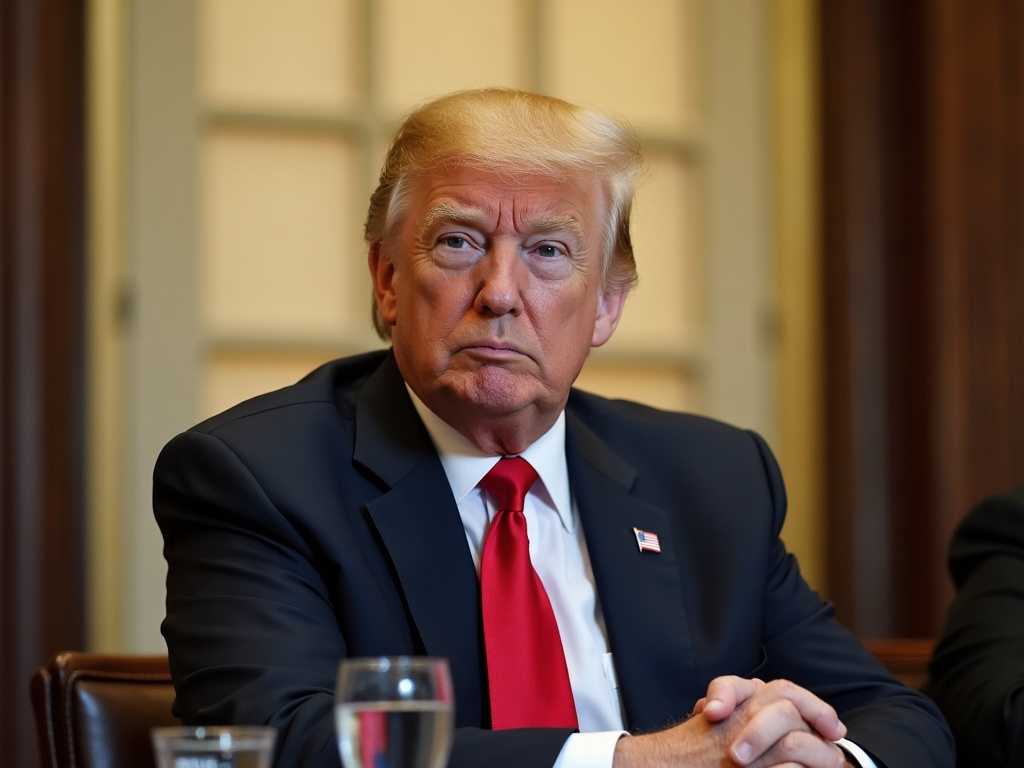
Donald Trump has endorsed a joint statement by G7 leaders welcoming the agreement he has reached with Iran, while emphasizing that a broader follow-up deal will be required to curb Tehran’s ballistic missile programme. That issue is not directly covered in the memorandum of understanding expected to be signed by the United States and Iran on Friday.
The statement notes that any future negotiations with Iran would benefit from the participation of a broader range of regional and international stakeholders, including the United Nations’ nuclear watchdog, the International Atomic Energy Agency (IAEA).
Trump has come under sharp criticism, including from some of his own political base, for launching a conflict with Iran that concluded in a negotiated settlement seen by critics as falling short of its initial aims.
He is scheduled to attend a banquet at Versailles on Wednesday evening marking the 250th anniversary of American independence. Ahead of the event, Trump remarked that Versailles was “the real deal,” underscoring the symbolism of the occasion.
Iran is widely expected to dismiss proposals for additional negotiations involving European leaders on its missile programme and its backing of regional proxy forces. Tehran has conducted talks exclusively with Washington and has signaled that it considers Europe marginal to the process. Iran is also likely to oppose a French and British proposal, endorsed in the G7 statement, to establish a naval taskforce to escort commercial vessels through the Strait of Hormuz.
Regarding Ukraine, G7 leaders pointed to Kyiv’s recent battlefield gains and called for renewed pressure on Russia through tighter sanctions and expanded arms shipments.
The G7 summit in Évian-les-Bains, chaired by French President Emmanuel Macron, gathers the leaders of the United States, France, Germany, Italy, the United Kingdom, Canada and Japan.
The joint communiqué released on Wednesday morning suggests that Trump has shown unusual flexibility in addressing the concerns of fellow leaders, particularly on Iran and Ukraine, where he has often acted independently.
The leaders stated: “We consider this the right moment to proceed with additional measures, as President Trump has delivered a deal that we support in reopening the Strait of Hormuz.”
The agreement restores navigation through the strait and reiterates Iran’s stated opposition to acquiring nuclear weapons. However, it postpones detailed discussions on reducing or eliminating Iran’s stockpile of highly enriched uranium. Trump has indicated he would accept dilution of the material within Iran under IAEA supervision.
The memorandum provides for the immediate lifting of US sanctions on Iranian oil exports and related sectors, and outlines the creation of a $300bn reconstruction fund. Washington has indicated it does not intend to make direct financial contributions to the fund.
G7 leaders described the accord, set to be signed in Switzerland on Friday, as “an historic opportunity to prevent Iran from acquiring any nuclear weapon and tackling the threats related to its regional and ballistic activities,” adding that they stand ready to assist with its implementation.
Reaffirming that unimpeded transit without fees or restrictions is fundamental to global trade, the leaders said: “The multinational, independent and defensive initiative led by France and the UK can play an important role in facilitating the resumption of maritime traffic in the Strait of Hormuz.”
They added that the initiative would safeguard merchant ships, reassure shipping companies and help verify that naval mines have been cleared.
Up to 40 countries have indicated a willingness to take part in the mission, which is designed as a defensive effort rather than an offensive deployment, and would therefore require Iran’s acquiescence. Trump has expressed doubts about whether such a mission is needed, saying most mines have already been identified.
The G7 leaders declared that they “strongly support a robust and comprehensive diplomatic follow-on agreement” to build on the memorandum secured by Trump, signaling that they view the current deal as limited in scope.
European governments have been excluded from the US-Iran negotiations conducted since Trump returned to office. Some observers argue that the relatively small US negotiating team lacked the depth of nuclear expertise possessed by their Iranian counterparts, who also wield leverage through their control over shipping in the Strait of Hormuz.
Draft versions of the memorandum circulating at the summit contain no mention of Iran’s ballistic missile programme or its support for regional armed groups such as Hezbollah.
On Lebanon, the G7 called for an immediate and durable ceasefire and voiced support for efforts by Lebanese authorities to disarm Hezbollah. The statement reaffirmed Lebanon’s sovereignty and territorial integrity, alongside appropriate international security guarantees.
Turning again to Ukraine, the leaders proposed accelerating momentum by increasing deliveries of air defence systems and interceptors, as well as long-range capabilities. They also signaled readiness to extend licensing arrangements that would enable Ukraine to expand its domestic military production.
In a pledge to help Ukraine endure the coming winter, the statement commits to intensifying pressure on Russia’s wartime economy through stronger sanctions, including measures targeting the oil and gas sectors.