Iran ‘in no rush’ to restart nuclear negotiations with US
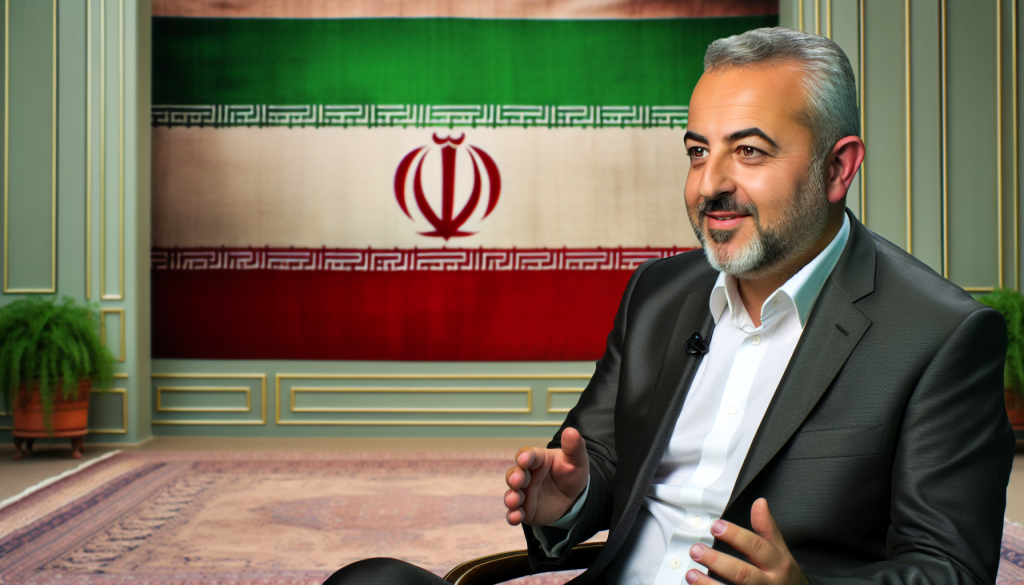
Tehran, Iran – Iran is not eager to quickly resume negotiations with the United States regarding its nuclear programme, the country’s foreign minister said in a recent televised interview.
Foreign Minister Abbas Araghchi told Al Jazeera Arabic that Iran remains open to the idea of indirect discussions with Washington — but only if the US agrees to approach talks from a standpoint of equal partnership and shared interests. The interview was conducted at his office in Tehran and aired on Sunday.
Recommended Stories
• Sudan accuses RSF of committing war crimes in el-Fasher amid harrowing survivor accounts
• Israeli forces shoot dead another Palestinian in Gaza; Hamas hands over 3 bodies
• Official warns that Tehran's drinking water supplies could deplete within two weeks
Araghchi also pointed to what he called a growing regional consensus on the role of Israel, which he described as contributing to instability across the Middle East.
He criticized US preconditions for renewed dialogue, which reportedly include demands for ending uranium enrichment, eliminating missile programmes, and halting support for regional allies. These terms, he said, are unrealistic and one-sided.
“They don’t seem to be in any rush,” he stated. “And neither are we.”
His statements come despite mounting external pressure, including recently reimposed United Nations sanctions and internal challenges confronting Iran’s leadership.
Still, the foreign minister argued that the regional political climate is shifting against Israel, a long-standing US partner in the region.
“I sometimes tell colleagues that although Mr Netanyahu has committed various crimes, his actions have helped expose Israel as the real threat in the region — not Iran or any other country,” Araghchi said, referring to the Israeli Prime Minister.
His remarks followed similar sentiments expressed by Oman’s top diplomat, who recently condemned Israel’s leadership publicly for the first time.
At the IISS Manama Dialogue 2025 forum, Foreign Minister Badr bin Hamad al-Busaidi declared, “We have always believed that Israel — and not Iran — is the root cause of insecurity in the Middle East.”
He also criticized the Gulf Cooperation Council (GCC) for passively allowing Iran to be sidelined diplomatically, a perspective he said should evolve.
Over the past 48 hours, claims that the controversial Israeli and US strikes on Iran were driven by concerns over mounting nuclear threats have been strongly challenged.
In a message posted on social media, Araghchi cited the head of the International Atomic Energy Agency, who reportedly confirmed Iran was neither producing nor preparing a nuclear threat.
Oman has long played a key role in facilitating diplomatic conversations between Iran and the United States, including discussions on finances, prisoner exchanges, and security issues.
Initially, a sixth round of Iran-US negotiations had been planned for mid-June. However, the talks were derailed when Israel carried out attacks on Iranian nuclear facilities. The resulting 12-day conflict led to over 1,000 deaths inside Iran and caused significant infrastructure damage.
Following media reports that President Donald Trump’s administration had recently sent a new diplomatic message to Iran via Oman, Iranian government spokesperson Fatemeh Mohajerani confirmed that messages were indeed received — though she gave no further details on their contents or Iran’s reaction. The US government has not acknowledged the reports.
In the broadcasted conversation, Araghchi mentioned that nearly all of Iran’s stockpile of 60-percent enriched uranium — around 400kg — remains buried at nuclear sites targeted by the US and Israel during the strikes.
“Right now, we have no plans to retrieve the material from beneath the debris. We don’t know how much of the uranium is intact or destroyed. We’ll only find out once we dig it up, and that will happen when the time is right,” he said.
Araghchi also noted that both China and Russia have officially rejected the most recent round of UN sanctions against Iran reinstated by European states involved in the 2015 nuclear agreement.
Although France, Germany, and the United Kingdom have indicated a willingness to restart nuclear talks with Iran, meaningful progress has remained elusive.
In the meantime, the European countries have introduced new restrictions, including penalties over Iran’s alleged drone deliveries to Russia and its atomic activities.
In September, these nations also suspended aviation agreements with Iran, temporarily halting direct flights operated by carriers like Iran Air.
However, flight activity appears to be gradually resuming. On Sunday night, Iranian state media aired footage of an Austrian Airlines jet landing at Tehran’s Imam Khomeini International Airport.
Germany’s Lufthansa is also expected to resume service to Tehran soon, though a specific restart date has not been provided.