"I Live on the Ground Floor — This Spot Is Mine": Who Can Actually Park in the Yard, Lawyer Explains
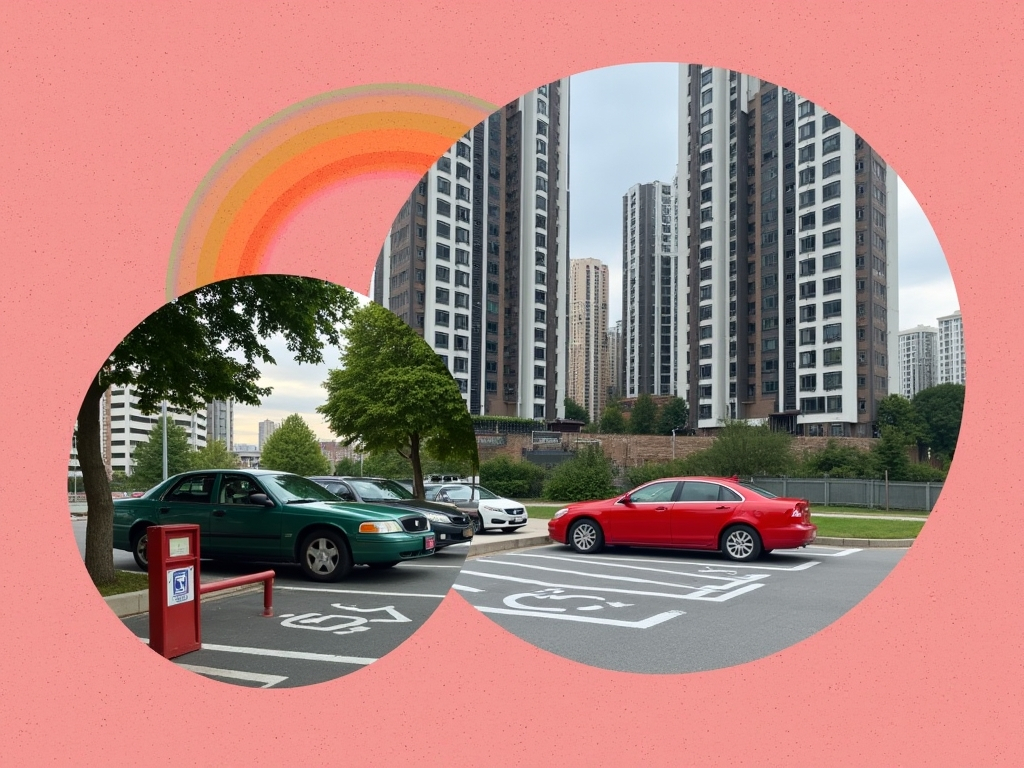
The area around an apartment building often becomes a source of disputes between neighbors, especially when it comes to parking near the entrance. Some residents believe that the space beneath their windows belongs to them, but the right to use the yard is not determined by the floor where a person lives or the location of their apartment. The rules depend on the legal status of the land, the building’s shared property, and decisions made by co-owners.
Who owns the yard of an apartment building, and who is in charge: residents, the condominium association, the building manager, or the city? What can each of them decide?
There is no single answer to the question of who owns a building’s yard. It depends on whether the plot beneath the building has been formally registered, who holds the rights to it, and on what legal basis.
As a general rule, owners of apartments and non-residential premises are co-owners of the apartment building. Shared property includes structures located in the surrounding area, as well as rights to the land plot on which the building and its adjacent territory are located.
If the land plot is jointly owned by the building’s co-owners, they are the ones who determine how it may be used. This approach is established by land legislation.
A condominium association does not become the owner of apartments or the yard instead of residents. Such an association is a legal entity created by owners to manage common property. A building manager also does not acquire ownership of the house or the land. The manager acts only within the authority granted by co-owners and specified in the management agreement.
The city may remain the owner of a municipal land plot if it has not been transferred to the co-owners for ownership or use. If the land belongs to the municipality, the local authorities decide issues related to its use.
Therefore, it is more accurate to say that co-owners have the primary authority over common property, while the condominium association or manager administers it within the limits of its powers.
Can the city or a manager make changes in the yard without residents’ consent, such as construction, paid parking, a kiosk, or removal of a playground? Can residents prevent this?
If the land plot is part of the shared property of the building’s co-owners, a manager cannot dispose of it independently. For example, the manager cannot decide on their own to allocate part of the yard for a kiosk, introduce paid parking, demolish a playground, transfer part of the territory to another party, or arrange construction.
Questions concerning the use of land belonging to an apartment building must be decided by the co-owners.
The situation with municipal authorities is more complicated. If a particular plot remains municipal property and has not been transferred to residents, the local government has powers over it as the owner. However, it must still comply with urban planning rules, land regulations, and other legal requirements.
The fact that residents use an area as their yard does not automatically mean that the entire adjacent territory belongs to them jointly. In a conflict, the first step should be checking the cadastral boundaries of the land plot and its legal status.
If local authorities plan construction on a plot that is jointly owned by the building’s residents, the co-owners may challenge the decision in court and demand that violations of their rights be stopped.
Parking: who may leave a car in the yard, can a person reserve a space, and may they install a post or barrier? What should be done if a neighbor takes a place or blocks access?
Simply living in a building does not create ownership rights to a specific parking space. In newer residential complexes, it may be possible to buy or rent a designated space. If an apartment owner has purchased or legally rented a particular parking place, no one else has the right to park there.
However, the informal rule that “I live on the first floor, so the space near the entrance is mine” has no legal force. If a parking area is located on common territory, the procedure for using it may be established by a decision of the co-owners.
Land legislation directly provides that the rules for using a land plot serving an apartment building are determined by its co-owners.
A resident cannot independently install a post, parking blocker, chain, or another object in order to “reserve” a place without a valid legal basis and a decision from the authorized co-owners.
If a neighbor occupies the parking space you usually use, this is not a violation of your property rights unless the place has been legally assigned to you.
However, a different situation arises when a vehicle blocks a driveway, exit, pedestrian access, emergency vehicles, or is parked in violation of traffic regulations. In such cases, the issue concerns parking rules and road safety rather than a neighbor’s claim to a particular spot. If there is a violation, residents may contact the police.
What can a resident do independently in the yard, such as placing a bench, planting flowers or a tree, installing an electric vehicle charger, or building a garage? What requires a joint decision, and what are the consequences of acting without permission?
Even minor changes, such as planting several flowers in a flowerbed, should preferably be coordinated with the condominium association chairperson or the building manager responsible for maintenance. Installing a personal bench without approval is also not advisable if it stands on shared territory. Planting a tree may require a decision of the co-owners or approval from the manager or association, especially if it affects landscaping. A person also cannot put up a fence around a flowerbed on their own initiative.
Installing an electric vehicle charger and running a cable requires resolving matters related to common property and the electrical network. It is also not permitted to build a garage on shared territory without proper authorization.
In general, a resident may carry out actions that do not affect common property or the improvement of the surrounding area. For example, a person may collect litter or help keep the yard clean.
It is important to understand that an apartment is private property, but the land around it does not automatically become the property of the apartment owner. Some people believe that because a patch of land is beneath their window, they may do whatever they want there. Legally, this is usually not the case.
Unauthorized installation of structures, illegal occupation of land, or work performed without the necessary approvals may have consequences. A person may be required to dismantle an unlawful structure, compensate for damage, and restore the area to its previous condition. Administrative liability may also apply.
For example, unauthorized installation of a fence on common or чужій territory may lead to a fine for violating landscaping and improvement rules. The amount of the fine may range from 340 to 1,360 hryvnias.
Residents of first-floor apartments often consider the land below their windows to be “theirs” and place flowerbeds, benches, or fences there. Do they really have more rights? Is the entire yard shared equally by everyone, from the first floor to the top floor?
It is a myth that owners of first-floor apartments have greater rights. The owner of an apartment on the first floor does not automatically gain ownership or exclusive use of the land beneath their windows. All apartment owners have equal legal rights to shared property.
An owner of a first-floor apartment does not become the owner of the plot located below their windows. This land is common property of all co-owners of the building and forms part of the adjacent territory. It is intended for maintenance of the building and for meeting the needs of apartment and non-residential premises owners.
If the plot is shared by the building, rights to it belong both to residents on the first floor and to people who own apartments on the fifth, fifteenth, or any other floor. The difference may concern the size of each person’s share in common property, which is generally linked to the area of their apartment or non-residential premises.
Therefore, a flowerbed under a window does not become the private property of a first-floor resident simply because they take care of it. It is not personal territory. If it is part of the common adjacent area, all co-owners have the right to participate in decisions about it, while the condominium association and manager implement those decisions within their authority. The legal status of land in each specific yard should always be checked separately.