Ukrainian evacuees from occupied Oleshky reunite with loved ones
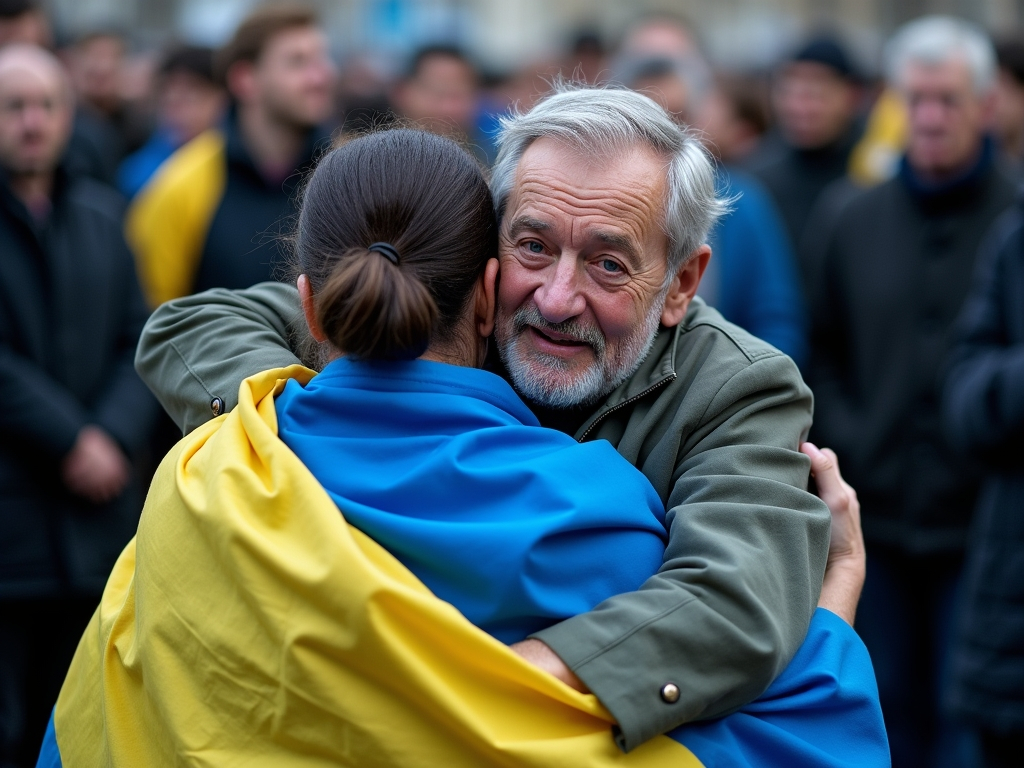
Hungry and exhausted residents of the Russian-controlled Ukrainian town of Oleshky have arrived in Ukraine during a large-scale civilian evacuation, made possible by the first humanitarian ceasefire of its kind in more than four years of Russia’s war.
The six-day truce for the town was secured through mediation involving US First Lady Melania Trump and support from Pope Leo XIV. It marks the longest local halt in hostilities since Russia launched its full invasion of Ukraine in 2022.
Recommended Stories
• list 1 of 3Ukraine strengthens its military capabilities as Russian losses reach a new high
• list 2 of 3US approves $2.1bn Patriot air defence package for Ukraine
• list 3 of 3Turkiye’s Erdogan calls on Russia and Ukraine to halt attacks in the Black Sea
“Ukrainian citizens from Oleshky have entered Ukraine through the Chernihiv region. Every one of them will receive the support they require,” Ukrainian President Volodymyr Zelenskyy said, expressing gratitude to the United States and the first lady for their role in the talks.
“More action is needed to reduce tensions and achieve genuine movement towards peace,” he added.
Residents leaving the town, some draped in blue and yellow Ukrainian flags, stepped down from buses near the Ukrainian-Belarusian border and embraced relatives waiting for them.
Ukrainian authorities welcomed the evacuees with signs saying “You’re not alone” and “We embrace with our hearts”. People from surrounding communities stood along the road, holding flags and shining flashlights as the buses passed.
Forced to eat grass
Fighting and drone activity had cut off key supply routes to Oleshky. Some residents said food deliveries ended in May, leaving hundreds of civilians facing extreme hunger.
An elderly evacuee using a wheelchair told Reuters that he had lost 20kg (44lbs) during the past year and had become so frail that he needed hospital care.
Another resident, Svitlana Yermakova, said people had resorted to eating grass in order to stay alive.
“We cut grass and squash ... simply to survive,” she said, explaining that she rode a bicycle through mined areas to reach a nearby village for food for herself and her dog.
To reach territory controlled by Ukraine, residents of Oleshky had to follow a long and difficult route out of the heavily damaged town, located only a few kilometres from the front line.
They travelled by bus through Crimea to the Russian town of Anapa, then flew to Belarus before crossing into Ukraine.
Ambulances were stationed along the road, while large military tents offered hot food, tea and medical assistance to those arriving.
Russian and Ukrainian officials said the Oleshky ceasefire had held since Tuesday, allowing roads to be cleared of mines and enabling deliveries of food, medicine and other essential goods to resume.
The temporary truce is scheduled to end on Sunday evening.
Some stay behind
Some people have chosen to remain in Oleshky despite continued shortages of gas, electricity and running water.
Russian Human Rights Commissioner Yana Lantratova said conditions in occupied Oleshky were still severe. She said she would continue coordinating with her Ukrainian counterpart, Dmytro Lubinets, to assist residents who did not leave.
“The mission has been completed,” she said. “We have agreed to organise regular humanitarian operations, and that is a highly important development.”
Before the war, Oleshky had a population of roughly 24,000 people. That number had fallen to an estimated 1,700 before the evacuation began.
Ukrainian authorities have not disclosed the precise number of people evacuated or the number who remain in the town.
Although the ceasefire has held in Oleshky, battles continue elsewhere along the front line, while Russia and Ukraine maintain drone strikes against each other.