Trump’s funding cuts cited as food supplies halted for a million Ugandan refugees
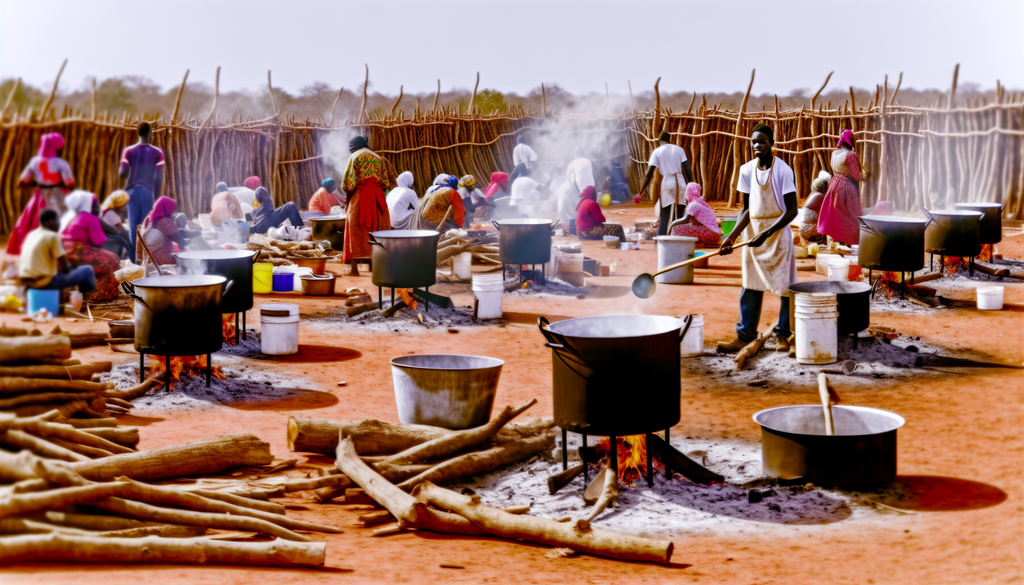
Food support for one million refugees in Uganda has been entirely halted this week due to a funding shortfall at the United Nations World Food Programme (WFP), sparking alarm that displaced people might be forced to return to conflict-ridden nations.
WFP Uganda recently warned that an urgent injection of $50 million (£37m) is needed to assist individuals escaping violence from the Democratic Republic of the Congo, South Sudan, and Sudan.
Uganda currently shelters the largest refugee population in Africa, with 1.8 million refugees, including 60,000 new arrivals in the past three months. The UN agency has reported that malnutrition among the refugee population has reached alarming levels.
"As a result of extreme funding gaps, @WFP_Uganda has ceased all food assistance to one million refugees," the agency declared on social media.
"Malnutrition has become critical, with rates exceeding 15% at reception centers. In some areas, food rations have already been reduced by up to 80%,” the statement added.
Earlier in March, the WFP had already slashed aid by introducing strict rationing for recent entrants into the East African country.
Uganda’s Minister for Refugees, Hillary Onek, attributed the crisis to significant aid cutbacks from the United States and European donors.
A freeze on U.S. assistance that began during Donald Trump’s presidency in January, coupled with the UK’s reduction of overseas aid from 0.58% to 0.3% of national income, has deeply impaired Uganda’s ability to support refugees.
"This situation has spiraled beyond our capacity. Globally, the support systems for refugees are deteriorating. The funds the WFP once had for purchasing food are now gone. Refugees will bear the brunt of this," Onek stated.
"We can no longer rely on foreign aid. Trump’s administration dramatically reduced refugee program funding. Many other nations have also failed to meet even their modest pledges. Now, both WFP and UNHCR are grappling with a full-blown funding crisis," he added.
By 2024, only 46% of the $858 million required under the multi-agency Uganda Country Refugee Response Plan had been secured.
“We can’t manage this situation on our own anymore. I fear rising unrest, violence, and war in the near future,” warned Onek.
"Desperate refugees will do whatever it takes to survive. Some may resort to raiding local crops such as cassava, which will lead to host-community conflict. We are unsure how to cope with this looming crisis,” he continued.
Last month, UNHCR made a $44 million appeal to support an influx of 55,000 Congolese refugees, with an estimated 25,000 more expected over the next six months.
“This wave of new arrivals is heavily impacting essential services—food, shelter, education, healthcare, and sanitation,” UNHCR explained.
“Already meager resources are being stretched thin. Delays in processing and transportation for refugees have only made matters worse,” the agency added.
Simon Okello, a South Sudanese refugee at Bidi Bidi—one of Africa’s largest camps—voiced deep concern over the cuts, fearing starvation and worsening malnutrition.
“We are completely devastated. It’s made our lives even harder,” he said. “We relied entirely on the food distribution programs. Now we’re left with nothing. People will go hungry and some may not survive.”
“Without food, there’s a real risk people might return to dangerous areas they fled from or turn to crime to feed themselves,” Okello warned.
Activists fear that Uganda may soon resort to forced repatriation—an option Onek acknowledged was on the table and would be discussed by the country’s cabinet.
“Our only remaining option might be to amend our policies so that refugees from stable countries are sent back home,” Onek said. “I will discuss this with fellow cabinet members to decide our next steps.”
Dismas Nkunda, director of Atrocities Watch Africa, expressed concern over the current trajectory. “We anticipated this outcome when the UN began favoring self-reliance programming over humanitarian support,” he said.
"The funding restrictions introduced during Trump’s presidency only worsened things. Now, it’s possible host countries like Uganda might be forced to abandon their previously generous refugee policies,” Nkunda cautioned.