
Sixty Palestinian detainees released by Israel return to Gaza, recount alleged mistreatment
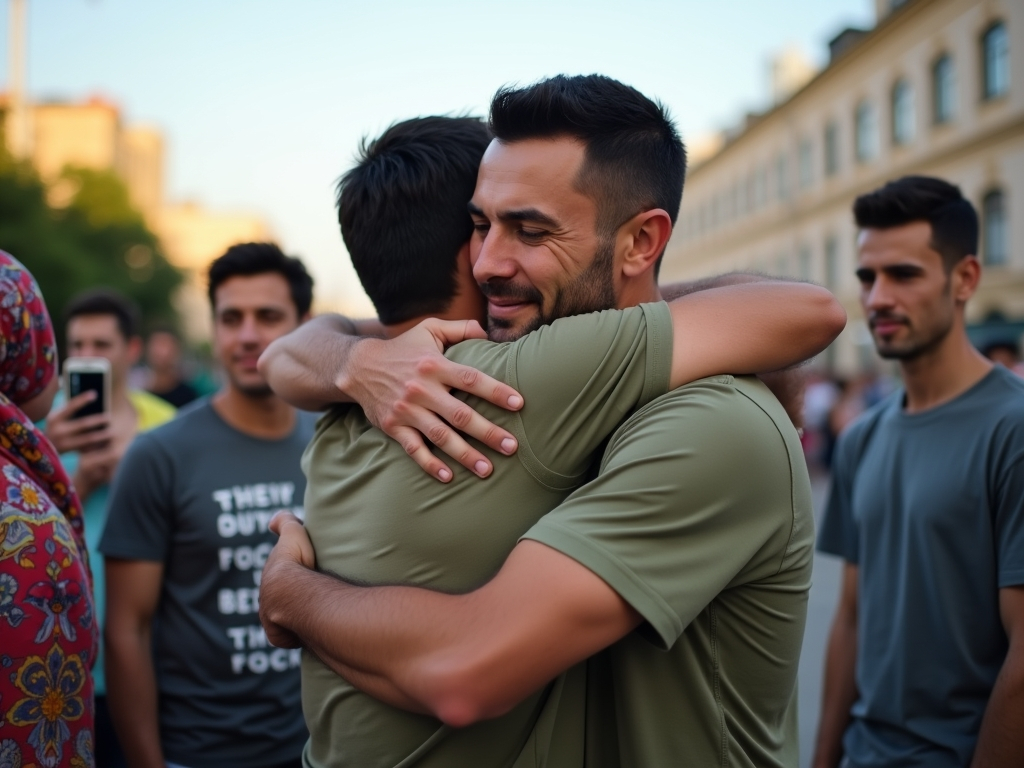
Sixty Palestinian detainees released by Israel arrived in Gaza in a visibly weakened state, reaching a hospital in Khan Younis exhausted, wounded and, in some instances, unable to stand on their own.
On Monday, the International Committee of the Red Cross (ICRC) transported the men to Nasser Medical Complex for medical checks, where families and healthcare workers gathered to welcome them back.
Recommended Stories
• list 1 of 3‘Back from the dead’: The continuing anguish over Gaza’s 9,500 missing people
• list 2 of 3Palestinians pin hopes on international peace force to rebuild Gaza
• list 3 of 3Gaza student excels in national exams despite war and displacement
This marks the largest group of prisoners freed since the initial stage of the ceasefire in Israel’s war on Gaza, which began in October.
The men are among nearly 1,300 Gaza residents Israel has classified as “unlawful combatants”, according to the Israeli rights organisation HaMoked. Israeli authorities stated they were released after questioning concluded they no longer posed a security threat.
According to a correspondent in Gaza, many of those freed had been working as labourers inside Israeli-occupied Palestinian territory before October 7, 2023.
He noted that Gaza’s worsening humanitarian conditions under blockade would make recovery difficult, as access to food, shelter and medical care remains severely limited.
Abdullah Kilani, one of the released detainees, said he was arrested in December 2024 on Salah al-Din Street in central Gaza and detained for more than 18 months. During that time, he and another prisoner were shot.
“The situation inside was extremely harsh,” he said. “It still feels unreal to be free.”
Another former detainee, identifying himself as Abu Ibrahim, said prisoners were forced to sit on bare concrete or metal surfaces and that he suffered injuries after guards struck him with rifle butts.
“No one was treated differently, whether young or old,” he said.
Mohammed Jabr al-Majdalawi, 43, said he spent a year and nine months in detention and only discovered he would be freed when he met Red Cross staff ahead of the transfer.
“I’m in tears because of everything we endured,” he said. “It’s impossible to fully describe it.”
He added that those still imprisoned remain at serious risk and called on international organisations to intervene.
Torture as policy
The men had been held in several of Israel’s most well-known detention facilities, including Ofer, Negev and Sde Teiman. Human rights organisations describe these prisons as part of a system where Palestinians face arbitrary treatment that amounts to an organised pattern of abuse.
Groups on both the Palestinian and Israeli sides have reported repeated beatings, denial of medical care, food deprivation, extended restraints and deaths in custody.
Approximately 9,600 Palestinians are currently held in Israeli prisons, including minors.
A recent United Nations commission of inquiry found that Palestinian children detained by Israel were subjected to torture, sexual violence and other forms of mistreatment.
The ICRC has said it has not been granted access to Palestinians held in Israeli custody since October 2023 and has repeatedly called for permission to visit detainees and assess their conditions.



