Experts find pesticides poison almost half of the world’s farmers each year
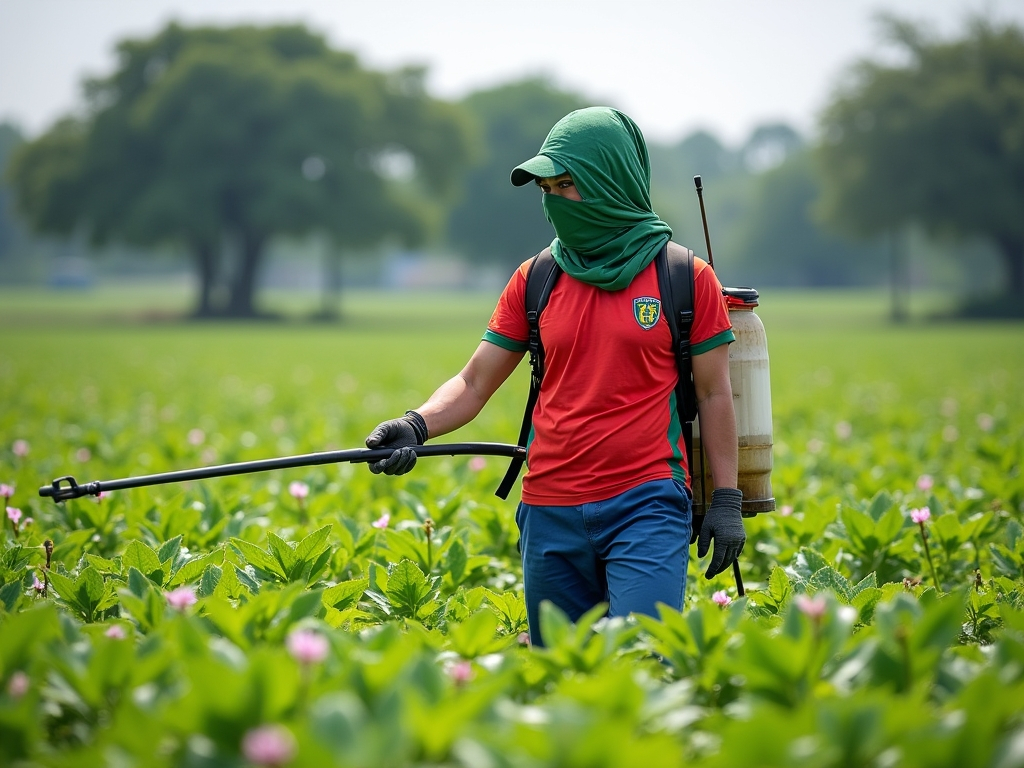
A new study has concluded that nearly one in two farmers worldwide experiences pesticide poisoning each year.
Drawing on publicly available evidence collected between 2006 and 2023, the research, commissioned by Pesticide Action Network, estimated that 402 million to 433 million farmers and agricultural workers suffer unintentional acute pesticide poisoning annually.
With the global farming population estimated at 934 million people, the findings suggest that around 46% are affected each year. Southern Asia recorded the largest estimated number of cases, followed by south-east Asia and east Africa.
Burkina Faso in west Africa had the highest estimated national rate, with almost 84% of farmers and farm workers said to have experienced pesticide poisoning.
The research, published in Frontiers in Public Health, also estimated that pesticide poisoning causes about 11,000 deaths every year. Nearly 60% of those deaths were estimated to occur in India.
Jayakumar Chelaton, executive director of Pesticide Action Network India, said the findings revealed a “crisis that can no longer be ignored”.
The study’s authors urged “immediate action”, including adoption of a UN recommendation to gradually eliminate highly hazardous pesticides.
According to the report, pesticide use has continued to rise despite repeated warnings about health risks. Around 3.8 million tonnes were used in 2023, roughly twice the amount recorded in 1990.
Dr Sheila Willis, who leads international programmes at Pesticide Action Network UK, said the newly documented scale of harm showed that farmers need greater support to move towards safer options that protect both workers and their families.
The analysis did not examine pesticide exposure among an estimated 84 million children working in agriculture. It also did not assess long-term health consequences. For the purposes of the study, acute pesticide poisoning meant an illness or health effect occurring shortly after exposure.
Génon Jensen, executive director of the Health and Environment Alliance, said there was serious concern about the health damage caused by pesticide poisoning, including both immediate illness and the longer-lasting exposure experienced by farm workers and nearby communities.
Hélène Nicora, director general of Parkinson’s Europe, said there was also substantial evidence that Parkinson’s disease may be influenced by environmental factors, with increasing research connecting pesticide exposure to its development.
Parkinson’s disease is a progressive neurological condition in which areas of the brain deteriorate over time, affecting movement, coordination and balance. Its global impact is increasing, and France, Germany and Italy have recognised it as an occupational disease among farmers.
Farmers and agricultural workers may encounter pesticides while mixing and spraying them, as well as through contact with treated plants, polluted tools, protective gear and clothing.
At an event organised by an environmental group earlier this year, Dutch farmer Rendert Algra said he believed his Parkinson’s disease was connected to pesticides used during his work on his family’s farm.
“As the oldest son, I was responsible for spraying pesticides on our fields for several years,” he said.
Although described as the strongest analysis of its kind so far, the report stressed that information on pesticide poisoning remains incomplete. Its authors called for consistent monitoring and reporting systems so that pesticide-related poisonings can be measured accurately and compared across countries.