'Down to the brink': behind the UK's high-stakes talks with the US to fend off Trump-era tariffs
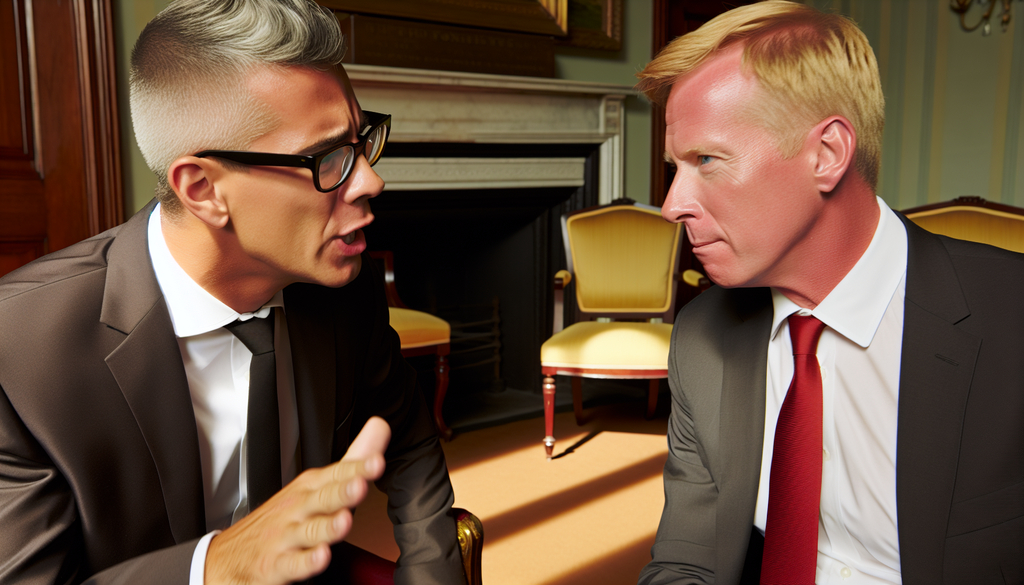
Top UK officials and ministers are in ongoing discussions with US representatives this weekend in an urgent push to secure exemptions from heavy new import tariffs.
According to sources within the government, leaders have prioritized talks on Donald Trump’s upcoming tariffs, treating them as the most pressing topic in all dialogues with American counterparts.
Earlier this week, Trump revealed plans to impose a 25% tariff on car imports starting 3 April — a move likely to affect British automakers such as Aston Martin and Bentley.
The UK government is aiming to negotiate an exception from not only the automotive duties but also the broader set of trade measures Trump plans to roll out next week, as part of a larger initiative referred to as an “economic prosperity deal” between the UK and US.
While British officials believe the US may be open to reaching an arrangement, they admit time is running short, with additional tariffs possible on 2 April — a date that Trump has dubbed “liberation day.”
The UK joins Japan, Australia, and South Korea in high-stakes negotiations to achieve exemptions before the measures come into force, according to a UK insider familiar with the talks.
Speaking at a Chatham House conference on Thursday, Jonathan Reynolds, the UK’s business and trade secretary, confirmed ongoing high-level negotiations, noting: “We are in the midst of very intensive discussions, and we’re likely to know the results very soon.”
However, he acknowledged an agreement might not be finalized by the critical 2 April deadline. “Ideally, no tariffs would be applied to the UK while dialogue continues — but we’re uncomfortably close to what the US is calling ‘world tariffs day’,” Reynolds added.
UK ministers and diplomats have underscored to their US counterparts that the trade flow between the two nations remains equitable. Trump has frequently criticized America’s trade gaps with key partners like the EU and China.
The UK counts the US as its single largest bilateral trading partner, with trade between the two nations totaling close to £300bn annually. In 2023 alone, the UK imported £57.9bn in goods from the US and exported £60.4bn — including some £6.4bn in car exports, nearly a fifth of all UK goods sold overseas. Trade in services remains even more advantageous to the UK.
Key figures in Downing Street are playing an active role in the discussions, including the prime minister’s special representative Michael Ellam and business advisor Varun Chandra. Chandra traveled with Secretary Reynolds to Washington DC earlier this month to pursue the prosperity agreement.
During the Washington visit, Reynolds held talks with Howard Lutnick, the US commerce secretary, as well as Jamieson Greer, the US trade envoy, and Mark Burnett, Trump’s UK envoy. Some British officials remained in the US capital to continue ironing out details. Peter Mandelson, formerly an EU trade commissioner and now leading the UK embassy team in Washington, is also deeply engaged.
While the UK is focused on achieving a trade deal, it has not dismissed the possibility of retaliatory measures. Labour leader Keir Starmer stated on Friday that Britain “reserves the right to respond” if tariffs are enacted, emphasizing that “our national interest must come first.”
Subscribe to Business Today
Start your day with comprehensive business updates and insightful analysis delivered each morning.
after newsletter promotion
During a stop in Yorkshire, Starmer explained: “Clearly, tariffs are a serious concern. We’re working closely with industries likely to be affected. None want to see a trade war brewing, which is why we’re engaging with the US to cushion these potential impacts.” The US is the UK’s second biggest export destination for vehicles, just behind the European Union.
Yet, there’s some debate over the UK’s current strategy. Trade policy analyst David Henig warned that pursuing a deal under these circumstances might be risky. “It’s a gamble — especially if we’re not a primary target — that engaging actively is better than staying quiet and potentially being overlooked.”
There’s concern that the UK could be offering significant concessions, such as the £800m digital services tax affecting US tech firms, unnecessarily — especially if Trump’s final measures prove to be more limited in scope, and the UK was never a core focus. “You begin to question whether this will lead to a strong deal,” Henig remarked. “It might pay off eventually, but for now it appears speculative.”
In previous trade talks between the two nations, sticking points have emerged around US agricultural exports — like genetically modified beef or poultry treated with chlorine — being sold in the UK. There are signals those sanitary and phytosanitary (SPS) issues could resurface.
At the Chatham House event, Reynolds acknowledged: “We do face some complex issues. We’ve publicly committed in our manifesto to uphold our SPS standards, and that remains a firm position. Other countries don’t always see eye-to-eye with us on that.”
William Bain, who oversees trade policy at the British Chambers of Commerce, concluded: “There will be an intense flurry of discussions between all negotiating countries and the US administration this weekend. If any nation stands a chance of securing exemptions, it’s the UK. We always expected this to go right to the wire — and perhaps even beyond 2 April.”