Chinese auto giant BYD claims it can succeed without the US market
The sharp rise in fuel costs triggered by the conflict in Iran has accelerated global interest in electric vehicles, and Chinese automakers are seizing the moment.
China remains the leading producer of EVs worldwide. Although its brands are still largely excluded from the vast US car market, they are seeing growing demand and increased dealership orders across Asia and other international regions.
BYD, which surpassed Tesla last year to become the world’s biggest seller of electric vehicles and is rapidly expanding abroad, sits at the heart of this momentum.
“We are able to grow and succeed without relying on the US market,” BYD executive vice president Stella Li said during the Beijing Auto Show.
Rather than targeting American buyers, the company says its main challenge now is keeping up with surging demand in markets such as Brazil, the United Kingdom and across Europe.
“When oil prices climb, customers immediately feel the impact in their daily expenses. EVs offer savings every single day,” Li explained.
“In fact, we are currently facing capacity constraints. Demand is exceeding what we are able to deliver.”
To address concerns that still deter some buyers, BYD is promoting its new “flash charging” system, which Li describes as transformative in tackling one of the biggest obstacles to EV adoption — charging time.
This flash charging technology can deliver hundreds of kilometres of driving range within just minutes. According to Li, this breakthrough could convince hesitant drivers to switch to electric and strengthen BYD’s competitiveness worldwide.
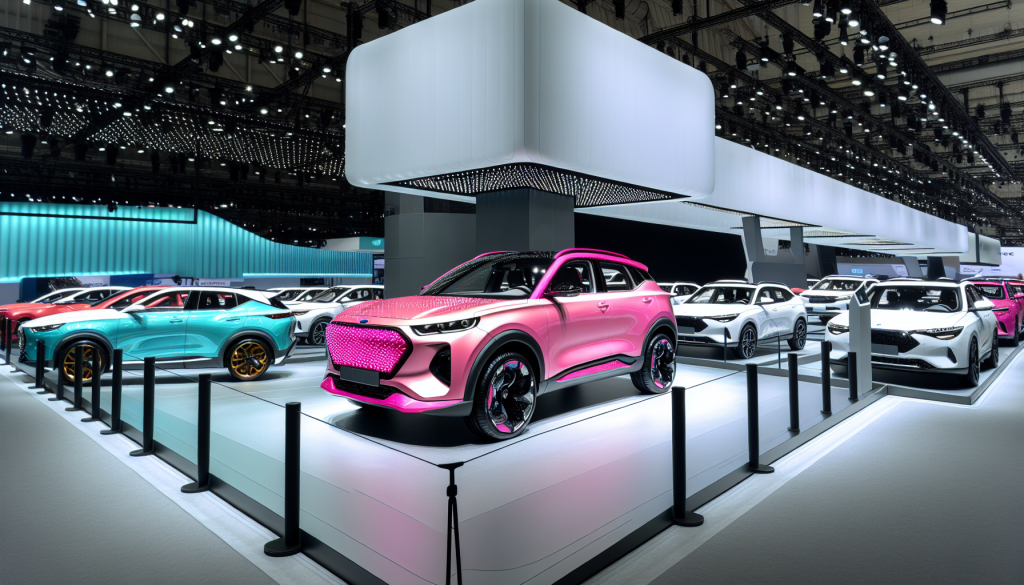
At this year’s Beijing Auto Show — now considered the largest automotive exhibition globally — more than 1,400 vehicles from hundreds of domestic and international brands were presented, with Chinese manufacturers taking centre stage.
BYD’s global expansion, however, is unfolding within a complicated geopolitical environment.
Chinese EV producers are encountering tariffs and heightened regulatory examination abroad, especially in the United States, the world’s largest consumer market.
US officials have criticised China’s state support for its EV sector and raised concerns about data security and broader national interests.
Despite these tensions, Li noted that BYD is gaining stronger brand visibility in other regions, including the UK.
Once recognised primarily for offering lower prices than competitors, Chinese carmakers are now increasingly competing on technological innovation — particularly in battery systems, charging solutions and integrated software platforms.
“We are more than just an automotive manufacturer. We supply a third of the world’s smartphone components, we are leaders in battery storage, solar technology, buses and trucks. BYD operates as a full ecosystem,” Li said.
The Auto Show also highlighted advances from other companies, showcasing developments that extend well beyond conventional vehicles.
Chinese automaker X-Peng introduced a new six-seat electric SUV, and its chief executive He Xiaopeng announced that humanoid robots would be launched later this year. The company also plans to begin producing flying cars by 2027.
Established global brands such as Volkswagen, Toyota and Ford, which once held dominant positions in China, are finding it difficult to match the pace of innovation. Some have opted to partner with domestic firms.
BMW has teamed up with battery giant CATL, Audi is incorporating Huawei’s driver-assistance technology, and Volkswagen is jointly developing EV models with XPeng.
Within China, rivalry remains fierce. Dozens of manufacturers are engaged in intense price competition and rapid model rollouts.
Even industry leaders like BYD face pressure at home. Ongoing price cuts have narrowed profit margins, and lower vehicle prices have dampened domestic demand.
BYD’s sales in China have declined for seven consecutive months, while its European sales surged by 156% during the first quarter of this year.
Li acknowledged that the competitive strain will likely lead to consolidation in the industry.
“History shows that not every company will endure,” she said, pointing to earlier waves of industry consolidation, including the rise of Japanese automakers in the 1990s and South Korean brands in more recent decades.