5 Groundbreaking Discoveries Yet to Win the Nobel Prize
Stay up-to-date with the latest discoveries by subscribing to CNN's Wonder Theory science newsletter. Journey through the cosmos with the newest news on incredible breakthroughs and cutting-edge scientific advancements.
Next week, the brightest scientific minds will emerge from the shadows of academia as the recipients of the coveted Nobel Prizes in physics, chemistry, and physiology or medicine are revealed.
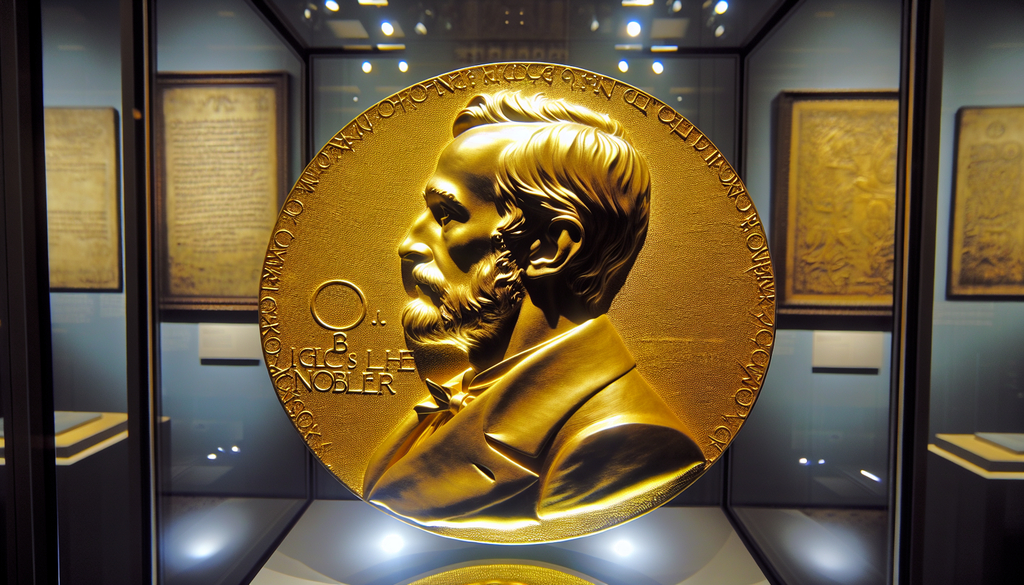
These prestigious awards, founded by Swedish industrialist Alfred Nobel more than 100 years ago, honor transformative achievements that often take decades to reach fruition.
Predicting the winners of science’s most elite commendation has always been difficult. Shortlists remain confidential, and nominators' identities, as well as the details of the decision-making process, are kept under wraps for half a century.
Still, many Nobel-caliber discoveries could one day earn a life-changing call from Stockholm. Here are five landmark achievements that have yet to result in a Nobel Prize — at least for now.
The Human Genome Project
A top contender that often comes up in Nobel discussions is the completion of the human genome map, an extraordinary scientific feat that first began in 1990 and culminated in 2003.
This immense undertaking involved thousands of global researchers from the US, UK, France, Germany, Japan, and China, all working to decode the very blueprint of human life.
Its impact has been profound in the fields of biology, medicine, and beyond. However, the immense scale and collaboration involved in the project may be the very reason it hasn’t yet garnered Nobel recognition.
As specified in Nobel’s 1895 will, the awards can honor only up to three individuals at a time — an increasingly common challenge in today’s era of large, collaborative research ventures.
An Obesity Treatment Breakthrough
The development of revolutionary weight-loss medications, which mimic a hormone known as glucagon-like peptide 1 (GLP-1), has sent shockwaves through healthcare in recent years.
With obesity affecting one in eight people globally — a figure that has more than doubled since 1990 — these drugs, which help control appetite and lower blood sugar, may help redefine the treatment of obesity and related illnesses like type 2 diabetes.
Three key researchers — Svetlana Mojsov, Dr. Joel Habener, and Lotte Bjerre Knudsen — were instrumental in bringing this breakthrough to life. For their contributions to developing semaglutide, they received the 2024 Lasker-DeBakey Clinical Medical Research Award, often viewed as a precursor to the Nobel Prize.
Mojsov and Habener made essential strides in identifying and synthesizing GLP-1, while Knudsen played a vital role in refining it into the now widely-used weight-loss drug.
AI’s Emergent Influence
Artificial intelligence, or AI, is radically changing people’s lives at an astonishing speed, across many fields of study.
Among a crowded AI landscape, two individuals stand out, says David Pendlebury, a leading analyst at Clarivate’s Institute for Scientific Information, known for predicting Nobel Prize candidates through citation analysis of research papers.
These individuals are Demis Hassabis and John Jumper, creators of AlphaFold through Google DeepMind, an AI system capable of accurately predicting the 3D structures of proteins. This resource has already benefited over 2 million researchers globally and accelerated additional breakthroughs in biology.
Since their 2021 paper outlining AlphaFold was published, it has been cited over 13,000 times. Pendlebury highlights this as a remarkable achievement; out of 61 million scientific papers, only around 500 reach a similar citation threshold.
This has already earned Hassabis and Jumper prestigious awards like the 2023 Lasker Prize and the Breakthrough Prize, leading many to believe a Nobel Prize for chemistry could follow. Pendlebury suggests that David Baker, a pioneer in protein design, may also share in this recognition for laying foundational work.
However, some experts argue that it might still be too soon for such an accolade, given the relatively recent emergence of AI-driven scientific methods.
“There is speculation that the work is either too new or that AI’s application to science might be too novel for the Nobel committee just yet,” Pendlebury noted.
The Complex World of Gut Microbes
Within our bodies live trillions of microorganisms — bacteria, viruses, and fungi that form what we call the human microbiome.
Over the past two decades, advancements in genetic sequencing have made it possible for scientists to better understand these microbes' roles and how they interact with each other and our human cells, particularly within the gut.
This rapidly expanding field of study has yet to receive its due in the form of a Nobel Prize, says Pendlebury.
Dr. Jeffrey Gordon, a biologist at Washington University in St. Louis, is one of the leading figures in gut microbiome research.
His groundbreaking studies began in mice, uncovering the fundamental ways the gut microbiome shapes human health, including its contributing role in undernutrition, which continues to affect almost 200 million children globally. Gordon is also spearheading efforts to create food-based therapies designed to improve gut health.
Cancer Genes and Genetic Testing
In the 1970s, while researchers understood some forms of cancer ran in families, the idea that breast cancer could be inherited wasn’t mainstream.
Mary-Claire King, now a professor at the University of Washington, approached the problem from a new angle — one shaped by her background in genetics, long before humanity had access to a complete DNA blueprint.
After 17 years of dogged research, King uncovered the BRCA1 gene mutation’s role in hereditary breast and ovarian cancers.
This discovery led to genetic tests that today help identify women more likely to develop these cancers, offering them options for enhanced screenings and preventative surgeries.
The 2023 Nobel Prize season begins on Monday with the award for physiology or medicine, followed by physics on Tuesday, chemistry on Wednesday, and literature on Thursday. The Nobel Peace Prize will be awarded on Friday.