Whale's incredible journey leaves scientists amazed
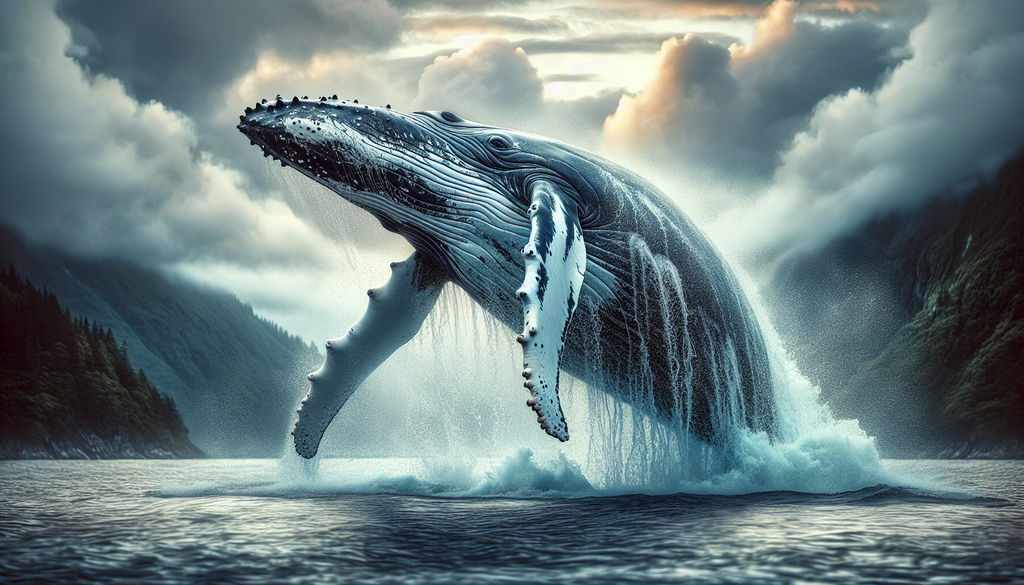
A humpback whale has undertaken one of the most extraordinary and far-reaching migrations ever documented, which scientists believe could be linked to climate change.
The whale was first observed in the Pacific Ocean off the coast of Colombia in 2017 and then re-sighted several years later near Zanzibar in the Indian Ocean—a journey spanning at least 13,000 kilometers.
Experts speculate that this remarkable odyssey may have been prompted by climate change reducing food sources or perhaps a quest to find a mate.
Ekaterina Kalashnikova, from the Tanzania Cetaceans Program, described the feat as “nothing short of astounding and highly unusual, even for such a migratory species.”
The photo below features the same whale, identified off the coast of Zanzibar in 2022.
Dr. Kalashnikova stated that this was very likely the longest migration ever recorded for a humpback whale.
Humpbacks are known to inhabit all the world’s oceans, undertaking extensive migrations yearly. These journeys typically cover vast distances between their tropical breeding areas and colder waters rich in food.
However, the journey undertaken by this particular male whale surpasses expectations, linking two breeding grounds separated by an immense distance.
One hypothesis suggests that climate change, which affects the availability of krill—an essential food source for humpbacks—might be forcing these mammals to travel farther in search of sustenance.
Alternatively, conservation successes and growing whale populations may encourage exploration of new breeding grounds.
"The exact reasons remain unclear, but potential factors include global climate shifts, increasingly frequent extreme environmental events, and the natural evolutionary behaviors of these animals," Dr. Kalashnikova explained.
The whale in question was part of a group photographed during a research expedition along Colombia’s Pacific coast in 2013.
It was later identified in the same general region in 2017 before appearing off Zanzibar in 2022.
According to scientists, these sightings mark a straight-line separation of 13,046 kilometers, known as the great-circle distance. However, the actual distance traveled could be significantly longer.
Great-circle distances refer to the shortest measurement between two points on a spherical surface, represented by the curve of an arc.
The study's conclusions are drawn from an extensive catalog of humpback whale photographs collected by researchers, whale enthusiasts, and members of the public, compiled through the citizen science platform happywhale.com.
The site employs artificial intelligence to match the unique patterns and shapes of whale tails—or flukes—allowing researchers to trace their movements around the globe.
The findings of this research have been published in the journal Royal Society Open Science.
To dive deeper into the wonders of humpback whales, watch The Secrets of Antarctica’s Giants on BBC iPlayer.
Sign up for the Future Earth newsletter for exclusive updates on climate and environmental issues curated by BBC’s Climate Editor, Justin Rowlatt. Not based in the UK? Subscribe to our international newsletter here instead.