Doorbell camera captures unusual moment of meteorite hitting front walkway
Subscribe to CNN's Wonder Theory Science Newsletter to uncover the wonders of the universe. Stay updated on groundbreaking discoveries, remarkable scientific strides, and more.
On a calm, sunny afternoon in Canada’s Prince Edward Island, Joe Velaidum and his partner, Laura Kelly, decided to take their dog for a walk. While in their yard, Velaidum noticed a stray leash and paused briefly to pick it up before continuing their stroll.
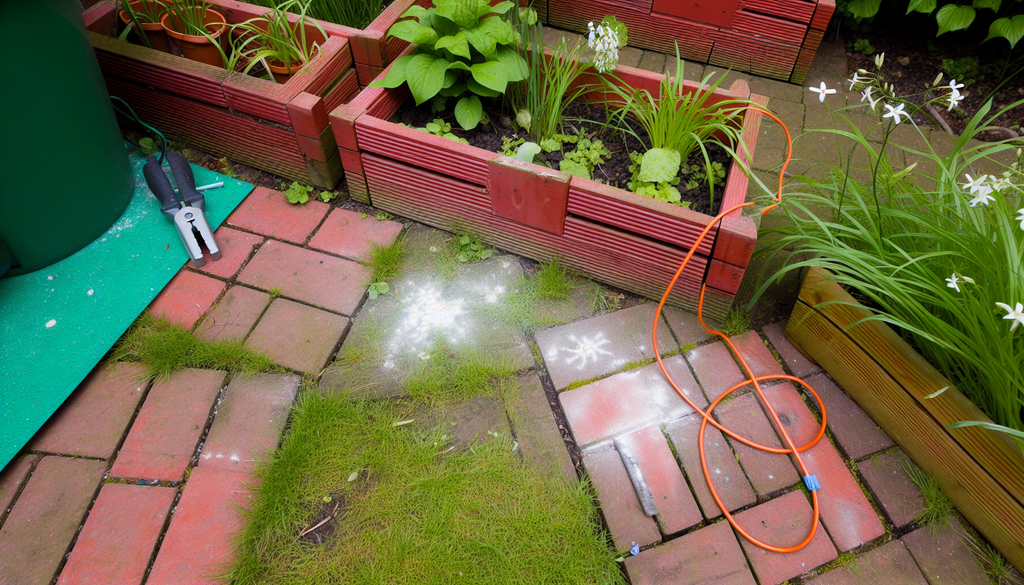
Moments later, a meteorite hurtled down, striking the very spot where Velaidum had stood just minutes earlier. The dramatic event was captured on video, thanks to a Ring doorbell camera.
“I never usually stop in that spot,” Velaidum recounted to CNN about the July 2024 incident. “When we reviewed the footage, it hit us—had I remained there just two minutes longer, I likely would have been struck and killed by the meteor.”
Months later, after scientific analysis validated the object’s extraterrestrial origin, the meteorite was officially added to a database maintained by the nonprofit Meteoritical Society.
The specimen, aptly named “Charlottetown” after the nearby city, is particularly notable. The University of Alberta recently shared its associated Ring doorbell footage—a rare close-range recording accompanied by sound. According to Dr. Chris Herd, an expert in Earth and atmospheric sciences at the University of Alberta, this makes the event exceptional.
“The Charlottetown Meteorite made a grand entrance,” said Herd, who collected the specimen and oversees the university’s meteorite collection. “To our knowledge, no other documented meteorite fall includes recorded sound.”
A Rare Occurrence
Even for someone like Herd, who specializes in meteorite studies, such an incident on Prince Edward Island—a small Canadian province north of Nova Scotia—is incredibly rare.
The University of Alberta operates an online meteorite reporting platform that receives around ten submissions each week. Yet, as Herd revealed, “Less than 0.1% of reports turn out to be genuine meteorites.”
Velaidum, himself a university professor, initially dismissed the idea that the object could be from outer space, theorizing it might have fallen from an airplane or a rooftop instead.
“The logical side of me thought, ‘It’s probably something far more ordinary than a meteorite,’” Velaidum admitted. Initially, the couple even began sweeping the debris off their sidewalk.
It was Laura Kelly’s father, who lived nearby, who encouraged them to gather samples for closer inspection. With the help of a vacuum and a magnet—often used to identify the metallic components of meteorites—the couple collected a 95-gram (3-ounce) fragment of the rock.
Curiosity led them to explore the University of Alberta’s meteorite collection online, and they submitted photos of the sample. Herd, upon seeing the images, was certain it was a genuine space rock.
“I’ve seen thousands of similar photos,” Herd explained, adding that meteorites are typically enveloped in a black coating formed as they burn through Earth’s atmosphere at speeds exceeding 45,000 miles (72,420 kilometers) per hour.
What made this discovery even more significant, Herd said, was the video — not just for confirming the meteorite’s arrival but for the scientific insights it might offer.
“We are working to analyze the footage to determine details like the speed of the fall,” Herd said. “The recorded sound could also provide clues about the physical properties of the meteorite.”
An Unusual Chain of Events
Both Herd and Velaidum reflected on the strange coincidences surrounding the meteorite’s arrival.
Most striking was the timing—had Velaidum remained in the impact zone just moments longer, the outcome could have been tragic. Additionally, this marked the first confirmed meteorite strike in the 2,200 square-mile (5,700 square-kilometer) history of Prince Edward Island.
Even more serendipitous, Herd already had a family vacation planned on the island just ten days later, allowing him to personally retrieve the specimen.
“This entire story is filled with uncanny moments of luck and timing,” Herd noted.
Velaidum, who teaches a course on “the meaning of life” at the University of Prince Edward Island, found yet another layer of irony. The course includes discussions about the enormity of the universe and humanity’s insignificance within it—a topic that now feels especially poignant.
“One section of the course focuses on the vastness of space,” Velaidum said, “and this experience has added an eerie layer of relevance to that discussion.”
Related Article: Scientists recently uncovered a new clue about life on Mars after studying a meteorite called ‘Black Beauty,’ discovered on Earth in 2011.
Interestingly, the type of space rock that struck Velaidum’s yard, known as an "ordinary chondrite," is not rare. These meteorites, however, have an extraordinary history.
“Research suggests that these types of meteorites are fragments from asteroids in the asteroid belt between Mars and Jupiter,” Herd explained. “This particular piece, which plummeted to Earth on July 25, 2024, at 5:02 p.m., may have been traveling through space for tens of millions of years.”
Why Meteorites Matter
Today, the Charlottetown meteorite is preserved as part of the University of Alberta’s Meteorite Collection, one of Canada’s largest, with over 1,800 specimens.
Herd emphasized that not all suspected meteorites are genuine. For example, slag—a byproduct of metal smelting—often gets mistaken for meteorites. But as Herd clarified, slag has visible bubbles, a feature almost never found in genuine space rocks.
Identifying true meteorites, often nicknamed “meteorwrongs” when mistaken, is vital because these rocks hold extraordinary insights into the cosmos.
“Earth's geological processes constantly renew its surface, so truly ancient rocks are rare here,” Herd said. “Meteorites, however, often date back 4.5 billion years, providing a rare glimpse into the universe’s early history that we can’t find on Earth.”