Rush to extract battery metals puts ocean haven at risk
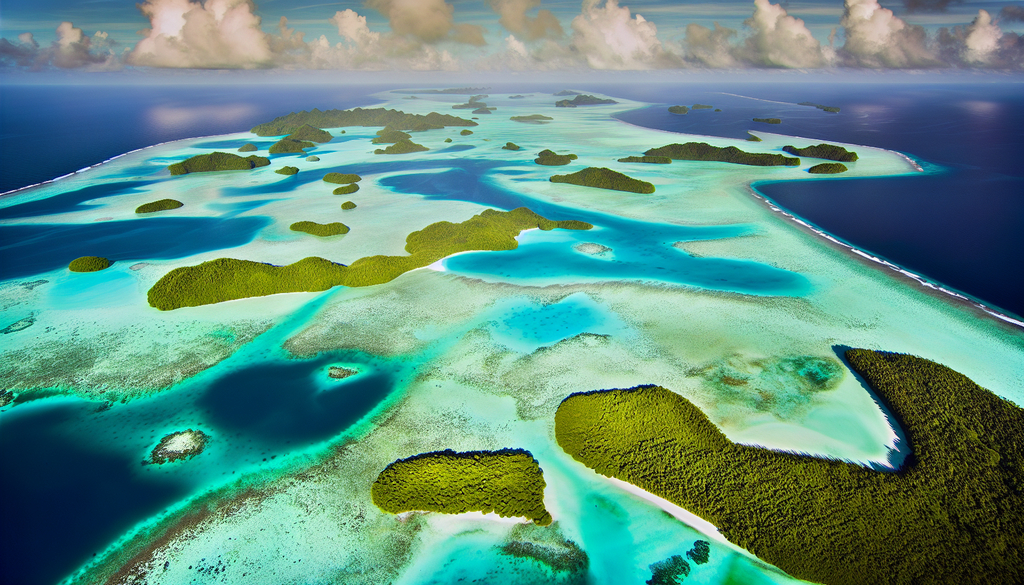
Dramatic drone footage obtained by environmental activists and shared with the BBC appears to reveal how widespread nickel mining has devastated forests and tainted waters in one of the world’s most ecologically rich marine environments.
Located in Indonesia’s Southwest Papua Province, the Raja Ampat islands are often referred to as the “Amazon of the Seas” due to their extraordinary biodiversity.
However, Global Witness reports that nickel mining — a major source for making electric vehicle batteries and stainless steel — has increased significantly in the region in recent years.
This week, in a move praised by environmental groups, the Indonesian government cancelled the permits of four out of five mining companies operating in the area.
In an official online statement, the Ministry of Environment and Forestry stated: “Raja Ampat's ecological richness is a global treasure that must be safeguarded.
"We monitor mining activities in the area with utmost concern."
Despite this action, images captured by Global Witness as part of a broader inquiry suggest damage has already occurred.
The aerial snapshots show deforestation and sediment spilling into waters that support vibrant coral reef ecosystems.
According to Global Witness, mining-related land use expanded by 500 hectares — comparable to around 700 football fields — between 2020 and 2024 across several of the region’s islands.
Environmental advocates, such as Greenpeace, have expressed worries that mining corporations could attempt to challenge the cancellations in court.
Meanwhile, one company on Gag Island — known for its high-quality nickel deposits — has retained permission to operate. Officials promise that "ecological restoration efforts will be enforced" in that location.
Marine biologist and reef protector Dr. Mark Erdmann told BBC News he was “stunned and thrilled” about the government's decision to pull the mining licenses.
"This is the global heart of marine life diversity," he stated to the BBC.
Dr. Erdmann, who has spent over 20 years working in Raja Ampat and co-founded the Reshark initiative to reintroduce sharks, said: "It was the powerful outcry from Indonesians that caught the government’s attention."
This ecological crisis highlights the broader risks tied to expanding production of essential materials for batteries powering electric vehicles and other green technologies.
Indonesia currently produces more than 50% of the world’s nickel, according to research from the Institute for Energy Economics and Financial Analysis in 2023.
While Raja Ampat’s remarkable marine life has focused attention on mining damage there, similar impacts have been documented in other regions.
A recent 2024 report by Forest Watch Indonesia linked mining-induced deforestation to increased incidences of floods and landslides in affected locales.
The rising global demand for so-called critical minerals is now driving policy decisions. For example, a recent executive order by former President Trump aimed to stimulate seabed mining in international waters, a move that China has condemned as illegitimate.
Dr. Erdmann acknowledged the tightrope Indonesia must walk between development and conservation. “Indonesia holds major nickel reserves — inevitably, some will be extracted,” he said.
Dr. Michaela Guo Ying Lo of the University of Kent led a 2024 study of mining’s effects on communities in Sulawesi, where most of Indonesia’s nickel is found.
Her research showed a small decline in poverty but also a noticeable “decline in environmental health,” including worsening air and water conditions.
"Indonesia is emerging as a key global supplier of nickel," Dr. Lo noted in a BBC interview. "But local consequences can't be ignored."
Jakarta-based environmental campaigner Imam Shofwan from the group Jatam told the BBC: “They market nickel as a climate solution, yet it's fueling deforestation and ruining farms.”
He also warned that coastal nickel reserves — often in low-lying regions — are among the most threatened by climate change impacts such as sea-level rise.
Dr. Erdmann concluded: “The nickel conundrum is truly grim.
"Mining always comes with environmental payloads, and while electrification brings benefits, we need to ask — how much ecological cost are we ready to bear?”
The BBC sought a response from the Indonesian government but received no reply by the time of publication.