Stunning high-resolution image unveils the neighboring Sculptor galaxy
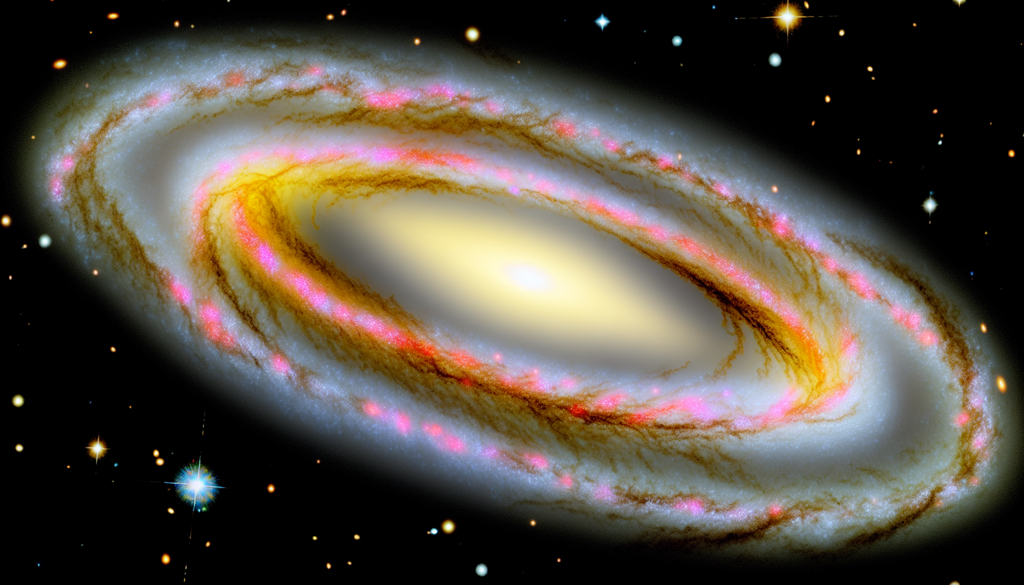
WASHINGTON, June 18 (Reuters) - The Sculptor galaxy, also known as NGC 253, shares many features with our own Milky Way. It has a spiral shape, and its size and mass are comparable. However, unlike our obscured view of the Milky Way from within, Sculptor can be observed clearly from Earth’s perspective.
On Wednesday, astronomers unveiled an exceptionally detailed image of Sculptor, captured after 50 hours of observations using the Very Large Telescope in Chile, operated by the European Southern Observatory.
This vibrant image displays the galaxy in approximately 4,000 distinct hues, each representative of a specific wavelength within the optical range of light.
Because various materials within a galaxy emit light differently across the spectrum, these high-resolution observations provide unprecedented insights into galactic processes—from how stars form to the dynamics of interstellar gases on a macro scale. By contrast, typical astronomical images depict only a few colors, limiting the data available.
Scientists employed an advanced instrument known as the Multi Unit Spectroscopic Explorer (MUSE) mounted on the telescope.
"NGC 253 balances detail and scope perfectly for study. It’s near enough to examine with MUSE in fine resolution, but distant enough to capture the whole galaxy in one view," said Enrico Congiu, an astronomer with the European Southern Observatory in Santiago and lead author of findings soon to appear in the journal Astronomy & Astrophysics.
"In the Milky Way, fine details can be studied, but a comprehensive view is lacking due to our position within it. For galaxies that are further away, we get the overall picture but miss out on the intricacies. Sculptor bridges this gap, helping us connect fine-scale analysis with a broader galactic context," Congiu added.
Located roughly 11 million light-years from Earth, Sculptor stands as one of the Milky Way's nearest neighboring large galaxies. A light-year equals about 5.9 trillion miles (9.5 trillion kilometers).
Sculptor, like the Milky Way, is categorized as a barred spiral galaxy—featuring a central elongated structure with arms spiraling outward. Measuring around 88,000 light-years across, its size and mass are strikingly similar to our home galaxy. One key contrast lies in its rate of stellar creation, which is estimated to be two to three times that of the Milky Way.
Much of this star birth—almost 30%—occurs near the galaxy’s center in an area known as a starburst zone, visible in the newly released image through vivid regions of light emission.
This detailed data is shedding light on numerous galactic characteristics, such as the movement of gases, the age of stars, and the chemical elements present throughout the galaxy—critical elements in understanding galactic evolution.
"Young stars tend to emit a bluer light, while older ones appear redder. With access to thousands of colors, we can decode a vast amount about the galaxy’s stellar population," explained Kathryn Kreckel, an astronomer at Heidelberg University in Germany and a co-author of the research.
"In the same way, the gas glows with specific bright emission lines at precise colors, each associated with different elements and physical processes causing the emissions," Kreckel noted.
The initial scientific results from this data set focus on planetary nebulae—bright clouds of gas and dust expelled from aging stars. Despite the name, these nebulae have no relation to planets and offer astronomers a method to accurately determine the distances of remote galaxies.
Researchers also expressed appreciation for the visual splendor of the Sculptor imagery in addition to its scientific richness.
"These images are simply stunning to me," Congiu reflected. "Each time I examine them, I notice something previously unseen—a faint nebula, a splash of unusual color, or a subtle structure that speaks to the complex physics at play."