World temperatures fell in 2025, yet scientists caution more heat extremes ahead
According to new research from the European Copernicus Climate Service and the Met Office, global temperatures in 2025 were slightly lower than in 2024 due to the cooling influence of the natural La Niña phenomenon in the Pacific Ocean.
However, the past three years have still been the warmest ever recorded, continuing to edge the planet closer to surpassing global climate goals.
Even with the moderating effect of La Niña, temperatures in 2025 remained significantly higher than those seen just ten years ago, as continued carbon emissions keep driving global warming.
Experts warn that without a major cut in emissions, the world will likely experience more record-breaking temperatures and increasingly severe weather events.
"When we look back at the mid-2020s in twenty years’ time, we may see this as one of the cooler periods," said Dr. Samantha Burgess, deputy director at Copernicus.
In 2025, the global temperature averaged more than 1.4°C above pre-industrial levels, those from the late 19th century before widespread fossil fuel consumption, according to data from both Copernicus and the Met Office.
While measurements differ slightly among research groups—largely due to varying definitions of pre-industrial temperature—scientists unanimously agree on the clear long-term trend of global warming.
"It's well understood: as greenhouse gases build up in the atmosphere from human activity, the planet responds with rising temperatures," said Professor Rowan Sutton, head of the Met Office Hadley Centre.
Although 2025 may not have set new records globally, extreme weather events tied to climate change persisted.
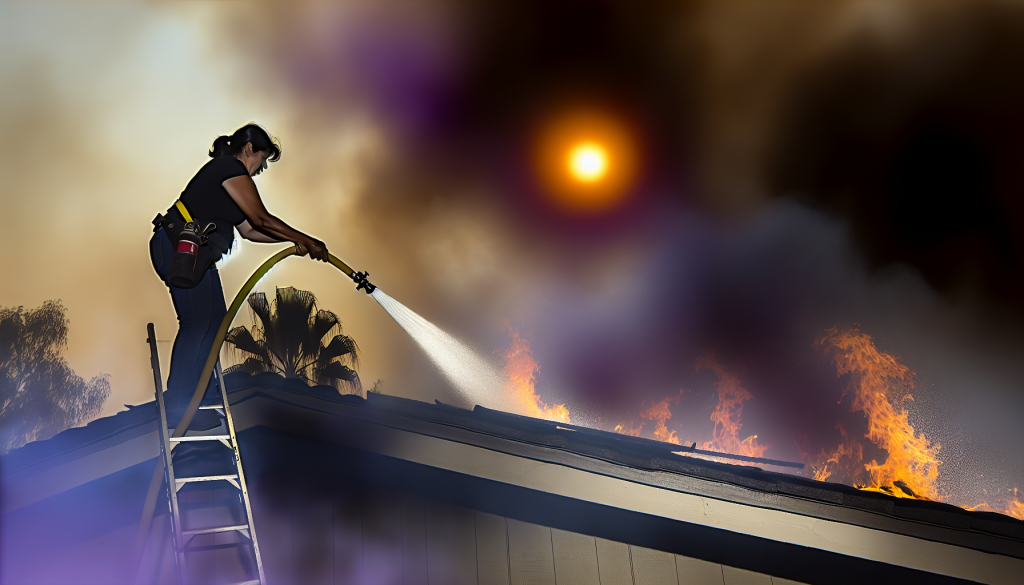
Incidents such as January's wildfires in Los Angeles and Hurricane Melissa in October are believed to have been at least partially worsened by climate change.
This sustained warming puts the world closer to breaching the international climate limit of a 1.5°C rise above pre-industrial levels.
This target, set by nearly 200 countries in 2015, aims to minimize the severe risks expected if temperatures reach 2°C above pre-industrial levels.
"Looking at current trends, we’re on track to cross that 1.5-degree threshold by the end of this decade," said Burgess.
Although long-term changes are driven by human activities, year-to-year variations are influenced by natural forces.
One such force is the periodic transition between El Niño and La Niña weather patterns.
While centered in the Pacific, these patterns impact global temperatures—El Niño typically warms the atmosphere, while La Niña tends to bring cooler global averages.
The record heat in 2024, and to a lesser degree in 2023, was amplified by El Niño conditions.
In contrast, the shift to La Niña likely tempered warming in 2025. Still, the continued high temperatures during a La Niña cycle are “somewhat alarming,” according to Dr. Zeke Hausfather from Berkeley Earth.
The last three years have shattered global temperature records by significant amounts. Monthly records have been consistently broken since 2023, based on Copernicus monitoring.
The spike in warming during 2023 left many scientists puzzled, raising discussions about additional factors beyond greenhouse gases and El Niño.
Some experts suggest that changes in cloud behavior and reductions in the Earth's reflective aerosols may be playing a role in absorbing more solar energy.
Hausfather observed that the unusual warmth continuing into 2025 might point to unexplained elements in the climate system.
"The rate of warming we're seeing is approaching the higher range of what we anticipated," added Sutton.
Still, he cautioned that it's too early to know whether the recent warming surge will have long-lasting implications—the evidence is still being gathered.
Scientists remain hopeful, emphasizing that humanity still has the power to shape future climate outcomes.
"We can change the course we’re on," said Sutton. "By reducing emissions and enhancing resilience, we can manage and adapt to the changes ahead."
Reporting for this article also contributed by Jess Carr.