What ancient dental proteins disclose about Stone Age interbreeding among early human groups
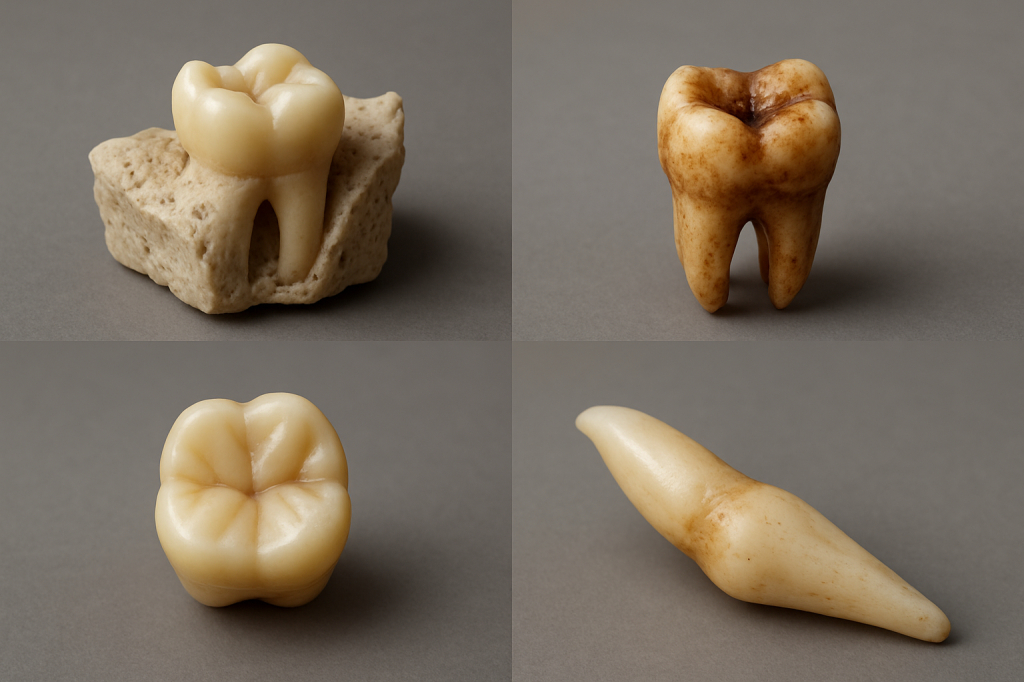
Homo erectus, a prehistoric human species, was the first of our ancestors known to leave Africa. It spread across multiple continents and survived for nearly 2 million years. Despite its long history and wide reach, the species remains one of the most puzzling chapters in human evolution, largely because usable genetic material has been extremely difficult to recover.
Researchers have now extracted ancient proteins from six teeth discovered in China, uncovering for the first time a molecular connection between Homo erectus and later human groups, including Homo sapiens.
“This represents significant progress in reconnecting the fragmented branches of our evolutionary history,” said Ryan McRae, a paleoanthropologist at the Smithsonian National Museum of Natural History in Washington, DC, who was not involved in the research. “Homo erectus has long been something of a mystery.”
Although fossils of Homo erectus have been uncovered in Africa, Asia and Europe, retrieving informative molecular evidence such as DNA has proven extremely challenging because of the fossils’ age and condition.
In a study published Wednesday in the journal Nature, geneticist Fu Qiaomei and her team reported that they successfully extracted and analyzed ancient enamel proteins from teeth found at three archaeological sites in China. Each of the teeth dates to roughly 400,000 years ago.
Proteins consist of chains of amino acids and are far more durable than ancient DNA, which breaks down easily over time. While proteins provide less detailed information than DNA, they can still offer important clues about evolutionary relationships.
Fu, a professor at the Institute of Vertebrate Paleontology and Paleoanthropology at the Chinese Academy of Sciences in Beijing, and her colleagues applied a minimally invasive technique that allowed them to study the fossils without altering their physical structure.
Instead of drilling into the teeth, the team used acid etching to gently remove a small amount of enamel for analysis. After unsuccessful attempts to extract DNA from animal fossils of similar age at the same sites, they did not attempt DNA recovery from the human teeth. Fu noted that obtaining ancient DNA remains difficult, but she remains committed to trying in the future.
Unknown variant discovered
The scientists identified two shared amino acid variants in the teeth from the three Chinese sites, one of which had never been documented before. This suggested that all six teeth belonged to the same species.
The second variant had previously been found in Denisovans, an enigmatic ancient human group, as well as in certain modern human populations.
This shared variant indicates that Denisovans may once have interbred with Homo erectus and later with Homo sapiens, according to the researchers.
As a consequence of such ancient interbreeding — known as admixture — traces of Denisovan genetic material persist in some people today.
Modern humans also carry Neanderthal ancestry, reflecting encounters with that species before it disappeared around 40,000 years ago. Denisovans themselves interbred with Neanderthals as well.
Populations in Southeast Asia today show the highest levels of Denisovan ancestry, suggesting that interactions between the groups likely occurred in that region.
‘Ghost lineage’
Geneticists have long known that Denisovans possessed ancestry from an unidentified “ghost lineage” that has not yet been matched to a known DNA source. Homo erectus has been considered a potential candidate, explained Eduard Pop, a research scientist at Naturalis Biodiversity Center in Leiden, Netherlands.
“This research reinforces that possible connection,” Pop said, adding that he is collaborating with colleagues to determine whether protein evidence can also be retrieved from Homo erectus fossils in Indonesia.
He noted that East Asian populations related to Homo erectus may have contributed genetically to Denisovans and, indirectly, to some modern humans.
Such findings support the view that human evolution in Asia was not a simple branching tree but rather a web of populations that occasionally overlapped and exchanged genes.
From the protein sequences, the researchers also determined the sex of the individuals represented by the teeth. By detecting a Y chromosome–specific marker in a tooth enamel gene, they identified five males and one female.
Earlier research published in 2020 recovered proteins from a Homo erectus fossil discovered in Dmanisi, Georgia. However, unlike the current study, that work did not clarify the species’ evolutionary relationship to other hominins.
The six teeth analyzed in the new study came from three sites in central and northern China: Zhoukoudian, Hexian and Sunjiadong. China has a long record of Homo erectus discoveries. During the 1920s and 1930s, numerous fossils, including skulls, were excavated from Zhoukoudian and became known as Peking Man. Those original fossils were lost during World War II.
The Zhoukoudian tooth examined in this research was uncovered during excavations carried out between 1949 and 1951, according to the study.
Homo erectus was the earliest human species with body proportions similar to those of modern humans. It walked fully upright, had a large face with a pronounced brow ridge and lacked a chin. Fossil evidence shows that Homo erectus existed for more than 1.5 million years — far longer than Homo sapiens, which has been around for about 400,000 years — making it the longest-surviving human relative known.
While the study favors the idea of interbreeding between Denisovans and Homo erectus, McRae pointed out that another explanation is possible. The Homo erectus teeth date to 400,000 years ago, whereas the oldest known Denisovan fossil included in the study, the Dragon Man cranium, is estimated to be between 150,000 and 300,000 years old.
Even at the closest estimates, a gap of about 100,000 years separates them. This raises the possibility that Denisovans may have descended directly from Homo erectus rather than overlapping with them in time.
McRae suggested that although the transfer of the amino acid variant through interbreeding is plausible, additional archaeological evidence would help clarify the nature of the relationship between the two groups.
Fu agreed that protein data alone cannot fully resolve how Homo erectus fits into the broader human family tree. Only DNA can provide the level of detail needed to answer those questions definitively. She described the discovery as a dramatic development that opens the door to further investigation and new lines of inquiry.