‘Such a strange and quirky bird’: How the dodo was wildly misunderstood
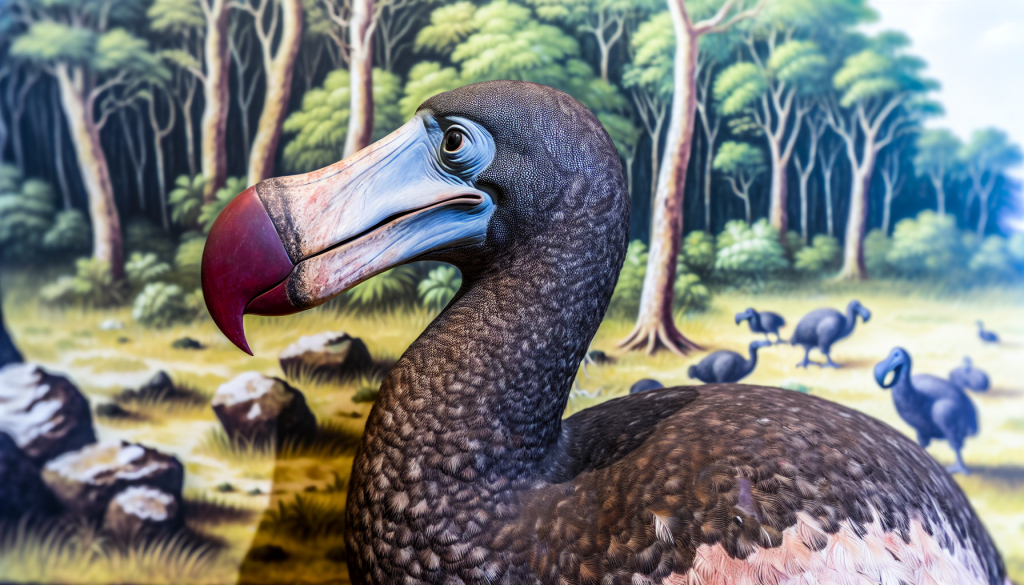
The dodo, a long-extinct, flightless pigeon-like bird, has fascinated people for over four centuries. Now, scientists and artists are uncovering how much its real form has been misunderstood—revealing a more agile, lean creature with a powerful beak.
Karen Fawcett, a palaeoartist specializing in scientifically informed recreations of prehistoric life, took on the difficult task of building the most accurate reconstruction of the dodo to date.
Unlike modern animals, the dodo comes with very limited references. Fawcett explains that she never saw a live bird and had to piece together clues from old drawings and historical descriptions.
“All I had were fragments—artworks and a few skeletal remains,” says Fawcett, reflecting on her work in her Durham, UK studio in 2019.
Many early depictions of the dodo were based on poorly preserved specimens or unhealthy captive birds kept in European collections. Its oddly proportioned wings and feet only added to the complexity of rebuilding its image. “The dodo is instantly recognizable. There’s even a dodo emoji. But nobody alive has ever seen one,” she adds.
Since Dutch explorers first encountered the dodo on Mauritius in 1598, the bird has often been illustrated, though misrepresented. Modern findings suggest it was not the awkward, dull creature of legend, but a capable and well-adapted island dweller.
According to Neil Gostling, a palaeobiologist at the University of Southampton, the bird's notoriety has long symbolized humanity’s role in species extinction. He and other researchers are delving into the dodo’s origins, behavior, and ultimate demise, in hopes of learning lessons for today’s conservation efforts.
Though the dodo is a compelling symbol, researchers are asking whether it can also serve as a guide to protecting endangered species today.
There is little surviving physical evidence to support research. The most notable remains include the Oxford dodo’s dried head and patch of skin, a few scattered bones in Europe, and a handful of skeletal fossils, most assembled from different individuals.
Julian Hume, a scientist and artist at the Natural History Museum in London, has documented all known remains. Only two or three fairly complete skeletons exist, with the rest being composites made from unrelated bones.
Beyond the bones, historical artworks are the only other references—but many are misleading and based on myths.
The dodo instantly captured European imagination in the 16th century. “It was unlike anything they'd seen,” says Gostling. “A tall, bizarre bird that stood out.”
One of the biggest myths, he says, is that the dodo was fat, foolish, and doomed. In truth, it was well-suited to its environment. What it wasn't prepared for was the arrival of invasive species—rats, pigs, cats, and, of course, people.
Only in the past ten years have these ungenerous portrayals been seriously questioned, notes Gostling, who praises Fawcett's model as the most accurate representation yet.
Fawcett spent years studying the dodo before beginning her sculpture. She soon realized that widely known images, such as Roelant Savery’s 1620s painting, were deeply flawed. “It’s more like a swan than a pigeon,” she says of Savery’s work. “He exaggerated the bird’s shape from a badly stuffed specimen.”
Savery’s depiction—distorted as it was—became iconic, even influencing Lewis Carroll’s depiction of the dodo in "Alice’s Adventures in Wonderland" and embedding a lasting but false image in people’s minds.
Hume explains that early scientific descriptions of the dodo didn’t appear until 1848, long after the bird went extinct, and before the theory of evolution helped explain how species adapt. With little to go on, early scientists relied on flawed art for their reconstructions.
However, more accurate sketches do exist. Notably, a Dutch sailor drew dodos in Mauritius in the early 1600s. Hume calls these "the most accurate drawings" we have, as they are the only known illustrations created on the island itself.
These drawings show a more upright, thinner dodo. Fawcett relied on them to shape her model’s head, supported by casts of preserved skulls and parts from the Oxford dodo. She notes that the illustrations reveal a pronounced, curved beak, likely a significant defensive tool.
Another useful reference was a 1625 painting by the Indian artist Ustad Mansur, who depicted a live bird kept by royalty. Fawcett used it for coloration, corroborating her hues with the other birds in the same artwork which still exist today.
Live pigeons also helped inform her creation. Fawcett observed her daughter’s pet pigeon for small details like the eyelids, and baby pigeons helped her envision the dodo's tiny, non-functional wings, believed to aid in balance rather than flight.
Still, Fawcett admits, “Every palaeoart piece involves some guesswork.” Researchers face the same problem. Despite the dodo’s fame, Hume says, much remains unknown about its natural behavior and population before human contact.
Hume, Gostling, and their colleagues are now sifting through over 400 years of records in a recent project, aiming to sort fact from myth.
Sailors of the time often recorded imaginative tales. Gostling points out how stories like that of a “white dodo” on nearby Reunion Island had no basis in reality. "Dodos lived only on Mauritius," he stresses.
When the bird vanished, no one noticed until a century later. At that point, many even began doubting it ever existed. Hume says some considered it implausible for such a creature to disappear—prompting speculation that the dodo was a fictional being.
As ongoing research unravels more of the mystery, Dutch ship logs point to occasional consumption of the bird by humans. However, its tough meat suggests it wasn’t a favored food source.
Ship-introduced animals like rats and pigs are now believed to have led to the dodo’s extinction. Beth Shapiro, a biologist at the University of California, explains how ground-nesting dodos laid a single egg at a time—easy prey for such invasive species.
The number of dodos living on Mauritius before human arrival is unknown. But some early reports describe them as remarkably fast runners in rocky forests, quite agile, and hard to catch in their natural terrain.
Recent research supports this. In 2016, Hume used laser imaging to rebuild a digital model of a dodo skeleton in Mauritius's national museum, giving it a more realistic, upright posture.
Unpublished studies of their foot bones suggest strong tendons once attached there—a trait shared with today's strong runners and climbers. This implies the dodo was well-equipped for quick movement.
Combined, the findings suggest a leaner, faster, more upright bird with sturdy legs—very different from the lumbering caricature seen in popular culture.
Shapiro notes that the dodo had no natural fear of people due to evolving in a predator-free environment. Hume adds that Mauritius's rugged geography likely drove the bird to evolve strong legs to compete with other species like giant tortoises for food in less accessible areas.
Gostling and Hume now aim to digitally recreate how the dodo moved, right down to muscle structure based on bone impressions. However, they are still seeking the funding needed to complete this project.
Meanwhile, efforts of a more ambitious kind are underway. Geneticists at Colossal Biosciences hope to "revive" the dodo using modern gene editing techniques.
In 2022, Shapiro and her team sequenced the dodo’s entire genome using DNA from skeletal remains. The research is still under analysis and aims to reveal what made the dodo unique and how it adapted to island life.
The long-term dream is to alter the genome of the Nicobar pigeon, the dodo’s closest living relative, to express key dodo traits such as larger size and inability to fly. The aim is both conservation and educational—showing how genetic traits influence behavior and appearance.
Other rewilding efforts lend optimism. For example, relocated giant tortoises have helped support native plants in Mauritius, showing how introduced animals can sometimes fill lost ecological roles.
While intrigued by the idea of bringing the dodo back, Hume doubts it will be possible anytime soon. “I hope to see it happen, but I probably won’t,” he admits. He notes that genetically editing birds is a challenge due to their reproductive systems.
Gostling shares that skepticism. “It won’t be a true dodo,” he says, suggesting any creation would be a pigeon with dodo-like features at best.
Still, studying the dodo’s genes offers valuable insights. Hume believes that by understanding and modifying pigeon genetics, scientists could help save endangered birds, like the inbred pink pigeon—Mauritius’s last native pigeon.
Ultimately, the dodo serves as a haunting reminder of extinction—then and now. “Unlike in the 17th century, we now know how easily a species can disappear,” says Gostling. “And we have the knowledge to prevent it—we just need to act.”
Hume points to the tooth-billed pigeon in Samoa, a dodo relative, currently on the brink of extinction. “It’s tragic. Many bird species are right on the edge,” he warns. Recent research even predicts that over 500 avian species could vanish in the next hundred years if current trends continue.
Back in Fawcett’s studio, after shaping the body in Styrofoam, attaching replica wings and a carefully recreated head from preserved references, she cast the final sculpture in resin. The most rewarding moment? Adding the eyes. “That’s when it comes alive,” she says.