Chinese dinosaur eggs dated to 86 million years ago using ‘atomic clock’ technique
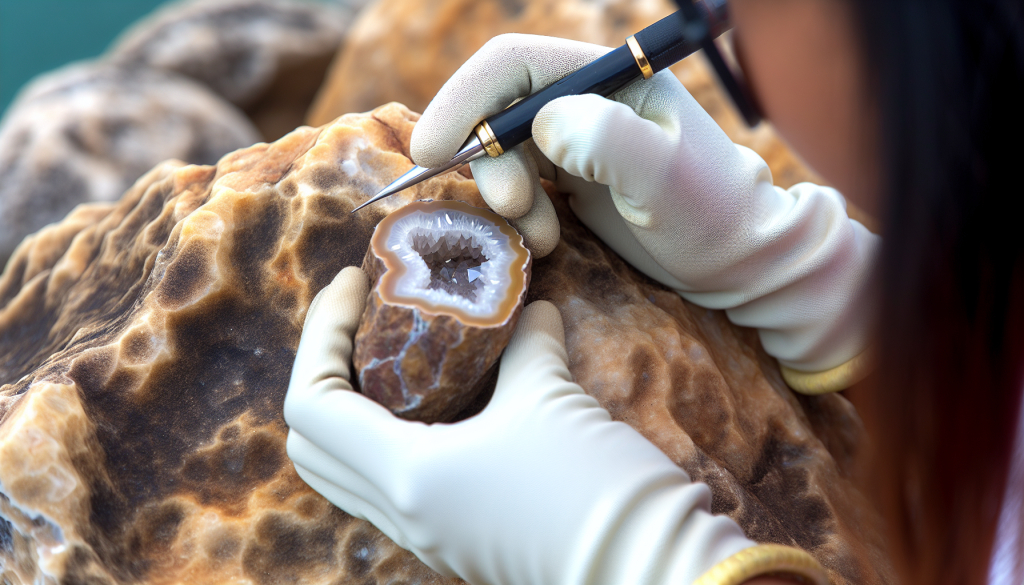
A group of 28 fossilized dinosaur eggs discovered in China's Qinglongshan fossil reserve have been dated to approximately 86 million years ago. Scientists used a precise technique known as “uranium-lead dating” to determine their age. This research may help explain how dinosaurs in the Yunyang Basin responded to changing environmental conditions during Earth's cooling period.
The method used is formally called carbonate uranium-lead (U-Pb) dating and is often employed to measure the age of minerals composed of calcium, magnesium, manganese, and iron. Uranium within these minerals gradually transforms into lead over time through natural radioactive decay.
To analyze the eggshells, researchers used a microscopic laser to remove tiny samples from the fossilized shells. These particles were vaporized, and then the amounts of uranium and lead atoms were measured. The age of the eggs was determined by comparing the proportions of these elements.
The identification of calcite, a kind of calcium carbonate, in the eggshell composition suggested they were suitable for U-Pb dating. According to findings published in the journal Frontiers in Earth Science, these eggs are the first fossils in the Qinglongshan reserve to be assigned an accurate age. This reserve is home to over 3,000 fossilized eggs, many of which are nearly intact and preserved in three dimensions with their original structure maintained.
Most of these eggs belong to the species Placoolithus tumiaolingensis, which falls under the Dendroolithidae family. This classification is based entirely on egg characteristics, as the dinosaur species that laid them remains unidentified. These eggs are oval and range between 4.7 to 6.7 inches (120 to 170 millimeters) in length, with a hard shell approximately 0.09 inch (2.4 millimeters) thick.
The porous nature of the eggshells is notable and may offer insight into the habitat conditions of the era. Since this period—the Cretaceous, spanning 145 to 66 million years ago—was marked by a shift to cooler temperatures, such structural features in the eggs could reflect how these animals adapted to climate changes.
Direct Dating of Fossils
Paleontologists often estimate fossil ages by examining surrounding rock or sediment layers. However, since fossils might settle in an area either earlier or later than the adjacent geological material, this strategy can lead to dating inaccuracies.
According to Bi Zhao, a researcher at the Hubei Institute of Geosciences in Wuhan, the idea to try U-Pb dating on the eggshell calcite began through discussions with scientists experienced in using this method for analyzing stalagmites. Their decision to apply the same analysis to the dinosaur eggs yielded surprisingly dependable results.
Heriberto Rochín-Bañaga, a research associate at the University of Toronto not involved in this study, emphasized that U-Pb analysis remains the most accurate technique available in geochronology. Rochín-Bañaga has used it to date ancient marine fossils such as corals and belemnites—now-extinct squid-like animals.
This dating technique has been applied to rocks ranging in age from one million to hundreds of millions of years, offering high precision, according to Zhao. Although other methods exist for gauging geologic time using radioactive decay, U-Pb remains the gold standard for its accuracy and reliability.
Even so, U-Pb dating isn't commonly used in fossil analysis yet, largely due to the advanced equipment and stringent conditions required. Samples must be meticulously collected to avoid contamination, Zhao explained. Furthermore, the presence of suitable carbonate minerals, like those in the eggshells, is essential for the method to succeed—something that may not be possible with other types of fossils.
Zhao noted that although this method could theoretically work on other fossils containing similar carbonates, its usefulness depends on how well the minerals are preserved and the broader geological context in which they're found.
Insights into the Cretaceous Era
The Qinglongshan fossil site offers a unique glimpse into life during the Cretaceous period, particularly in terms of egg-laying behaviors and how dinosaurs may have adapted to environmental shifts.
The openness of the eggshells may have served an evolutionary function, possibly making it easier for embryos to receive oxygen, though it’s still unclear whether this feature was advantageous as the climate cooled.
Building upon this successful use of U-Pb dating, researchers now plan to apply the technique to other fossil egg sites from the same period. The goal is to deepen understanding of how specific dinosaur species evolved and reproduced. With over 200 fossilized egg sites identified globally, only a few have been dated with precision. Introducing U-Pb dating as a standard analytical tool could greatly enhance knowledge about how reproduction evolved in dinosaurs.
"Widespread use of this method," Zhao said, "could provide a detailed timeline for dinosaur reproductive patterns and adaptations."