A rare Archaeopteryx fossil withheld from researchers for years finally studied—yields a series of astonishing findings
Subscribe to CNN’s Wonder Theory newsletter to delve into the wonders of science. Discover incredible breakthroughs, intriguing research, and fascinating cosmic stories.
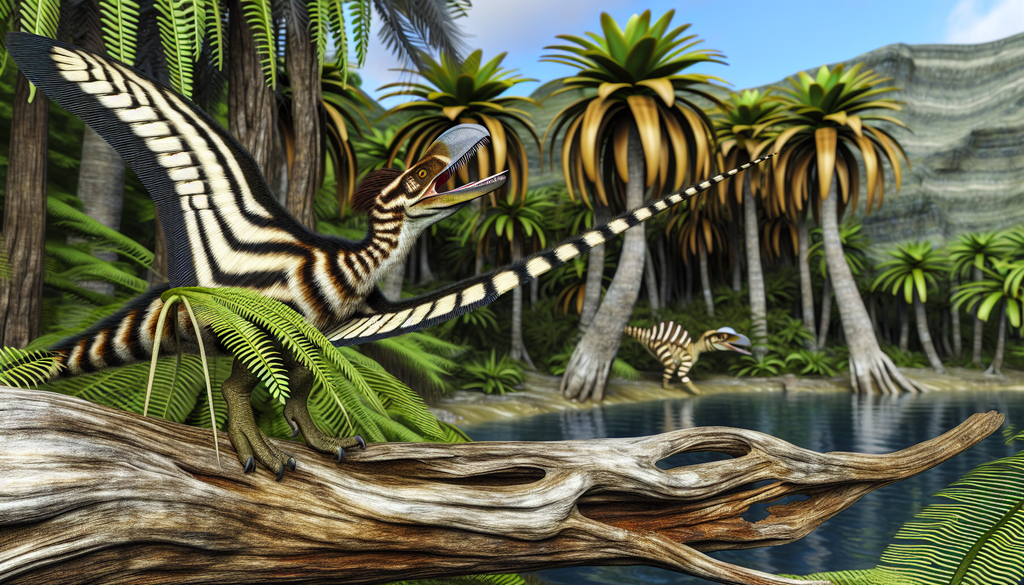
Fossils that preserve entire animals as they appeared in death give us a rare glimpse into the distant past. Such is the case for multiple finds of Archaeopteryx—the earliest known bird—and a newly studied, long-inaccessible fossil now reveals fresh insights into whether or not Archaeopteryx could truly fly.
Scientists have debated for years how Archaeopteryx managed to take to the skies while other feathered dinosaurs stayed earthbound. Some believed it was more of a glider than a flier. Discovered over 160 years ago in southern Germany, these rare fossils—14 known so far from approximately 150 million years ago—have long captivated paleontologists. However, several specimens ended up in private collections, limiting research into one of evolution’s major breakthroughs.
Now, the Field Museum of Natural History in Chicago has acquired one such fossil, archived out of scientific reach for decades. Published May 14 in the journal Nature, researchers revealed that this remarkably preserved, pigeon-sized specimen uncovered never-before-seen structures using ultraviolet (UV) light and CT scans. The new data suggest the ancient bird possessed feathers suited for powered flight.
Lead author Dr. Jingmai O’Connor, a paleontologist and associate curator of fossil reptiles at the Field Museum, noted that most Archaeopteryx fossils are fragmented and crushed. But this one, intact except for a single missing digit, has remained impressively three-dimensional.
“The preservation of the bones in 3D is phenomenal—unlike anything we’ve seen before,” O’Connor told CNN. “Plus, we have more fossilized soft tissue on this specimen than any previously studied fossil of its kind.”
Flight-Ready Plumage
The fossil underwent a meticulous preparation process led by Field Museum experts Akiko Shinya and Constance Van Beek, who, alongside other scientists, worked for more than a year. This included hundreds of hours modeling bones in 3D, carefully removing stone fragments, and using UV light to distinguish between tissue and rock.
After approximately 1,600 hours of preparation, the efforts paid off. For the first time ever, scientists found evidence of tertial feathers—flight feathers attached to the upper arm—confirmed on an Archaeopteryx. These feathers, critical for sustained flight in modern birds, had long been suspected based on bone length, but this discovery confirms their existence.
Related article: Newly discovered ancient cicada fossil reveals detailed wing patterns.
Even more surprises emerged. The shape of the toe pad scales hinted the bird foraged on the ground, like today’s doves and pigeons. Bones in the mouth's roof illuminated the early development of cranial kinesis—the ability of birds to move parts of the skull independently, enhancing control over feeding through a mobile beak.
“It was just one amazing revelation after another,” said O’Connor.
Dr. Susan Chapman, a Clemson University biologist who studies bird evolution, called the find remarkable. Although she was not involved in the research, she praised the thorough fossil preparation, which preserved both bone and delicate tissue structures.
“Thanks to the meticulous work done on this fossil, we’ve gained crucial new insights into this evolutionary link between dinosaurs and birds,” Chapman said in a statement to CNN.
However, she noted that while Archaeopteryx had flight-enabling feathers, it likely only managed brief bursts of flight and lacked key muscular and skeletal adaptations—like the keel bone—that modern birds use for powerful flying.
A Defining Moment in Evolution
The Field Museum acquired the specimen in 2022, and museum president Julian Siggers described it as the most significant fossil addition since acquiring SUE the T. rex.
Serving as a bridge from non-avian theropods to modern birds, Archaeopteryx is a vital figure in storytelling Earth’s evolutionary tapestry. According to O’Connor, the fossil was a gamble—it had been privately owned since 1990, and its preservation was uncertain. What researchers found vastly exceeded expectations.
“When I heard we were getting an Archaeopteryx, I never dreamed we’d see one so exceptionally preserved,” said O’Connor. “This fossil represents one of the most critical evolutionary transitions in vertebrate history. It led to the dynamic, diverse bird lineage we see thriving today.”
Chapman emphasized the importance of prioritizing scientific access to such specimens. Private collections can hinder research and result in poorly prepared fossils that strip away soft tissue details crucial to understanding evolution.
Related article: Ancient three-eyed predator was ‘unlike any living animal’
O’Connor believes this is only the beginning for the Chicago fossil. With a wealth of data already gathered and ongoing analysis, more discoveries are expected from this unique specimen.
“There’s so much more still to learn,” she said. “I hope others find it as thrilling as I do.”
About the author: Mindy Weisberger is a science communicator and producer whose contributions can be found in Live Science, Scientific American, and How It Works. She is also the author of “Rise of the Zombie Bugs: The Surprising Science of Parasitic Mind Control” (Hopkins Press).