Boris Johnson, J-Lo, and the most furious play ever: the strange ways UK television tackled the US election
If you're not among the top-tier political enthusiasts, the best way to handle US election night is to simply check your phone after waking up, groan, and drift back to sleep. After all, for those following from rainy UK shores, the significant developments don’t happen until well past 4am.
Tell that to the UK’s media, though. They have a tendency to treat US elections much like an over-eager dog encountering a lamppost—it’s impossible to resist. Both BBC and ITV launched their election coverage just before 11pm, long before any meaningful results were due. Channel 4? They jumped in even earlier, starting at 10pm. Sky News was the true frontrunner here, airing split-screen shots of lifeless polling booths and sad-looking lawn signs from 7.30pm, in what could be best described as a boring Slow TV version of 24.
Typically, one might turn to the BBC expecting a display of gravitas and ceremony. However, their coverage this time felt oddly muted, impersonal—even robotic. Bathed in purple hues and plastered with forced grins, the broadcast felt oddly anonymous. None of the major household names made any significant appearances, leaving it with the air of something you'd only watch if stuck in a work hotel with little else available.
At least ITV seemed to take the event with a touch more seriousness. The familiar face of Tom Bradby, the channel’s go-to anchor for all-nighters, was in for the long haul. His role during the UK election night was similarly taxing, which leads one to wonder if Bradby might combust upon exposure to sunlight. The star of the show, though, was the guest lineup. Sarah Palin was practically omnipresent, to the point she could have been considered an unofficial co-host. J-Lo even made a fleeting appearance to voice her support for Kamala Harris. Aside from that, ITV’s coverage was solid and predictable—dependable, but not particularly riveting. The looming thought was that the final verdict wouldn’t come until Good Morning Britain had begun.
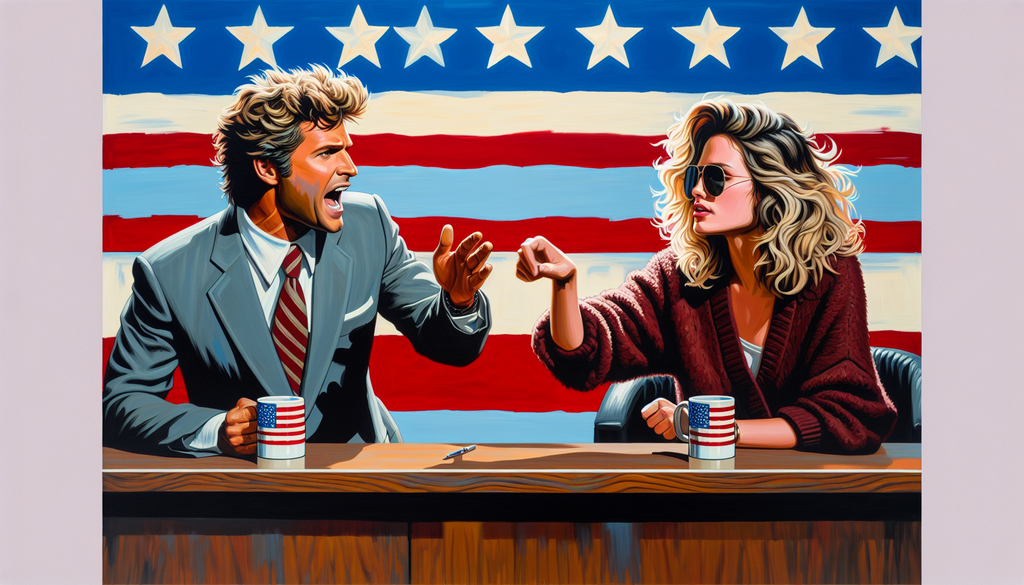
But perhaps meticulous vote-tallying wasn’t your idea of election night fun. Maybe instead, you wanted to witness festering irritation in an overly cramped room. Enter Channel 4. It’s hard to convey just how angrily intense their setup was. In what could only be described as an overcrowded triangular table setting, Krishnan Guru-Murthy and Emily Maitlis spent hours barely masking their contempt for whatever their guests had to say.
Sign up to What's On
Get the latest reviews, TV highlights, and exclusive features delivered to your inbox every Monday.
Now, this barely concealed hostility occasionally boiled over into pure, raw rage. Boris Johnson was roped in as the star guest for the first two hours, nominally to promote his book. What happened in reality was far more chaotic. He became a stand-in for Donald Trump, grilled and shouted down by the hosts at every ill-advised word. Sean Spicer made an appearance too—his anger so obvious it looked like his head might explode. Stormy Daniels also popped by, only to witness, wide-eyed and bewildered, as the room erupted into dysfunctional family-style shouting matches around her.
As the hours trickled by, this fury subsided into a gloomy sense of frustration. Channel 4’s audience, especially those from tense family homes, must have left the broadcast emotionally wrung out. As political analysis, the coverage fell flat. But as an on-stage disaster in the form of choreographed outrage? Brilliant. Run this theater piece every night, please.
That said, some may have found a better alternative in the format offered by the Rest Is Politics podcast. Operating safely away from the limelight on YouTube—with a panel featuring figures like Marina Hyde, historian Dominic Sandbrook, and former Trump staffer Anthony Scaramucci—hosts Alastair Campbell and Rory Stewart helmed the evening from 8pm to midnight.
And here’s the clever part—they simply walked away. Come midnight, the whole broadcast went dark for five hours before resuming at 5am. By that point, their once confident predictions of a Harris victory had crumbled, and they spent the morning dissecting the very echo chamber that led them down such a faulty path. Their approach didn’t revolutionize election night coverage, but it offered a refreshingly sane strategy—get some sleep, then deal with the fallout. Perhaps, come 2028, this is how we all should tackle it.