Qantas is phasing out its A380s. Is it time to farewell the superjumbo?
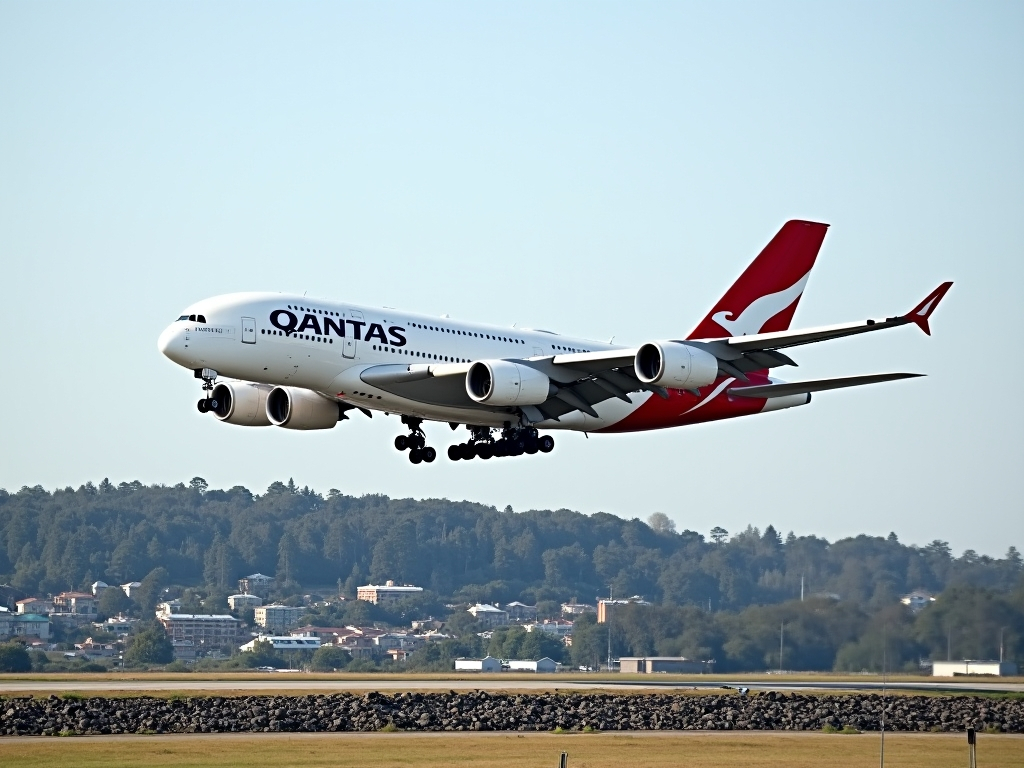
It is huge. It is beloved by aviation fans. It is unmistakably past its peak. And it has returned from the brink more times than many expected.
Yet as Australia’s national carrier Qantas prepares to phase out its fleet of Airbus A380 superjumbos, known for their spacious full-length double decks, a larger question remains: has the world’s biggest passenger aircraft finally reached the end of its era?
Qantas announced in August that it intends to begin retiring its 10 A380s in 2028, four years sooner than previously planned. The airline pointed to mounting fuel and maintenance expenses, a problem that has also troubled other carriers still flying the enormous jet.
The move is another sign of the A380’s long decline. Around 171 aircraft remain active today, compared with a peak global fleet of more than 230 in the late 2010s, according to industry data. Airbus ended production in 2021 when demand disappeared. During the Covid-19 crisis, airlines such as Air France and Thai Airways permanently withdrew their A380 fleets while international travel faced an uncertain future.
It also highlights a broader change in high-end air travel. When the A380 entered service, it became a symbol of rapidly expanding Middle Eastern airlines that used its size and glamour to win premium passengers. Today, competitors around the world have upgraded their own products, and the superjumbo is no longer the unique advantage it once was.
Still, the A380 has survived predictions of its demise before.
During the quietest months of the pandemic, many observers assumed the aircraft was finished. Airlines appeared to be moving toward smaller, more efficient long-haul jets capable of flying directly between more cities, reducing the importance of giant hub-to-hub aircraft. But strong passenger affection for the A380, combined with delays in deliveries of newer Airbus and Boeing models, helped bring it back into service.
‘A more comfortable flight’
Qantas has not confirmed the final date on which an A380 will fly in Flying Kangaroo colors. Even so, the airline’s decision may offer a glimpse of the aircraft’s eventual future. Qantas has long been one of the jet’s most loyal operators.
“This aircraft has not been produced since 2021,” Cam Wallace, chief executive of Qantas International and Freight, recently told investors. “There are already supply chain challenges today, and we expect those constraints to continue in the future.”
The news will disappoint many passengers who have a particular affection for the A380. The aircraft is widely praised for its quiet cabin, stable ride and sense of roominess. Boarding upstairs remains a novelty, while its ability to carry well over 500 travelers gives it a scale few other passenger jets can match.
The world’s most memorable passenger aircraft have often been defined by more than just efficiency.
Aircraft enthusiasts will feel the loss as well. Watching the giant plane lift into the air or descend toward a runway can still seem almost impossible, its vast wings and broad fuselage appearing to challenge gravity in a way smaller aircraft do not.
“It is my favorite airplane,” said Sebastian Barney, a Melbourne-based Qantas frequent flyer who regularly travels between Australia and the United States. “It feels more spacious and gives you a smoother flight” than many other aircraft.
The encouraging news for fans is that, although the aircraft’s final chapter may be underway, the A380 is likely to remain in airline service for several more years.
Two different futures
George Dimitroff, global head of aircraft valuations at aviation analytics company Cirium, says the A380 market is increasingly divided into two camps: Emirates and almost everyone else.
Emirates, by far the biggest A380 operator, has built much of its Dubai hub operation around the aircraft. Other airlines generally own only a small number and deploy them on a limited set of especially busy routes.
“Airlines with smaller A380 fleets are likely to retire them,” Dimitroff said. “That is particularly true as the industry increasingly puts its focus on premium travel.”
He added: “Eventually, it may become an Emirates-only aircraft.”
Many analysts share that view. Emirates operates 101 A380s and has another 15 in storage, according to industry figures. Replacing such a large fleet would take many years, even if the airline decided to move away from the aircraft, because of current aircraft production limits.
“Emirates expects to operate the A380 into the early 2040s, which is why we are investing billions in refurbishing our aircraft with updated interiors and new technology,” Emirates president Tim Clark said in a statement.
“The Emirates A380 continues to attract customers, reinforce our brand and provide unmatched capacity as demand continues to grow,” he added.
Emirates received the final A380 ever built in 2021.
Other carriers do not depend on the superjumbo to the same extent, though several have committed to keeping it in operation for much of the next decade.
Lufthansa Group chief executive Carsten Spohr said in 2021 that the company had “permanently decommissioned” the A380. Just two years later, the aircraft returned because Airbus and Boeing faced major delivery delays, including continued setbacks involving the Boeing 777X.
Lufthansa is now modernizing the business-class cabins and entertainment systems on its eight remaining A380s, indicating that the aircraft will remain part of its fleet for some time. A company spokesperson said the airline expects to operate the A380 “well into the 2030s.”
All Nippon Airways, British Airways, Singapore Airlines and other operators have also not announced immediate retirement plans. “They remain among our most popular aircraft,” a Singapore Airlines spokesperson said.
For the moment, A380s will remain familiar sights at major international airports, including London, Munich, Dubai, Singapore and other global hubs.
Changing priorities
One important reason behind the A380’s fading role is the changing nature of premium travel. During its relatively short golden age, airlines generally focused on filling large economy cabins, with fewer seats devoted to first class and business class.
Gulf carriers helped reshape that model. They used the A380’s massive cabin to create extravagant premium experiences for high-paying customers. Emirates introduced showers onboard, while Etihad Airways in Abu Dhabi unveiled The Residence, a private three-room space with its own dedicated attendant.
But luxury aviation has changed again. Gulf airlines are no longer the sole leaders in premium service. Carriers from Air France and Japan Airlines to Lufthansa have dramatically improved their top cabins. Private suites have become common in business class, while showers in the sky have remained a rare and limited feature.
Qantas is set to follow the wider premium trend with the aircraft that will replace its A380s. Wallace told investors that the airline’s incoming Airbus A350-1000s will feature a greater proportion of first class, business class and premium economy seats than the retiring superjumbos. The plan is to offer more high-value seats to travelers willing to pay for greater comfort on long international flights.
More premium cabins can also mean fewer economy seats and higher prices for passengers at the back of the plane. That may be less welcome news for travelers trying to keep fares low.
The A380 remains one of the most extraordinary commercial aircraft ever placed into service.
Like the Boeing 747 before it, the A380 is likely to disappear gradually rather than all at once. Airlines will withdraw their fleets one by one until Emirates may be the only major operator left. Some entrepreneurs may seek to give the aircraft a second life through specialist A380-only services, but industry experts do not expect that to develop into a meaningful market.
Most forecasts suggest the A380 could become an Emirates-only aircraft sometime in the early or middle part of the 2030s.
The disappearance of the A380 will certainly reduce some of the spectacle associated with airlines that retire the type. But aviation analysts believe most carriers will accept that trade-off without much hesitation.
“Airlines now operate for profit rather than prestige,” said Henry Harteveldt, a travel industry analyst and president of Atmosphere Research Group. “They do not want to keep an aircraft merely for status if it cannot deliver the financial return they need.”
He said the A380 was intended as a flagship aircraft for Airbus, but it never achieved the sales volumes the manufacturer anticipated. Its appeal steadily weakened as newer aircraft entered the market with longer range, lower fuel consumption and increasingly sophisticated cabins.
“The A380 is an engineering achievement, but it was a commercial disappointment for Airbus,” Harteveldt said. “As more efficient long-range aircraft become available, airlines are finding that smaller can be better.”