
The world’s leading cities for 2026 — and what makes them exceptional
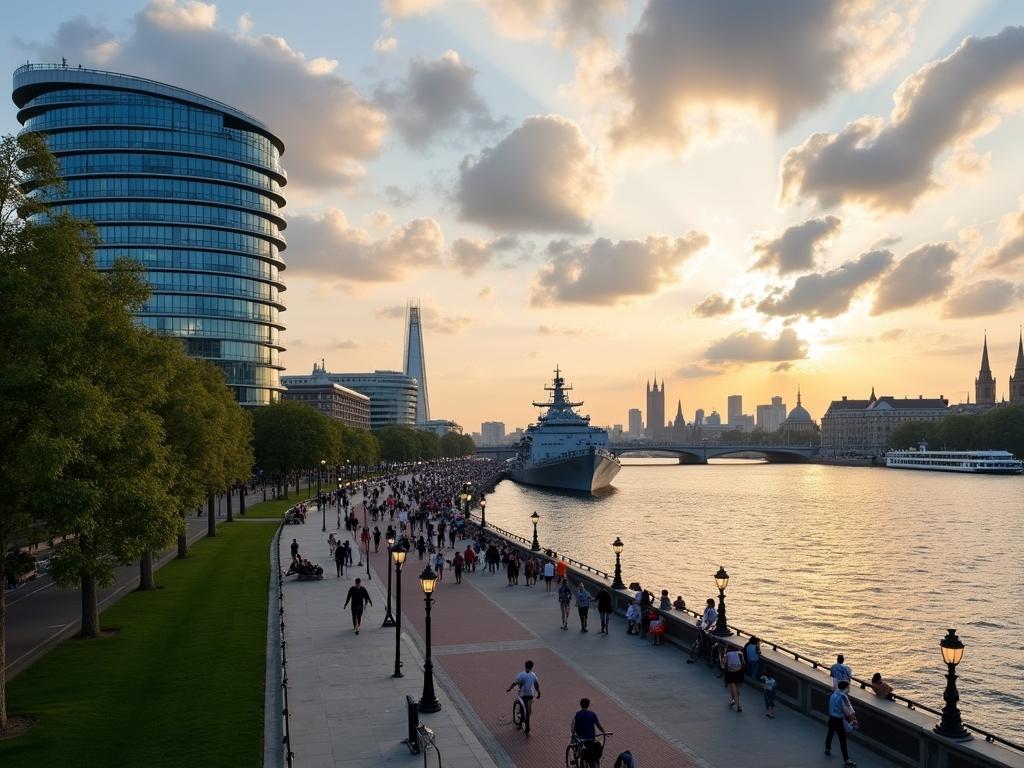
From major cultural institutions to advanced technology, the 2026 Global Cities Index highlights the qualities that make the world’s leading urban destinations attractive places to live in and explore.
What allows a city to command global attention – and what turns it into a rewarding destination for visitors? Oxford Economics’ 2026 Global Cities Index suggests the answer involves much more than financial strength or striking landmarks.
The index assesses 1,000 cities across five categories: governance, economics, human capital, environment and quality of life. New York, London and Paris lead this year’s rankings, with cities such as Seattle and Dublin also performing strongly.
Among the top-ranked cities and notable contenders, four recurring strengths emerge. Together, they show why certain places continue to appeal to residents and travellers alike.
The highest-scoring cities often excel in human capital, which reflects the education, expertise and diversity of their residents. New talent and fresh ideas can influence everything from local districts to dining and creative life, improving the experience for both communities and visitors.
Boston, which places seventh in the index, earns particularly strong marks for human capital because of its remarkable number of prominent colleges and universities. Its powerful knowledge-based economy supports some of the world’s highest incomes. Part of that prosperity has been invested in shared spaces, including the Rose Kennedy Greenway, where a former elevated road has been transformed into gardens, fountains and outdoor art. Cultural venues such as the Harvard Art Museums also welcome the public.
Dublin, in sixth place, is supported by a highly qualified workforce shaped by institutions including Trinity College Dublin. This has attracted major global employers such as Google, Meta, Microsoft and Accenture, while also helping fuel the renewal of former docklands and public areas along the River Liffey.
London stands out even more clearly: it takes first place for human capital, attracting professionals from across the globe. Nearly 40% of its residents were born abroad. That international character has helped reinvent a food culture once dismissed by outsiders, with visitors now able to experience its range from Brick Lane to Borough Market.
Still, economic success by itself does not guarantee an appealing city. Paris, ranked third overall, performs especially well for quality of life, supported by long life expectancy and remarkable cultural access. The city has roughly 130 museums, and 11 municipal institutions have offered free entry to permanent collections since 2001, regardless of visitors’ nationality or residence. Many other museums provide free admission on selected days each month.
Seattle, fourth overall, also benefits from a high quality-of-life rating. The report notes its extensive arts scene, including the Seattle Art Museum, as well as its important grunge legacy, which produced bands such as Nirvana and Pearl Jam. The city has also recently completed its 20-acre Waterfront Park, replacing a former motorway with a promenade featuring community piers, cycling routes and views across Puget Sound.
A city may be lively, innovative and full of culture, yet poor air conditions or inconvenient transport can soon undermine the experience for visitors.
Despite its enormous scale, London performs notably well in environmental measures for a city of its size. Oxford Economics identifies initiatives including the congestion charge and Ultra-Low Emission Zone as policies that have helped curb traffic and pollution. For travellers, the result can be felt in central streets that are less dominated by cars.
San Francisco also receives strong environmental marks. Its transport system is identified as one reason why both residents and visitors are less dependent on private vehicles, helping maintain lower emissions and better air quality. Dublin scores well in this area too, due to relatively low pollution and ambitious climate policies, including a target of climate neutrality by 2030.
Technology is driving several of the index’s fastest-moving cities. San Jose, ranked eighth overall, recorded the highest GDP per person in the study, supported by Silicon Valley companies including Alphabet, Apple and Nvidia. In nearby San Francisco, where firms such as Meta, Uber and Salesforce are based, autonomous vehicles have become part of daily transport, giving visitors an early view of how mobility could change in other cities.
Tallinn, Estonia’s capital, also appears on the index’s Cities to Watch list because of its growing technology sector and comparatively high adoption of artificial intelligence among European capitals. Projects such as Rail Baltica, planned to link rail routes across the Baltic region by 2030, are being developed as digitally native infrastructure. The railway is intended to run entirely on renewable power and use 5G communication systems rather than conventional physical signal lights.



