Lakeside bliss: relaxed cycling and autumn walks around Italy’s Lake Iseo
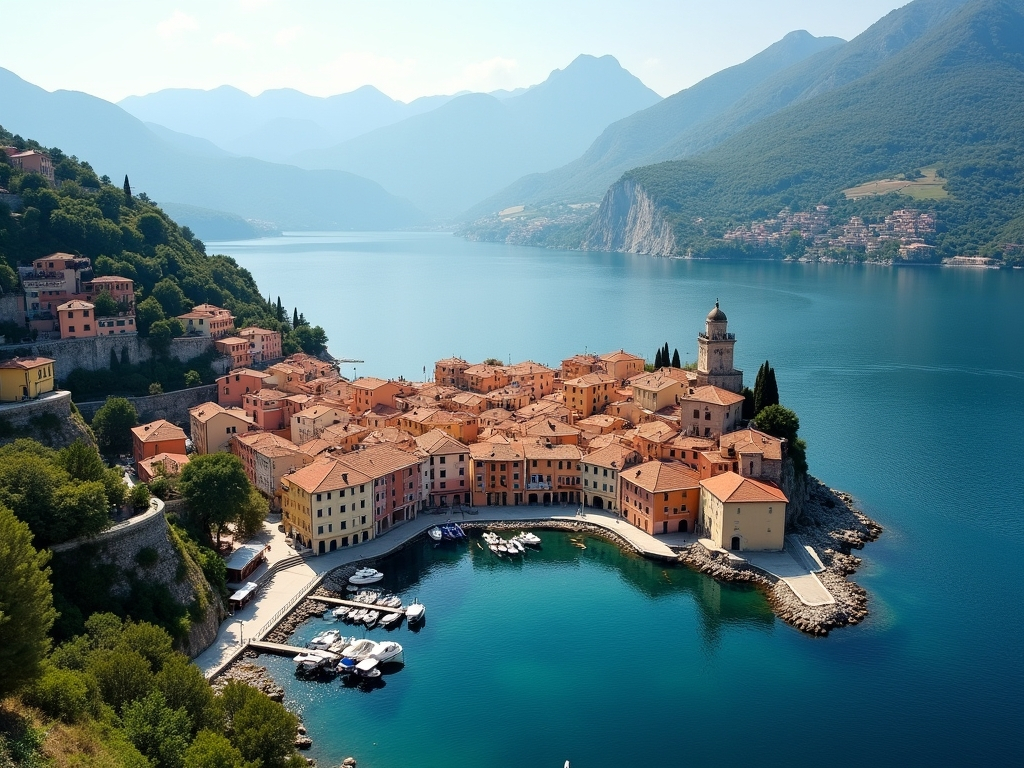
Rust-red leaves and burnt sienna tones scatter across the green slopes rising from Lake Iseo, while soft autumn sunshine glitters on the water below. Monte Isola, the largest island on an Italian lake, is a rugged mix of steep cliffs, thick woodland, fishing settlements and small villages clinging to the hillsides. It has the charm of Lake Como and Lake Garda, yet without their crowds. I reach the little harbour of Peschiera Maraglio on a ferry from Sulzano, a journey of barely five minutes across the lake. Striped wooden boats bob beside the quay, recalling Venice’s gondolas.
“Just three people on the island can have a car: the mayor, the doctor and the priest,” says Chiara, my guide from Brescia. Locals travel the sharply sloping lanes by moped, while a few compact buses make regular circuits around the island. Otherwise, cars are almost entirely absent, leaving visitors to get around by bicycle or on foot.
Bicycles cannot be taken aboard the boats at weekends, but that is hardly a problem. The waterfront is full of places hiring them out, with standard bikes available from €4 an hour. I am usually hesitant on two wheels, but the lack of traffic makes cycling feel far less intimidating. Most of the other riders have the slightly uncertain wobble of beginners too. This is not a destination for racing gear and speed records. The calm, well-maintained roads invite easy pedalling and frequent pauses to admire Lake Iseo from another angle.
The circular route follows the lakeshore past olive trees spilling down towards the water. I had expected chilly late-autumn weather and packed for it, yet the temperature reaches 24C and I am soon warm in shorts and a T-shirt. I pass through Sensole, a tiny settlement on the south-western side of the island, then stop in nearby Menzino. A cafe-bar welcomes cyclists, and an espresso with a lake view feels like the ideal reward.
On the western side, the scenery is slightly interrupted by a large concrete works across the water, so I focus on the road towards Siviano, the island’s main town. Its quiet lanes seem almost deserted. Villas in shades of orange, pale yellow and magnolia climb the slopes, broken up by the imposing church of Santi Faustino e Giovita and a medieval stone tower. Monte Isola has been settled since Roman times. Venetian influence during the 15th and 16th centuries gave its villages a look similar to towns around Garda and Como, with shuttered pastel homes stacked along hillside terraces. By the end of the 18th century, net making had become the island’s main trade. At Retificio La Rete Srl near Siviano’s harbour, nets are still woven by hand for fishing, sports goals, shopping bags and hammocks.
At the island’s northern end, the most dramatic mountain views come into sight. To the south, Lake Iseo is framed by pale bell towers, low rolling hills and vineyards producing franciacorta wine. In the north, the landscape grows sharper and wilder, with jagged peaks plunging towards deep green water. Just offshore lies Isola di Loreto, a tiny island crowned by an impressive castle-like residence. Chiara explains that it is privately owned. A group of kayakers from Marone paddle silently towards its private landing place over the almost motionless lake.
In Carzano, I stop to look at the pink-and-white exterior of San Giovanni Battista church before continuing along the plainer eastern road. The car-free calm is briefly interrupted by an elderly Fiat Punto creeping carefully past. Perhaps, I wonder, it belongs to the doctor or the priest.
I finish the loop back in Peschiera Maraglio, ready for a late lunch of lake fish at La Foresta restaurant. There is pickled tench, sharp enough with vinegar to make my mouth water, followed by chub carpaccio with a clean, fresh flavour. The island speciality is dried and salted sardinas served over grilled polenta. “Sardina does not mean sardine,” Chiara tells me. “It is actually a kind of shad. In the Middle Ages, Monte Isola owed taxes to Venice, and because the residents did not really use money, they paid with salted sardinas.”
When the final ferries depart in the evening, Peschiera Maraglio feels wonderfully empty. Places to stay tend to be private holiday flats or restaurants with a few rooms attached. At Decio, a sleek contemporary bistro occupies the ground floor, with several stylish bedrooms upstairs. Its glass frontage opens onto uninterrupted lake views, and sunset fills the room with rich orange light. Later, I sit outside L’Isola dei Sapori, a simple open-air spot where well-chilled sparkling franciacorta is served with small plates of local salami, olives and fish for an easy dinner.
The following morning, I leave the bicycle behind and pull on hiking boots. The steep route to the summit begins in the narrow cobbled lanes of Peschiera Maraglio before disappearing into dense chestnut woodland. I pick up an especially large conker and tuck it into my pocket, unable to ignore an old childhood instinct. The climb rises about 450 metres, and my legs soon feel the effort. Stones and tangled roots break through the trail, with a steep drop on one side, but every glimpse of Lake Iseo through the trees makes the climb worthwhile.
After about an hour, the forest opens and I arrive at the Santuario della Madonna della Ceriola. The brilliant white sanctuary dates to the 13th century and stands on the site of an earlier pagan temple and early Christian chapels. Inside are elaborate frescoes and a broad golden altar, although the real highlight is the sweeping view from outside. Far below, the ferry heading for Sulzano resembles a toy boat, trailing a thin white line across the lake.
From this height, it is easy to see autumn gradually taking hold in the forest canopy. I wipe sweat from my face and look out over the changing colours. The panorama will become even more beautiful as the season deepens, and there are surely plenty more prize conkers still waiting to fall.
Bike hire on Monte Isola starts from €4 an hour. Ferries from Sulzano to Monte Isola cost €2.60 each way, while trains between Brescia and Sulzano start from €4.10. Rooms at Decio are available from around €90 including breakfast.