‘Little hope’: Ukrainians question Russia’s willingness to halt war during talks
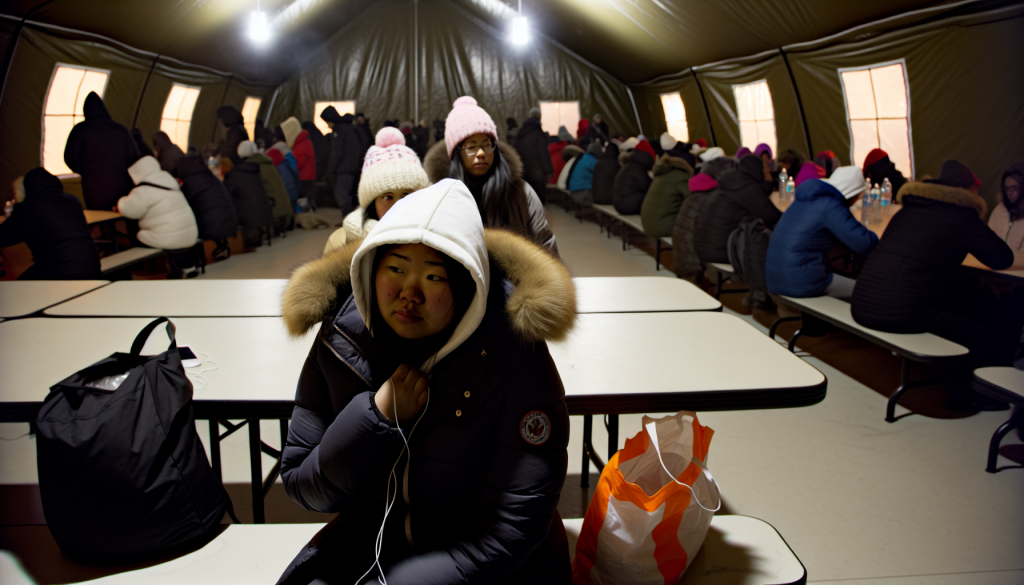
Kyiv, Ukraine – In a dimly-lit passageway to a Kyiv metro station, 34-year-old florist Snizhana Petradkhina pulled her hands from her thick winter coat, revealing two small hand warmers.
“These are keeping me going today,” she shared, standing beneath a flickering lamp at her flower stall. “I’m so tired of the cold, and the darkness. But more than anything, everyone in Ukraine is tired of this war. We just want peaceful nights — no drones, no bombs.”
This winter, constant strikes on Ukraine’s power facilities by Russia have plunged Kyiv into repeated blackouts, leaving many residents without light or water during the freezing temperatures.
The weariness from war, however, has been long felt. The once-alarming air raid sirens that wail through the capital each day now go mostly unnoticed by residents.
What began nearly four years ago as a sudden invasion has become a slow and grinding struggle, marked by destruction and attrition.
Recent diplomatic discussions among Ukrainian, Russian, U.S., and Emirati representatives in Abu Dhabi gave some hope, with officials calling the talks a potential step toward peace. Yet, on the streets of Kyiv, skepticism prevails.
“I don’t believe the war is ending any time soon,” said Igor Novikov, a former adviser to President Volodymyr Zelenskyy, speaking from his office overlooking the city. “It’s better to be talking than silent, but I’m not hopeful for quick progress.”
In his view, peace will only come either if Russia decides to halt the war or if significant pressure is placed on Moscow to change course.
But he doubts either possibility will emerge before spring, once Russia concludes its current campaign aimed at crippling Ukraine’s power grid.
Novikov suggested that President Putin aims to exhaust the Ukrainian people and create internal instability. Yet he added that, time and again, Ukrainians have shown resilience.
The U.S.-facilitated talks in the Gulf state wrapped up without any firm agreements.
President Zelenskyy, who dispatched Ukraine’s key negotiators including intelligence chief Kyrylo Budanov and main envoy Rustem Umerov, said the talks were useful.
“The discussions centered on what a path to peace could possibly look like. I appreciate the recognition of the need for American involvement and monitoring to ensure meaningful security,” Zelenskyy stated.
He noted that further discussions might take place, provided there’s willingness to move forward.
Just hours before the second day of meetings, Russia launched over 100 drones and several missiles toward Kyiv. The attack forced people to rush into the underground metro for shelter during the night, shrouded in total darkness.
‘I’ve made up my mind to join the front line’
Maksym Fomin, a 20-year-old bartender preparing to join the military, said everything was terrifying when war broke out. Now, the fear has faded, replaced by numbness — even as new high-speed missiles and infrastructure attacks continue.
He is skeptical about outside support.
“After four years of fighting, I’ve decided to leave my job and serve on the front. It’s on us, the younger generation, to defend our country and reclaim what’s ours,” said Fomin, originally from Poltava, roughly 300 kilometers southeast of Kyiv.
Katarina, 37, also from Poltava and speaking on condition of partial anonymity, recalled how strong the spirit of unity was at the outbreak of the invasion in early 2022.
Neighbors helped each other, united by shared hardship. But recently, tensions have grown, with residents arguing over who gets to use a shared generator during prolonged blackouts.
“People are worn out,” she said. “We just want to live normally again — that’s not too much to ask.”
‘Ukraine has partners – not allies’
Oleksandr Khara, who leads Kyiv’s Centre for Defence Strategies, questioned the significance of the Abu Dhabi meeting, insisting real negotiations would need a genuine change in Russia’s mindset.
He argued that Russia feels it has the upper hand and sees little reason to stop, especially as it gains ground — slowly, but steadily — and with signals of sympathy from U.S. political figures.
As long as Russia gives no meaningful concessions, Khara said, Ukraine has no cause to compromise.
“Both sides are trying to keep the U.S. engaged in their own ways,” he remarked.
He believes Ukraine doesn't have traditional allies, but rather dependable partners — mainly smaller nations like Poland, the Baltic States, and Nordic countries.
He added that while the current U.S. administration isn’t antagonistic, it has proven unreliable because of delays in support and the contrasting stance of U.S. figures favorable toward Putin.
Meanwhile, in the chilled air of Kyiv’s subdued passageways, florist Petradkhina spoke about a paradox many Ukrainians now live with.
“I want this war to be over. I want my child to sleep without fear. I want to take the elevator to our apartment on the 23rd floor, to swim in the Black Sea again,” she said. “But I can't agree to giving up land where so many died. That might be hard for people in other countries to understand, but it’s my truth.”