
‘We heard the roof giving way’: how Russian strikes ravaged Kyiv’s cultural landmarks
For four years, Vitalina Martynovska and her colleagues had been preparing a full-scale renewal of Kyiv’s National Chornobyl Museum.
The redesigned galleries featured modern, streamlined displays intended to present a renewed narrative of the reactor explosion on 26 April 1986 — the gravest nuclear disaster in history. The catastrophe hastened the collapse of the Soviet Union and remains a defining event in Ukraine’s modern identity.
The updated museum was meant to highlight not only the heroic efforts of the “liquidators” who carried out the initial cleanup. It would also tell the broader story “of everyone whose lives were transformed by the disaster,” said Martynovska, the museum’s director.
The institution welcomed visitors again on 26 April, exactly 40 years after the explosion.
Less than a month later, on the night of 23 May, a powerful shock wave from a Russian missile struck the museum’s historic home — a former fire station — causing catastrophic damage.
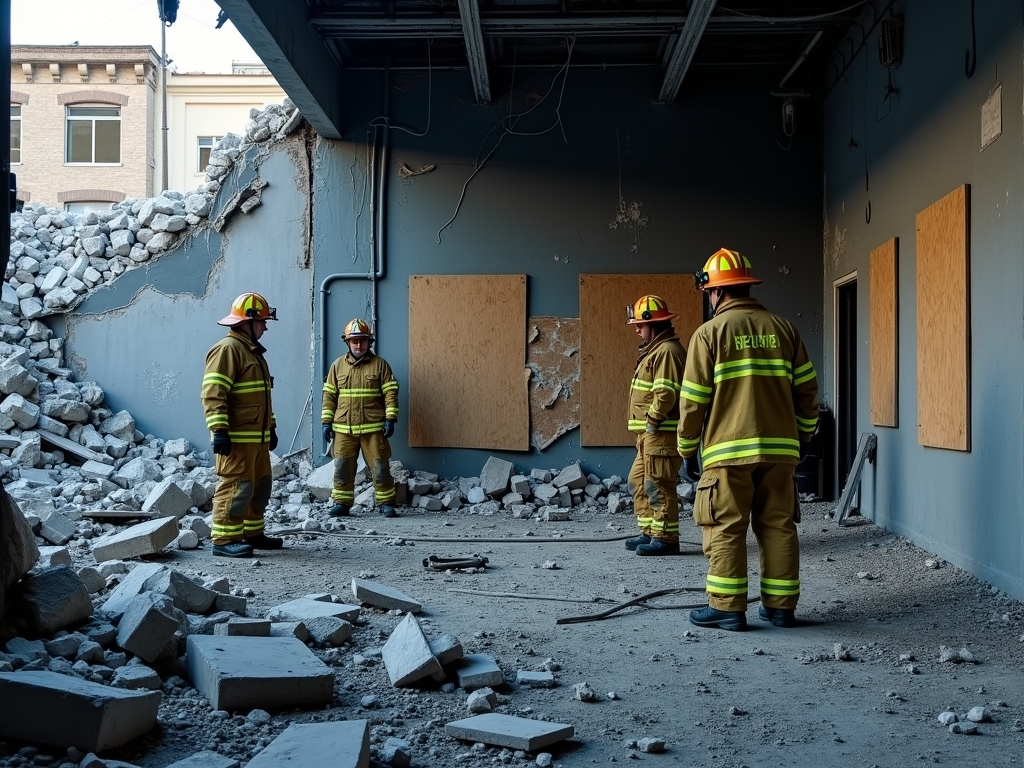
Five days afterward, a visibly shaken Martynovska stood amid the scorched remains. Fire crews worked through the wreckage of the exhibition her team had spent years bringing to life.
“There is hardly a single room that escaped damage,” she said. “The structure itself suffered greatly — the roof was destroyed, the floor between the second and third levels collapsed, and the exhibition halls and museum laboratory were severely affected.”
Initial estimates suggest that roughly 40% of the artefacts on display were lost beyond recovery.
Martynovska learned the building was burning at around 5am on 24 May. Overnight, Russia had launched dozens of missiles and hundreds of drones toward Ukraine, most aimed at Kyiv. The assault killed two people, injured many others, and caused heavy destruction to museums and other cultural landmarks across the capital.
“Within twenty minutes I was on site,” she said. “I saw thick smoke rising and flames along the roof. Windows, doors, and gates had already been blown out and lay scattered outside.
“After dedicating four years to restoring the building and creating a new exhibition, it was an overwhelming blow.”
As soon as emergency responders permitted access, she and the chief curator rushed inside to rescue whatever they could. “We started evacuating artefacts while the roof was still burning and firefighters were still working,” she said. “We heard parts of the roof collapsing. Water was everywhere under our feet.”
Nearby, emergency teams were securing an area that had displayed life in the Chornobyl region before the power plant was built. Among the items were old Bibles, religious icons, books, and ceramics — many of them destroyed. A wall inscription survived, reading: “Lost worlds.”
The museum’s storage facilities, which contain most of its 22,000-item collection, remained intact. Martynovska expressed cautious hope that the final tally of losses might be somewhat lower than first feared. She held a small earthenware jug recovered from the blackened debris. Emergency workers had also uncovered fragments of a missile.
Elsewhere in the city, wind and rain poured into the stately building of the National Art Museum of Ukraine. Shock waves had shattered nearly all its windows, sections of ceiling had fallen, and parts of the heavy wooden entrance doors were thrown across the foyer. Even the sculpture crowning its pediment was cracked.
Its permanent collection — from ancient icons to modern Ukrainian masters — had been placed in storage or sent abroad. During the full-scale invasion, the museum had focused on temporary exhibitions. Its current show, featuring works by 20th-century painter Anatoly Limarev, was partly shielded by temporary partition walls that absorbed much of the flying debris. After the attack, the exhibition was swiftly dismantled and secured.
Inside one gallery, staff and art history students worked together to clear rubble and shattered glass.
“It’s certainly an internship they will never forget,” said museum spokesperson Veronika Bublei.
She recalled the early hours after the strike as chaotic. “It was intense and frightening. We ran from place to place doing whatever we could. There was no time to process emotions — we focused on practical tasks.”
“It felt like standing in the centre of a storm, with windows and doors torn away — as if a tornado had ripped through,” she said.
“My first reaction was shock,” added the museum’s director, Yulia Lytvynets, dressed in work clothes as staff continued the exhausting cleanup. “We know we are living through war. Our galleries are empty and the artworks are safe. But you can never be fully prepared. You can hide the collection, but not the building itself.”
The museum had been preparing a major exhibition devoted to modernist theatre designer Anatol Petrytskyi. That project will now be presented online. The building remains closed to visitors for an indefinite period.
Other cultural landmarks across Kyiv were also damaged in the same night of strikes, including the Zhytnyi market, a notable example of late-20th-century modernist architecture.
This assault was the latest to impact Ukraine’s cultural heritage. Since 2022, hundreds of historic sites and cultural institutions across the country have been reported destroyed or damaged.
In the Lukianivka district, fires swept through a shopping centre and market. Across the street, at the Mala Opera — a small performance venue dating back to the early 20th century — staff were covering shattered windows with plastic sheeting. Parts of the roof and a rear wall had been damaged.
Despite this, the venue planned to proceed with its scheduled performance on 29 May: “Railroad,” a play set during the rise of fascism.
Here, despite everything, the show would go on.



