Chad holds first parliamentary election in more than 10 years: Key details
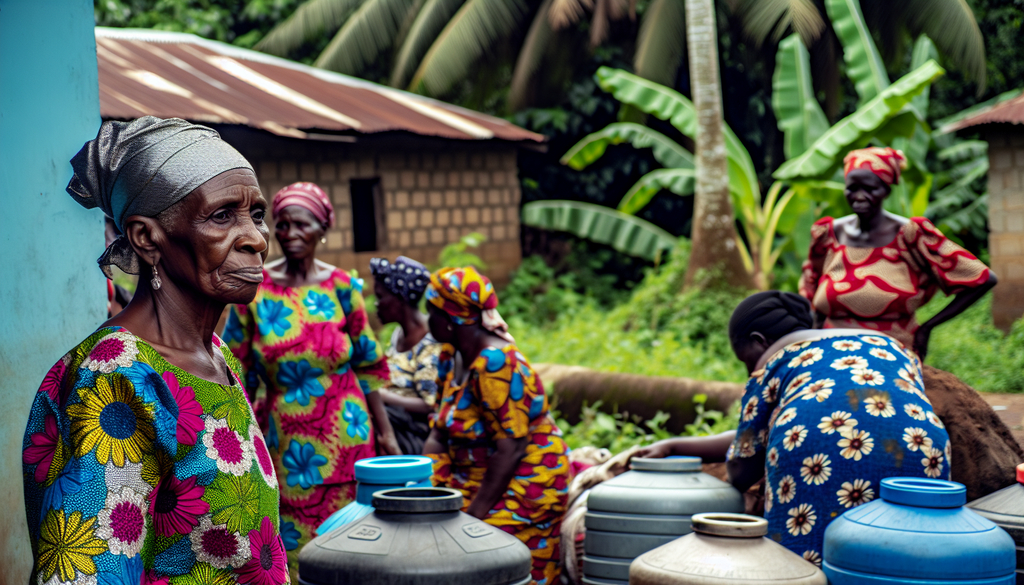
The people of Chad are casting their votes in parliamentary, regional, and municipal elections, marking the first such event in over ten years. This development is part of the government’s efforts, transitioning from military rule to civilian leadership, to navigate the country toward democracy. However, opposition parties remain doubtful about the intent and fairness of the process.
Officials in the capital, N’Djamena, describe this voting exercise on Sunday as the conclusion of a three-year “transitional period” that began after former leader Idriss Deby Itno’s death in 2021. His son, Mahamat Idriss Deby, assumed power following this and was later installed as president via an election in May.
Despite these efforts, numerous opposition groups are refusing to participate in the elections, labeling the process a mere “masquerade.” They accuse the ruling Patriotic Salvation Movement (MPS) of attempting to reinforce what they view as a hereditary political dynasty.
Chad, among Africa’s poorest nations, is the first of several countries in the Sahel region affected by coups to make good on promises to hold elections, even though the process has faced significant delays. Since 1991, the nation has primarily been governed by the Deby family and has experienced periodic coups and authoritarian rule.
The elections take place against the backdrop of pressing security concerns: conflict in neighboring Sudan is spilling over in the east, Boko Haram fighters are targeting security forces around Lake Chad, and Chad recently terminated its military agreement with its longtime ally and former colonial ruler, France.
Human rights organizations have raised concerns about the lack of opposition involvement in the elections, arguing this compromises the fairness of the vote.
“Conducting credible elections without inclusivity will be difficult,” said Isa Sanusi, Amnesty International’s director in Nigeria, to Al Jazeera. “The fact that some opposition groups are boycotting highlights the need to reassess the electoral process to ensure it allows for full participation.”
Here’s a closer look at the parliamentary elections and the controversies surrounding Chad’s journey toward democracy:
How does the election process work?
• Approximately 8.3 million registered voters, out of Chad’s 18-million population, will elect representatives to the 188-seat parliament. A parliamentary majority requires at least 95 seats.
• Over 100 political parties are participating, fielding roughly 1,100 candidates in this parliamentary contest. Winners are chosen through either a first-past-the-post system or an absolute majority, based on constituency size.
• Voters will also select leaders for regional and local government offices across 22 regions, including the capital city, N’Djamena.
• Major opposition groups, such as the Transformers Party and others, have decided to boycott, alleging that the elections lack the conditions to be free or fair.
Why hasn’t Chad held parliamentary elections in more than 10 years?
The last elections for parliament happened in 2011. While lawmakers’ terms were due to end in 2015, financial complications were cited as the reason for their indefinite postponement.
Even though Chad is an oil-producing nation, it ranks near the bottom of the United Nations Human Development Index due to economic stagnation and challenging climate conditions. Repeated calls by opposition figures for timely elections were ignored by former President Deby, who continued to delay them. In 2019, the newly formed National Independent Electoral Commission (CENI) pledged to organize elections by 2020, but the COVID-19 pandemic disrupted these plans.
Following Idriss Deby Itno’s death in May 2021 during a rebel conflict, his son, General Mahamat Idriss Deby, took control. His military government disbanded parliament and established a transitional council. In October 2022, Deby announced an extension of the transition period until 2024, leading to widespread protests that turned violent, with security forces killing over 100 demonstrators.
Succes Masra, leader of the opposition Transformers Party and a key figure in these protests, fled Chad for the United States after the violence.
Were there any other elections recently?
Yes. Authorities successfully conducted a constitutional referendum in December 2023, paving the way for new elections. In a controversial May 2024 presidential election, Mahamat Idriss Deby secured a disputed victory, gaining 61.3 percent of votes amid accusations of rigging and violence against opposition candidates.
Notably, one opposition figure, Yaya Dillo of the Socialist Party Without Borders (PSF), was killed under controversial circumstances earlier this year. Authorities accused Dillo of leading an attack on Chad’s intelligence agency, but critics claim this was part of the regime’s efforts to eliminate political opponents. Human rights groups have documented abuses in Chad’s maximum-security prison Koro Toro, where detained opposition figures remain.
Who are the major parties contesting the elections?
Patriotic Salvation Movement (MPS): Founded by Idriss Deby Itno, the MPS has been Chad’s ruling party for decades. Its leadership includes Haroun Kabadi, a former prime minister who now heads the Transitional Council. The party has remained dominant in Chad’s parliament since 1996.
National Union for Democracy and Renewal (UNDR): Previously an opposition coalition, this party is now led by Saleh Kebzabo, who served as prime minister under Mahamat Deby’s transitional government from 2022 to 2024. Before the transition, the UNDR held 10 parliamentary seats.
National Rally of Chadian Democrats (RNDT): Once a coalition partner of the MPS, the RNDT operates as a semi-opposition group. Its leader, Albert Pahimi Padacke, is a former prime minister who previously contested the presidency. The RNDT held eight seats before parliament was dissolved.
Why are certain opposition groups boycotting?
Key opposition parties, such as the Transformers and Group of the Cooperation of Political Actors (GCAP), are abstaining from the elections in protest. They allege that the ruling government suppresses dissent and ensures victory through manipulation.
Succes Masra referred to the elections as “legislative apartheid,” arguing that true competition is impossible under current conditions. Activists affiliated with opposition groups have set up roadblocks in certain areas to hinder MPS campaign efforts, but government officials deny these accusations.
Why are journalists protesting?
In the days leading up to the election, the High Media and Audiovisual Authority (HAMA) imposed a ban on online newspapers broadcasting audiovisual election-related content. This decision has led to outrage among journalists, who viewed the regulations as an attack on press freedom.
Even after a December court ruling instructing HAMA to lift the restrictions, the regulatory body has yet to comply. Dozens of publications are on strike in response, and media workers have staged protests in N’Djamena, accusing the government of suppressing independent journalism before the elections.
“HAMA’s role is to regulate media, not to silence it,” said Reporters Without Borders’ sub-Saharan Africa director Sadibou Marong, calling for immediate amendments to the decision.
What lies ahead?
Analysts predict that the MPS is poised to secure a parliamentary majority, solidifying its decades-long reign and Mahamat Idriss Deby’s control. Over the weekend, MPS rallies filled the streets of N’Djamena, with party volunteers distributing blue-and-yellow merchandise to enthusiastic supporters.
Yet, human rights defenders remind Chad’s authorities of their responsibility to ensure an inclusive election. Meanwhile, boycotting opposition parties have vowed to monitor the elections independently and escalate irregularities to the African Court in an effort to nullify the results.