Funeral Mass for Pope Francis begins at the Vatican amid throngs of mourners
A solemn farewell is unfolding in Vatican City as thousands have gathered to honor Pope Francis, remembered for his devotion to the marginalized and his transformative vision for the Catholic Church.
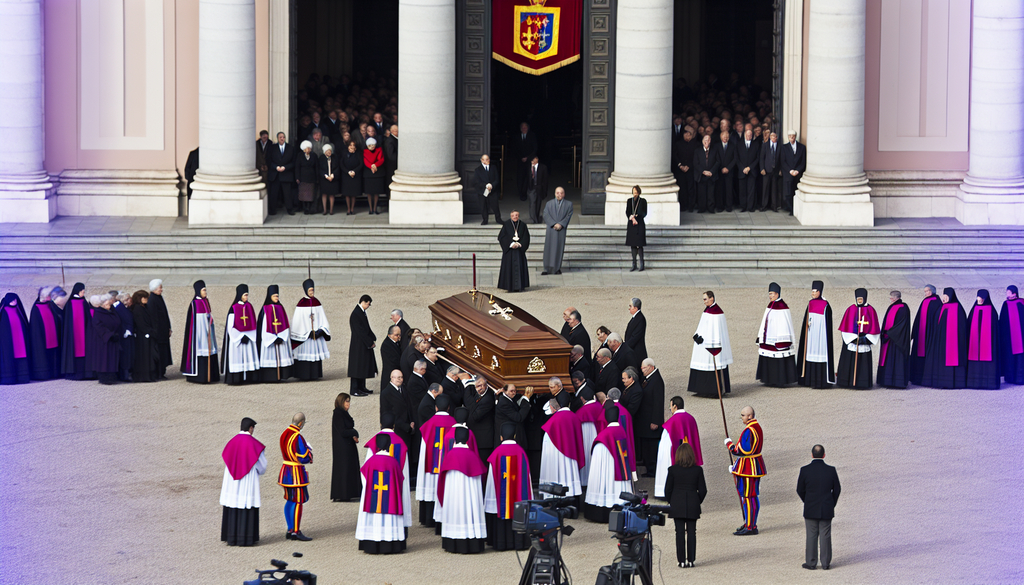
Silence filled the moment before the ceremony began. Applause echoed across St. Peter's Square as the pope’s casket emerged from the great basilica in a dignified procession just after 10 a.m. local time (4 a.m. ET).
The funeral Mass is being conducted on the basilica’s grand steps, a sacred hub of Catholicism. Dignitaries in attendance include over 50 global leaders and 11 current monarchs. Notably present are U.S. President Donald Trump, former President Joe Biden, Argentine President Javier Milei, Italian Prime Minister Giorgia Meloni, Ukrainian President Volodymyr Zelensky, and Philippine President Ferdinand Marcos Jr., representing Asia’s largest Catholic country.
According to Vatican officials, around 200,000 participants have filled St. Peter’s Square, with preparations made for nearly a million more to line the nearly 6-kilometer (3.7-mile) route from the Vatican to the Basilica di Santa Maria Maggiore, hoping to glimpse the pontiff’s simple wooden casket en route to its resting place.
Related article: Why Pope Francis Isn’t Being Buried Inside the Vatican
Across the globe, millions of the Church’s 1.4 billion faithful are tuning in to witness the final rites of the first pope from Latin America.
Pope Francis passed away at 88 after suffering a stroke on Easter Monday, only a day after giving his Easter blessing in the same square where his funeral now takes place.
In the days following his death, more than 250,000 mourners filed past his body as it lay in repose within St. Peter’s Basilica. On Friday evening, the coffin was ceremonially sealed in a liturgical ritual led by Cardinal Camerlengo Kevin Farrell.
Sunlight kissed the travertine pillars of the Square as the Mass began Saturday morning with the ancient Latin prayer: “Eternal rest grant unto him, O Lord, and let perpetual light shine upon him.”
Delivering the homily, Italian Cardinal Giovanni Battista Re, dean of the College of Cardinals, called Francis a “pope close to the people, with a heart welcoming to all.”
He continued: “His endless advocacy for refugees and the displaced defined his mission. He never wavered in his call to serve the poor.”
He reflected that during turbulent times filled with conflict, the pope consistently spoke out for peace, urging thoughtful dialogue and resolution through diplomacy.
Following the homily, Cardinal Re led the “Prayer of the Faithful” — also known as the Universal Prayer. Other cardinals offered short prayers in a diverse range of languages including French, Arabic, Polish, German, Portuguese, and for the first time, Mandarin — a nod to Francis’ outreach to all corners of the world.
The service follows the traditional papal liturgy, including Holy Communion and culminating in a farewell and commendation, an order personally approved by Francis back in June 2024.
Certain ceremonial aspects have been scaled back per Francis’ wishes. He aimed to simplify the rites, framing the event as fitting for “a shepherd of Christ, not a worldly dignitary,” as stated by the Vatican.
True to the spirit of his chosen namesake, St. Francis of Assisi — known for his care for the poor and love of creation — the pope included symbolic gestures in the funeral to underline his advocacy for the vulnerable.
A Vatican statement noted, “The poor hold a treasured place in God’s heart,” which is why a group of impoverished individuals will occupy a position at the steps of Santa Maria Maggiore, paying last respects before burial.
They will be the final members of the public to see his humble coffin as it makes its way through Rome, passing iconic landmarks such as the Piazza Venezia and the Colosseum in a slow ceremonial procession.
Pope Francis will become the first pontiff in more than 300 years to be interred at Santa Maria Maggiore, with the burial taking place in private.
A trailblazer in many respects — the first Latin American pope, the first Jesuit elected to the papacy, and the first non-European in modern history — Francis broke centuries of precedent.
Chosen in 2013 from outside the traditional European ranks, Francis led with progressive energy, advancing reforms including increased roles for women within the church structure.
However, his papacy was not without controversy. He made initial but limited progress in addressing clerical abuse within the Church, a matter advocates say still demands far-reaching action.
The issue of same-sex unions remained divisive. While his often-quoted remark, “Who am I to judge?” earned praise, he simultaneously reinforced the Church’s official teachings on homosexuality being sinful.
Some conservative voices in the Church criticized his leadership and theological leanings. Earlier this year, he openly challenged the Trump administration’s immigration policy and criticized Vice President JD Vance’s use of scripture to defend it. Vance was reportedly one of the final visitors Francis met, during a brief Easter encounter.
Related article: Who Will Be the Next Pope? Here Are Potential Successors
The selection of the next pope will unfold in a conclave of cardinals from around the world, where opposing visions may collide — those wishing to continue Francis’ path and those inclined to redirect it.
Candela Rodríguez, a Spanish exchange student studying in Rome, expressed hope for a like-minded successor: “Someone humble and close to the people, like Francisco.”
“He really reached the youth and made religion more accessible,” the 21-year-old said, adding that she felt “blessed” to be in Rome to witness this momentous farewell.
While opinions among Catholics differ, many gathered this week in Vatican City voiced their admiration for Francis’ legacy.
“He put the needs of the forgotten at the center of the Church again,” said Argentine pilgrim Federico Burlón as he waited to enter St. Peter’s Square.
“Of course it’s sad, but also a celebration of his life. My hope is that his work for the poor continues,” he remarked.
“He was simple and kind, deeply compassionate,” chimed in Sister Luisa of Munich. “We are grieving, but also incredibly grateful.”
Reporting contributions by CNN’s Sophie Tanno, Christopher Lamb, Antonia Mortensen, Barbie Latza Nadeau, Lauren Said-Moorhouse and James Frater.