Children in Sudan increasingly at risk from deadly diseases as immunization rates drop by half
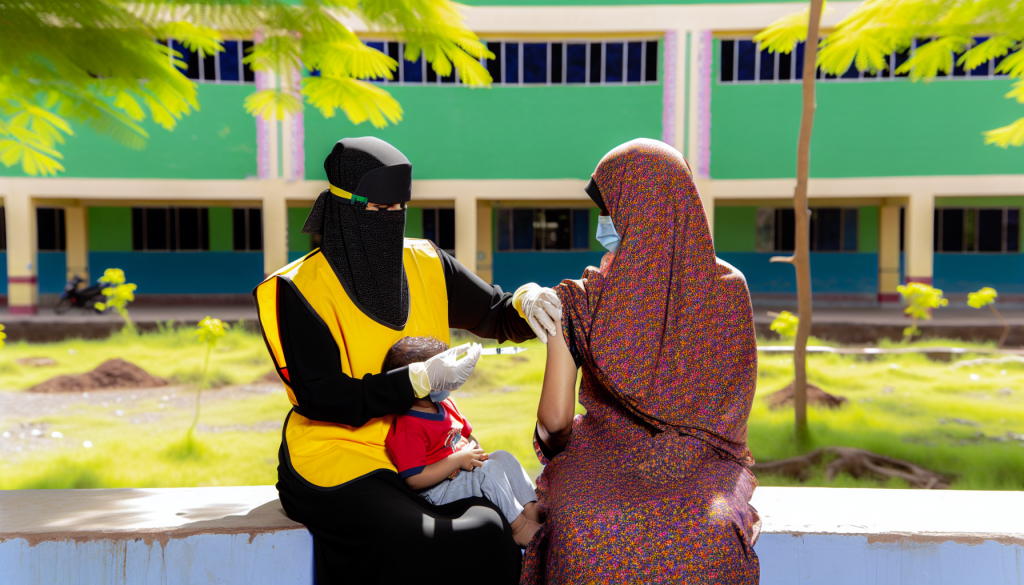
Children in Sudan are facing a growing risk of deadly infectious diseases as vaccination rates drop sharply amidst an escalating humanitarian crisis and widespread violence.
In 2022, over 90% of children in Sudan received their standard immunizations. However, that number has drastically declined to 48%—the world’s lowest—according to the World Health Organization (WHO).
Globally, more than 14 million infants have not received any routine vaccines, and current efforts are falling short of achieving the 2030 goal to reduce this number by half compared to 2019 levels, as reported by the WHO.
Unlike in some countries where vaccine declines stem from misinformation or fear, the situation in Sudan is entirely due to the ongoing conflict, said Dr. Tedbabe Degefie Hailegebriel, UNICEF’s chief of health in Sudan. “It’s the war that has completely disrupted immunisation services,” she explained.
The conflict, which began two years ago, has claimed tens of thousands of lives and forced millions to flee their homes. The International Rescue Committee describes it as one of the most severe humanitarian crises ever seen.
Last year alone, 838,000 children in Sudan missed all basic vaccinations, ranking the country third globally in this regard—only behind Nigeria and India.
The coverage of the first dose of the DTP vaccine (which protects against diphtheria, tetanus, and pertussis) is a crucial measure of access to healthcare. According to Hailegebriel, missing out on this vaccine typically means that children—and often their parents—have no connection to any health services at all.
Sudan’s medical infrastructure has been hit hard by the war. Facilities have been destroyed, supply chains interrupted, and health data systems dismantled—making healthcare delivery nearly impossible, she said.
“Doctors, nurses, midwives, and community health workers haven’t received salaries in months. Even the basics—clean water and electricity in clinics—have been wiped out,” Hailegebriel noted.
Displaced individuals often end up in overcrowded camps with limited sanitation. In these environments, unvaccinated children become especially susceptible to outbreaks.
Without immunization, diseases like measles can claim lives or cause long-term disabilities. “These are children whose futures are being taken from them,” she added.
The WHO emphasized that conflict and fragile conditions in 26 countries significantly hinder progress in vaccinations. Children in these areas are three times more likely to miss immunizations than those in stable regions.
Dr. Kate O’Brien of the WHO warned that even small national declines in immunisation rates could spark serious outbreaks. “These drops lead to preventable deaths and put added pressure on already overburdened health systems,” she said.
While the main issue globally remains access to vaccines, O'Brien also flagged rising misinformation and disinformation as growing threats to immunisation efforts.
She also highlighted that reductions in aid funding may undermine vaccination programs in the coming years as many nations struggle with limited domestic resources.
Hailegebriel said some humanitarian efforts have led to slight improvements in vaccination coverage in Sudan earlier this year. Yet, she pointed out that UNICEF’s funding appeal remains unmet.
To stabilize Sudan’s fragile vaccine supply chain, the organization has sent special containers designed to maintain proper temperatures for vaccines and medicines. However, ongoing violence repeatedly halts these operations.
“We simply cannot operate in areas where active fighting is underway,” she said. “But once things begin to calm, we quickly return to resume our work.”
“The destruction we see is overwhelming. Infrastructure is ruined, and medicine and supplies are often looted. Every time we enter a conflict-affected area, we have to start over to prevent the healthcare system from collapsing further.”
She stressed that Sudan’s crisis remains largely overlooked by the global community. “We sincerely hope the world begins to take notice, so peace can be restored and these children can live securely and grow,” she said.
Abdallah Idriss Abugarda, head of the Darfur Diaspora Association in the UK, shared insights into the worsening situation in the Darfur region, especially in El Fasher, a city under siege.
He said that, amid the chaos, vaccination is far from the top concern for most families. “People are more worried about securing food and getting medicine for illnesses like malaria and fever that are affecting their children,” Abugarda explained.