As global conflict and turmoil rage on, world leaders gather at the UN in search of solutions
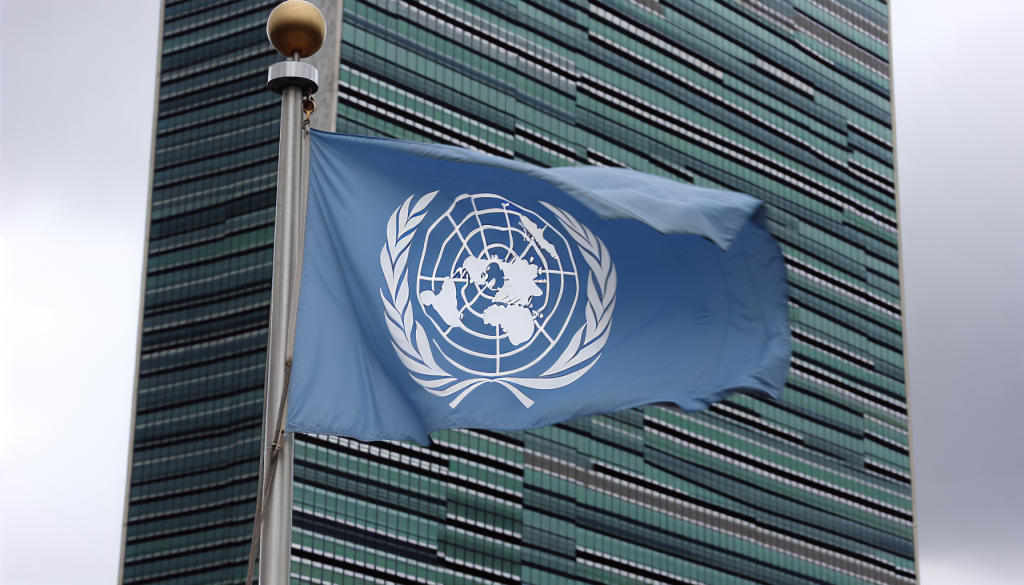
UNITED NATIONS (AP) — Starting Monday, global leaders are assembling at the United Nations during one of the most unstable periods in its 80-year history, facing ongoing conflicts in Gaza and Ukraine, changing dynamics in U.S. foreign policy, widespread poverty, and rapidly advancing technologies raising regulatory concerns.
The United Nations, born from the ruins of World War II to unite countries in resolving global challenges, is itself under immense pressure. Secretary-General Antonio Guterres recently noted that international cooperation is under threats unlike any seen in recent memory.
Nevertheless, this year’s General Assembly will see the arrival of presidents, prime ministers, and monarchs from roughly 150 of the 193 UN member states. Guterres emphasized that the gathering is too critical to ignore, despite the turbulent moment in history.
"We are navigating through uncertain, even dangerous waters," Guterres said. He highlighted serious concerns like rising temperatures on Earth, unregulated technological developments, and growing social and economic disparities.
A Shared Goal: Can Unity Lead to Real Progress?
Guterres plans to use his over 150 scheduled discussions with international figures to push for cooperation on resolving conflicts, slowing climate change, managing artificial intelligence’s rapid surge, and boosting efforts to meet the UN’s 2030 development goals, including eradicating poverty and universal access to quality education.
He called on world leaders to move beyond formalities and make genuine progress instead of issuing empty statements.
However, analysts warn that deep divisions among nations and ongoing violence in places like Gaza, Ukraine, and Sudan may limit what can be achieved during the summit.
Richard Gowan, who oversees the UN portfolio for the International Crisis Group, suggested that three issues will dominate the discussions: U.S. President Donald Trump’s official visit during his second term, the dire humanitarian crisis in Gaza, and the future of the UN as it deals with funding shortages, especially due to halted U.S. financial contributions.
The war in Gaza is expected to take center stage. Amid a new Israeli military campaign in Gaza City, thousands have been displaced, following a UN-commissioned report accusing Israel of genocide — a charge Israel has furiously denied.
Palestinian UN envoy Riyad Mansour has stated that the Palestine issue will be a dominant subject during the Assembly's proceedings.
On Monday, a major meeting led by France and Saudi Arabia will focus on reviving the two-state proposal regarding Israel and Palestine. Notably, Palestinian President Mahmoud Abbas was not granted a visa to speak in person by U.S. authorities. To address this, the General Assembly passed a resolution permitting Abbas to address members via video call, similar to the arrangement made for Ukrainian President Volodymyr Zelenskyy in 2022. Zelenskyy will be in attendance this year, with the Security Council expected to discuss Ukraine on Tuesday.
Earlier this month, the General Assembly strongly supported the two-state idea and encouraged Israel to endorse Palestinian statehood. Around the same time, Israeli Prime Minister Benjamin Netanyahu declared there would be "no Palestinian state." Presently, over 145 nations recognize Palestine, and Mansour said at least 10 more will announce their support on Monday afternoon. A session on Gaza in the Security Council may also take place on Tuesday.
A Complex Agenda to Navigate
General Assembly proceedings begin formally on Tuesday morning in the large Assembly Hall. Trump is scheduled to speak that same day after Secretary-General Guterres delivers his annual global address.
According to Gowan, there is cautious optimism that Trump will bring a cooperative message, highlighting his foreign policy achievements. Observers will be paying close attention to his views on trade tariffs, as well as his stance on Russia and China.
Additional anticipated speakers include Ahmad al-Sharaa, Syria’s new interim leader after the fall of long-time president Bashar Assad, and Iranian President Masoud Pezeshkian.
President Pezeshkian arrives just after the Security Council stopped short of lifting UN sanctions related to Iran’s nuclear program. Instead, Tehran has until September 27 to strike a new deal with European powers — France, Germany, and the UK — or face renewed sanctions.
This week will also feature numerous side meetings focusing on climate efforts, the ongoing civil war in Sudan — now considered the worst global displacement emergency — and crises in places like Somalia, where militant group Al-Shabab remains active, and Haiti, where gangs dominate most of the capital and continue their spread.
On Monday, the UN will observe the 30th anniversary of the Beijing conference on women’s rights, which created a roadmap for gender equality. Yet, the UN warns progress is lagging far behind, with Guterres saying equality may still be 300 years away at the current pace.
Among the Secretary-General’s broader ambitions is to gain support for reforming the UN by 2025 to make it more effective. To address a funding crisis, the UN announced it needs to reduce its 2026 operating budget by 15% to $3.2 billion, along with trimming nearly 20% of staff positions — amounting to 2,681 jobs.
Though some countries are limiting their financial contributions, Gowan said he doesn’t believe the U.S. or other nations are abandoning the UN, but acknowledged that the organization is experiencing significant strain and must evolve to meet today’s challenges.
"The UN no longer carries the same weight in global peace and security matters as before," Gowan admitted. "Still, it’ll continue to push forward in whatever way it can."
___
Edith M. Lederer has reported on global affairs for The Associated Press for more than fifty years.