The US deploys elite airborne forces to the Middle East: they were trained to seize airfields, AP reports
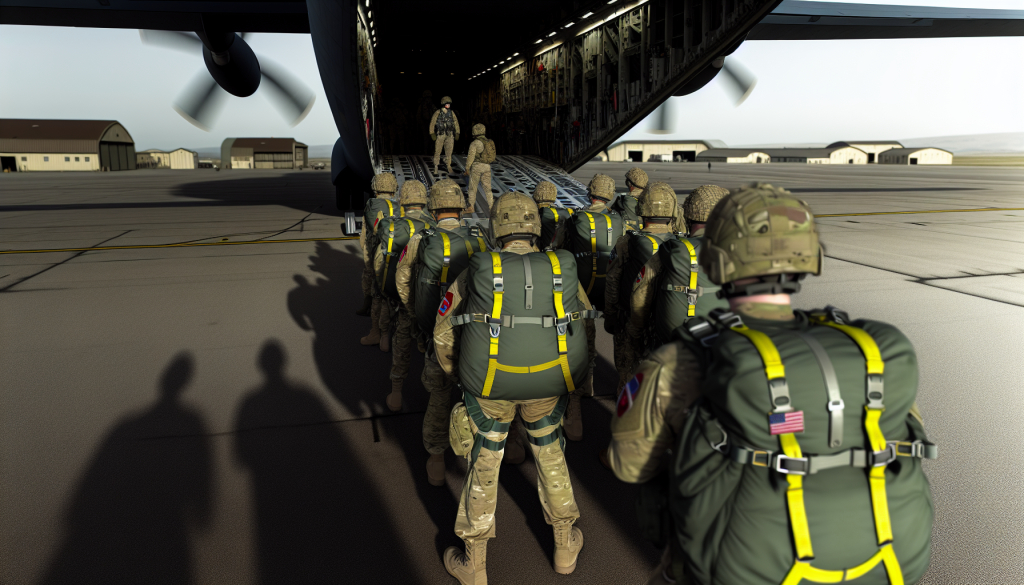
The United States is urgently deploying more than 1,000 troops from the 82nd Airborne Division to the Middle East, closer to the area surrounding Iran. The elite units are preparing to depart within the next few days, according to the Associated Press, which cited three defense officials familiar with the matter.
The 82nd Airborne Division serves as the U.S. Army’s primary rapid-response force, capable of executing swift and complex airborne operations, including parachute landings, securing and controlling critical enemy infrastructure such as airfields, strategic positions, and command centers. The deployment will include a battalion from the 1st Brigade Combat Team. Officials, speaking on condition of anonymity, confirmed that preparations are being carried out under strict secrecy.
Earlier, U.S. officials also announced the redeployment of the Navy ship USS Tripoli and the 31st Marine Expeditionary Unit, which had been participating in exercises near Taiwan. In addition, a naval task group equipped with rapid-response forces departed from San Diego. Two new expeditionary units, totaling around 5,000 Marines, are being positioned as well. Approximately 50,000 American service members are already stationed across the region.
On Wednesday, March 25, a closed-door event is scheduled to take place on Capitol Hill. Pentagon representatives will deliver a classified briefing to members of the Senate Armed Services Committee, according to a U.S. official familiar with the meeting schedule.
Trump’s Carrot-and-Stick Approach
The agency emphasizes that President Trump is pressuring Iran not only through military measures but also through diplomatic efforts. The White House has signaled attempts to initiate dialogue with Tehran, and Pakistan has offered to act as a mediator. Trump personally confirmed that preparations for potential negotiations are underway, involving Steve Witkoff, Jared Kushner, Secretary of State Marco Rubio, and Vice President J.D. Vance.
Speaking at the White House a day earlier, Trump stated:
“We have several people working on this. And I can tell you, the other side would like to make a deal.”
Meanwhile, in Tehran, Parliament Speaker Mohammad Bagher Ghalibaf denied any direct contacts with Washington. Iranian military officials remain firm in their position. An army spokesperson released a statement pledging to continue the struggle “until complete victory.”
Current Situation Around Iran
The Trump administration has reportedly developed a confidential fifteen-point plan aimed at ending the military confrontation with Iran. A key objective of the initiative was to prevent a sharp rise in global energy prices. According to reports, the proposal was conveyed to Iranian representatives through Pakistani intermediaries.
President Trump has claimed that Iran agreed to abandon the development of nuclear weapons, describing this as a significant U.S. achievement in the standoff. He has also asserted that Washington played a role in political changes within Iran, noting that the country’s current leadership differs markedly from those in power at the start of the conflict.
In addition, it was reported that Saudi Crown Prince Mohammed bin Salman, during a series of private discussions, urged Trump not to halt military operations against Iran until the Iranian regime is fully dismantled. The Crown Prince has argued that Iran poses a serious threat to security in the Persian Gulf region.