European Stocks and Dollar Gain Ground as Markets Ease for Thanksgiving
SINGAPORE/LONDON, Nov 28 (Reuters) - European markets edged higher alongside the dollar on Thursday, following declines for both in the prior session, while Asian equities softened as trading activity slowed ahead of the U.S. Thanksgiving break.
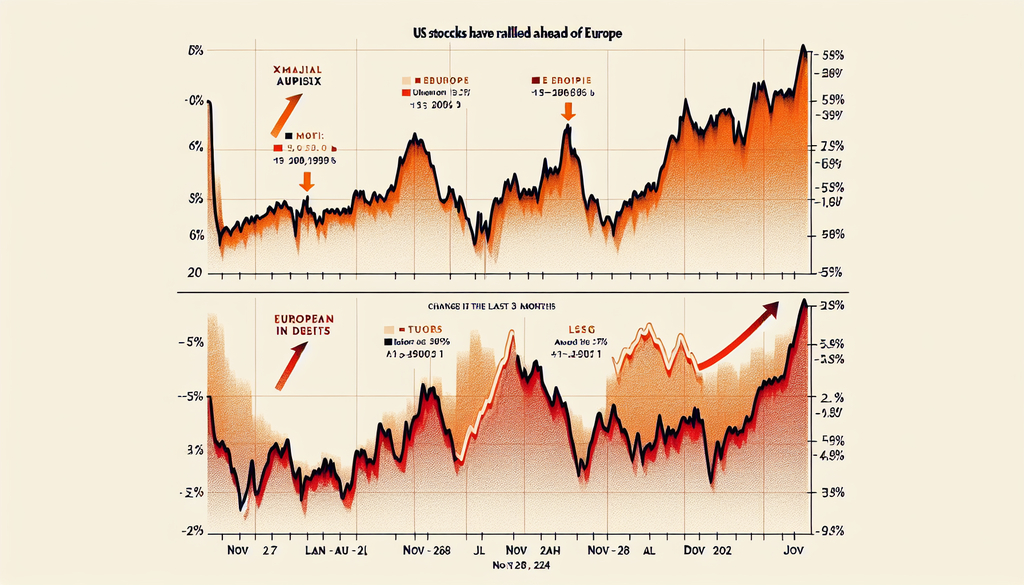
Europe's broad Stoxx 600 index gained 0.62% in early trading, bouncing back after a combined 0.75% loss over the last two sessions.
Meanwhile, MSCI's comprehensive index of Asia-Pacific shares excluding Japan (.MIAPJ0000PUS) slid 0.52%. However, Japan's Nikkei (.N225) recorded a modest rise of 0.56%, providing some balance to regional markets.
Although U.S. equity and Treasury markets were closed for the holiday, U.S. stock futures pointed upward. Futures for the S&P 500 climbed 0.11%, recovering slightly after the index dipped 0.38% on Wednesday.
Data released Wednesday revealed U.S. consumer spending grew in October, while the Federal Reserve's preferred inflation gauge rose to 2.3% in October from September's 2.1% figure.
This combination of robust spending and persistent inflation, coupled with possible increased tariffs on imports, might limit the Fed's room to implement further rate cuts next year.
"We still anticipate a 25 basis point rate cut at the FOMC's December meeting," stated Kristina Clifton, an economist at Commonwealth Bank of Australia, referencing the Federal Open Market Committee. "However, another strong monthly core inflation print for November could challenge the view that inflation is heading down to the 2% target."
The dollar index, which tracks the U.S. currency against six major rivals, climbed 0.22% to 106.33, reclaiming some ground after a 0.7% drop the previous day.
Chris Turner, ING's global head of markets, attributed Wednesday's dollar decline partly to investors locking in gains on U.S. assets ahead of thinner market activity due to Thanksgiving. "It seems some of these actions were executed in liquid conditions on Wednesday rather than waiting for the slower holiday period," he noted.
In a surprising development, South Korea's central bank reduced benchmark interest rates for the second consecutive session on Thursday, responding to weaker-than-expected inflation. Following the announcement, the Korean won depreciated.
The yen fell 0.55% to 151.91 per dollar, pulling back after reaching a one-month high the day before. Nevertheless, the currency appeared on track for its strongest weekly performance since early September, fueled by expectations that the Bank of Japan could raise rates next month.
The euro slipped 0.29% to $1.0535 after a 0.7% advance on Wednesday, driven by European Central Bank board member Isabel Schnabel's comments emphasizing that rate cuts should progress slowly toward neutral levels rather than easing too far.
European bond prices rose, pressing yields downward. This provided some relief to France, where borrowing costs had surged to their highest relative to Germany since 2012. On Thursday, French Finance Minister Antoine Armand expressed readiness to amend the country's budget, which faced opposition from both far-left and far-right factions.
Market participants also focused on inflation data trickling out from eurozone countries and German states on Thursday, with bloc-wide inflation figures scheduled for release on Friday.
Turning to commodities, oil prices eased as concerns over Middle East supply disruptions waned following a ceasefire agreement between Israel and Hezbollah. Brent crude futures fell 0.4% to $72.54 per barrel.
Spot gold edged 0.37% higher to $2,645 per ounce, yet the precious metal was on track to close November with nearly a 4% decline—its weakest monthly showing in over a year.