
Researchers once believed this Argentine glacier was steady. Now they report it’s rapidly melting.
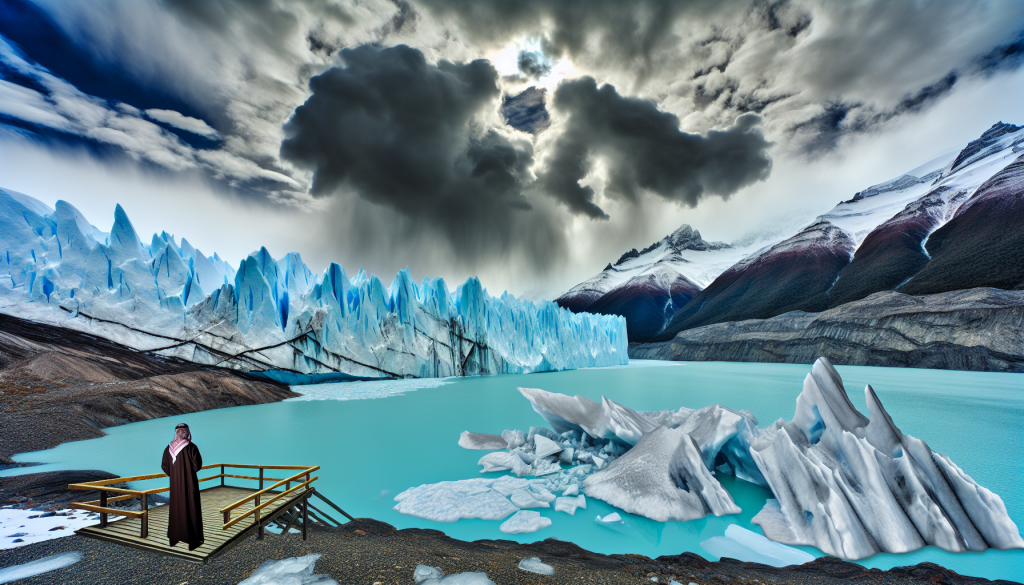
The renowned Perito Moreno Glacier in Argentina, once considered remarkably stable, is now experiencing its most significant retreat in at least a hundred years, according to newly published findings.
Located within the Southern Patagonian Ice Field, the glacier has long remained anchored within a mountain valley. However, recent observations reveal that it is now detaching from the bedrock beneath, accelerating the loss of ice as it gradually recedes. Time-lapse imagery captured over the last few years vividly demonstrates how precarious the condition of this global landmark has become, the researchers report in the journal Communications Earth & Environment.
Scientists believe the glacier may recede several additional kilometers over the next few years.
“We think this rapid retreat is due to prolonged climate instability over the past decade,” explained Moritz Koch, a doctoral researcher at Friedrich-Alexander University in Erlangen-Nuremberg and one of the primary authors of the study. “The glacier is now slowly but definitively becoming unfastened from a central stabilizing point, which explains the extent of movement we're currently witnessing.”
Koch and his research team carried out extensive field analysis to gather data. To survey the glacier’s thickness, they employed a radar system suspended beneath a helicopter. Additional insights came from sonar scans beneath the adjacent lake and satellite imagery collected from above.
Tourists walk on the Perito Moreno Glacier at Los Glaciares National Park, near El Calafate, Argentina, Nov. 2, 2021. (AP Photo/Natacha Pisarenko, File)
Tourists walk on the Perito Moreno Glacier at Los Glaciares National Park, near El Calafate, Argentina, Nov. 2, 2021. (AP Photo/Natacha Pisarenko, File)
Hundreds of thousands of visitors travel each year to witness the Perito Moreno Glacier, which has been recognized as a UNESCO World Heritage Site since 1981. A notable feature of the glacier is its dramatic ice calving, where large chunks break off and fall into Lake Argentino below.
Understanding glacier behavior in a warming world may seem simple — increased heat leads to more melting. But as ice scientist Richard Alley of Pennsylvania State University (not associated with the study) noted, the way glaciers respond to that heat can be unpredictable, much like trying to guess how a mug breaks when dropped.
Alley remarked that those skeptical of climate change often reference cases like Perito Moreno, which for years appeared unaffected while other glaciers around the world were clearly receding.
Even without the influence of climate change, glaciers naturally go through cycles of growth and retreat. But under stable conditions, new snowfall would typically balance out natural melting and movement, according to Erin Pettit, a glaciologist at Oregon State University who also did not take part in the research.
The melting of glaciers, especially those in polar areas, has broader consequences. It contributes to rising sea levels, which can threaten homes and lives in low-lying coastal and island regions. While dramatic changes in regions like Patagonia might seem isolated, Alley believes studies like this one provide insight into how much larger ice systems, such as Antarctica’s, may respond in the future.
Nevertheless, smaller glaciers also have profound local impacts, Pettit emphasized. Glaciers have shaped landscapes that people admire today and remain culturally significant across various regions. They can provide essential freshwater but also pose hazards when they suddenly collapse, leading to floods or landslides.
"All around the world, we are watching these small pieces of ice disappear," said Pettit. "Perhaps we're finally beginning to value the presence and importance of these icy giants, even as they slip away."



