Stunning cosmic comet spotted in fresh images from NASA's Mars explorers
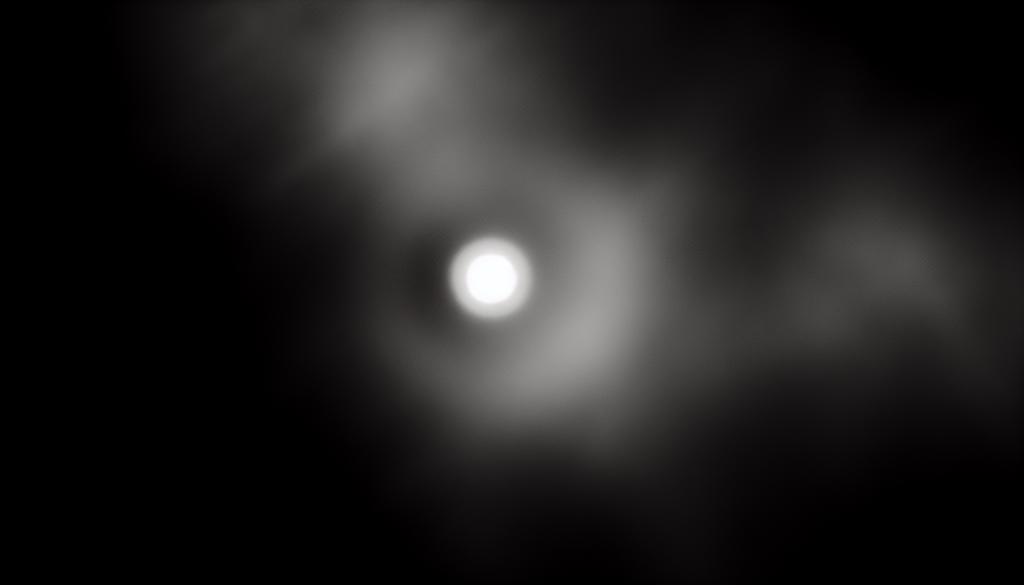
New images from NASA have captured the breathtaking moment an interstellar comet soared through space, offering a rare opportunity to study this celestial phenomenon and gain new insights into its makeup.
Named 3I/ATLAS, the comet was first spotted by astronomers on July 1. It marks only the third known interstellar object—originating from outside our solar system—to pass through our cosmic neighborhood.
As the comet passed near Mars in October, several NASA missions temporarily paused their normal duties to capture detailed images of the traveler from a distant star system.
The images, which were delayed due to a recent government closure, were released by NASA on Wednesday.
Though most spacecraft aren’t specifically equipped to photograph fast-moving comets — which can travel at speeds near 153,000 miles (246,000 kilometers) per hour — scientists were determined not to miss out on this unique event.
“It’s like our various NASA spacecraft were attending the same cosmic event from different seats in a stadium,” explained Tom Statler, a senior scientist focused on small solar system bodies at NASA. “Each spacecraft had its own view and tools, offering distinct perspectives.”
Missions unite to track the interstellar comet
Around 20 different mission teams worked in unison to monitor and record the movements of 3I/ATLAS, said Nicky Fox, NASA’s Associate Administrator for Science.
“It’s thanks to the varied range of instruments aboard our spacecraft that we’ve been able to gather so much data,” Fox noted. “We even pushed our science tools beyond their intended use to observe this extraordinary interstellar visitor.”
Prior to the comet’s approach near Mars in September, spacecraft like Lucy and Psyche—tasked with asteroid exploration—alongside solar missions such as the Parker Solar Probe, SOHO, and PUNCH, managed to glimpse the comet’s activity.
By merging data from these spacecraft with Earth-based telescope observations, scientists can map the comet's three-dimensional form and better understand how the sun affects its dusty trail, Statler shared.
“It gives us a chance to draw comparisons between ancient material from a distant solar system and that found within our own,” he added.
NASA’s Mars Reconnaissance Orbiter and Perseverance rover also followed the comet closely during its October flyby. According to Fox, the orbiter came closest to the comet among all spacecraft.
While Earth-based telescopes were poorly positioned to view the comet at its closest point to the sun, Mars offered an ideal vantage, Statler explained. “With the inner planets on the far side of the sun, we relied on our Martian assets to maintain visual contact.”
Two upcoming missions to Jupiter — NASA’s Europa Clipper and the European Space Agency’s Juice — will also attempt to watch the comet as it approaches Jupiter’s orbit later this year.
On October 3, 3I/ATLAS passed within about 18 million miles (29 million kilometers) of Mars. The ESA’s ExoMars Trace Gas Orbiter, orbiting Mars since 2016, was significantly closer to the comet than any Earth-based telescope, capturing angles not possible from our planet. These new views helped scientists more precisely chart the comet’s path through space.
Numerous other observatories, such as the Hubble Space Telescope and the James Webb Space Telescope, also contributed images and data.
Dr. Theodore Kareta, a planetary scientist and professor at Villanova University, explained that while telescopes on Earth are useful, spacecraft provide essential viewing angles that enhance our understanding.
“Because comets are three-dimensional objects, a multi-angle approach improves our knowledge of their structure, activity, and core size,” Kareta said.
Experts currently estimate that 3I/ATLAS is between several thousand feet and a few miles in diameter, though refined measurements are ongoing, according to Statler.
Studying the comet’s behavior
NASA was also quick to dispel speculation that the comet could be of artificial origin.
“It displays all the hallmarks of a natural comet,” said Amit Kshatriya, one of NASA’s associate administrators. “What sets it apart is its interstellar origin, which makes it incredibly compelling from a scientific viewpoint.”
Fox confirmed that NASA has not detected any indicators—such as technosignatures suggesting alien technology—that would imply the object is anything but a natural body.
“What excites us most aren’t the similarities to local comets,” she said, “but the unique properties 3I/ATLAS may reveal.”
Kshatriya emphasized how the world’s curiosity during NASA’s public silence illustrates a strong public interest in the wonders of space.
“It reminded people just how full of possibilities our universe is,” he said. “While the search for life continues, this comet is a product of nature.”
How 3I/ATLAS compares to typical comets
The comet made its closest approach to the sun on October 30, coming within approximately 130 million miles (210 million kilometers), according to NASA.
Unlike comets that form within our solar system—frozen remnants of early planetary building blocks—3I/ATLAS carries the potential to teach astronomers how distant systems might give rise to similar objects.
Initial research suggests the comet emits more carbon dioxide than water and contains more nickel relative to iron, compared to solar system comets, Statler said. These uncommon characteristics continue to be explored.
The comet also displayed high levels of activity, leading some to wonder whether it may have partially disintegrated while passing near the sun.
Jet-like features observed on the comet’s surface could point to specific regions where materials are evaporating quickly, Statler noted.
“These jets often indicate active spots on comets, leading to spiraling or streaming structures in their surrounding atmospheres,” Kareta added. “But without multiple viewing perspectives, interpreting these can be tricky.”
Currently, 3I/ATLAS is emerging from behind the sun and is again becoming visible to Earth-based telescopes. The comet will pass within 168 million miles (270 million kilometers) of Earth on December 19 before beginning its departure from our solar system.
“The fact that so many different NASA missions took part in observing this comet tells you just how valuable we consider this event,” Kareta said. “Interstellar objects like 3I/ATLAS are incredibly rare—and this one may provide insights that we won’t get again for a very long time.”
Though the exact age of the comet remains unclear, its high velocity suggests it’s significantly older than objects in our own solar system, said Statler.
“3I/ATLAS is more than just a visitor — it’s a messenger from a very ancient past, even older than Earth and the sun,” he said.