For Canada’s military, frostbite is the smallest concern amid an emerging Arctic challenge
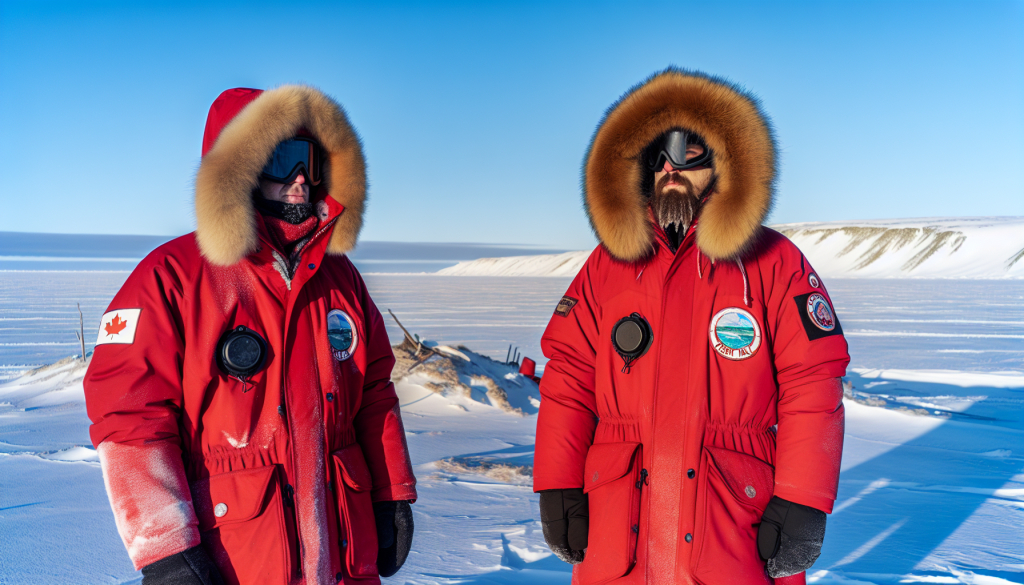
A modest line of spruce trees served as the finish line for Canadian reservists and combat troops after nearly two months crossing one of the planet’s most unforgiving landscapes: the Canadian Arctic.
The journey, which concluded on Friday in Churchill, Manitoba, marked the largest northern deployment ever undertaken by the Canadian Rangers, the branch of the Armed Forces tasked with safeguarding remote regions. Covering 5,200km (3,200 miles), the team traced a path across the Arctic that had not been attempted in eight decades.
Travelling by snowmobile over frozen ground, they pressed on through blizzards and fierce winds, sometimes riding for hours between isolated northern settlements. On several nights, they pitched tents directly on the ice as temperatures plunged to -60C (-76F).
On their final evening, camp was set along the frozen shores of Hudson Bay beside an abandoned trading post. Beneath shimmering northern lights, the ice shifted and cracked below them.
Danger was constant, from roaming polar bears to frostbite and dehydration brought on by extreme cold.
The patrol formed part of the Canadian Armed Forces’ yearly northern operation, designed to demonstrate the country’s military presence in the Arctic.
This year, 1,300 personnel participated. Their objectives included surveying terrain, studying the effects of climate change, identifying potential new travel routes and sharpening Arctic survival and combat skills in a region that represents 40% of Canada’s landmass and 70% of its coastline.
The mission carries added weight amid intensifying global competition for Arctic resources as warming temperatures reshape the region. It also follows comments made in January by US President Donald Trump about annexing Greenland, a Danish territory near Canada, which heightened tensions among Nato allies.
Those remarks alarmed political leaders in Europe and Canada and prompted renewed efforts by Nato members to underscore their commitment to Arctic defence.
Prime Minister Mark Carney, born in the Northwest Territories and the first Canadian leader from the north, has announced a multi-billion dollar defence strategy that includes modernising northern military installations.
Despite political friction, Brig Gen Daniel Rivière, commander of the task force overseeing Operation Nanook-Nunalivut, said the comments have had “zero effect” on co-operation between Canadian forces and their allies.
The operation, which ran from mid-February to early April, included representatives from Greenland who requested to observe the Rangers’ work, Rivière noted.
Military personnel from the United States and the United Kingdom monitored activities from a command centre in Edmonton, while French and Belgian troops carried out ice-diving drills alongside Canadian forces.
Rivière explained that the mission aims to prepare Canada for the most challenging contingencies. He pointed out that Russia continues to be a significant Arctic power despite its war in Ukraine.
Russia is reported to maintain dozens of permanent Arctic bases, whereas Canada has none.
“They continue to operate and test the region,” Rivière said, adding that joint naval exercises between Russia and China in international Arctic waters have grown more frequent.
“Is it an immediate threat? No. But are they becoming more capable in Arctic waters? Without question.”
Climate change presents another serious challenge, making Arctic navigation increasingly unpredictable.
Lt Col Travis Hanes, who spent 52 days on patrol, has witnessed these changes firsthand.
“Rivers that were once reliably frozen have overflowed in places where they never used to,” he said, describing unstable layers of ice that create new winter hazards.
At the same time, this winter brought unusually severe cold, opening ice routes across waters that had not frozen in recent years.
Indigenous Inuit members are central to the Canadian Rangers. Their deep understanding of the land proved vital in charting safe routes and ensuring survival during the patrol and other Arctic missions.
“We would not have succeeded without them,” Hanes said.
Often referred to as the indispensable presence in Canada’s north, the Rangers possess unmatched skill in navigating snowmobiles between remote communities, surviving harsh weather and detecting subtle environmental changes.
Throughout the patrol, they shared dried Arctic char and caribou—traditional “country food”—with teammates who needed more than standard rations. They also provided gloves and boots made from coyote and caribou fur to those struggling against the cold despite modern winter gear.
Julia Elanik, an Inuk Ranger from Aklavik in the Northwest Territories, travelled the full distance with a rifle slung over her back in case a polar bear approached.
The patrol, typically consisting of around 20 snowmobiles, depended on more than a dozen Inuit communities for lodging along the route. Local Rangers guided the team from one hamlet to the next.
Barnie Aggark of Chesterfield Inlet in Nunavut, who joined for the final 500km stretch, said he felt a duty to both his homeland and his country.
“It’s about our land and our sea, how we manage them and who has access,” said Aggark, a Ranger since 1999.
“We must show the world that we live here. This is our home, and we will defend it with everything we have.”
The patrol also received assistance from the Royal Canadian Air Force. Twin Otter aircraft flew overhead to assess terrain conditions, while satellite intelligence and new ice-monitoring systems supported the ground team.
Looking back on the mission, Chief Warrant Officer Sonia Lizotte said: “We’ve pushed our boundaries, and now we understand what lies ahead.”
In 2024, Canada identified Arctic sovereignty as its top national security priority.
Carney has criticised previous governments for underinvesting in the north.
“After years of limited commitment, our government is acting with ambition that matches the scale of this region and its people,” he said in March.
Funding will also enhance airports and highways serving both civilians and the military. Transportation in the north remains difficult, with sparse infrastructure and costly air travel between communities.
The Conservative opposition argues that past neglect has left Canada exposed in the Arctic.
They have urged the government to establish permanent military bases in the region.
“We need tangible progress, not just promises,” said Conservative defence critic James Bezan last month.
Nevertheless, additional funding has been welcomed by residents and military leaders alike. “It shows we’re committed to building for the future,” Rivière said.
He added that plans include expanding military capabilities in the Northwest Territories and increasing combat training in the Arctic, “because we must always be prepared for the worst.”
Not every element of this year’s mission unfolded as intended.
A scheduled howitzer firing exercise in Cambridge Bay, Nunavut, was cancelled due to a severe blizzard. Several Rangers experienced food poisoning, likely from field rations. One member fractured a rib when his snowmobile overturned but continued the patrol, Hanes said.
Another Ranger suffered frostbite and was evacuated before the injury worsened.
Despite these setbacks, Hanes described the operation as a clear success, highlighting Canada’s growing proficiency in extreme Arctic conditions.
“One major injury among 250 personnel? That’s an exceptional record by any standard.”