Where has everyone gone? Exploring Canada’s hidden underground worlds
It’s lunchtime on a frigid Wednesday in Toronto’s Financial District, and the streets feel strangely deserted.
Snow sweeps sideways through the corridors of glass and steel, the sky hangs heavy and grey, and visibility is limited. A small number of pedestrians, bundled tightly in oversized parkas, shuffle along the slushy sidewalks of Adelaide Street West, enduring a biting 7F (-14C) windchill beneath looming office towers.
Beyond them, there is little movement.
A first-time visitor might reasonably assume that Canada’s largest city — and North America’s fourth largest — is some abandoned concrete expanse rather than a thriving financial powerhouse.
That impression changes the moment they head underground.
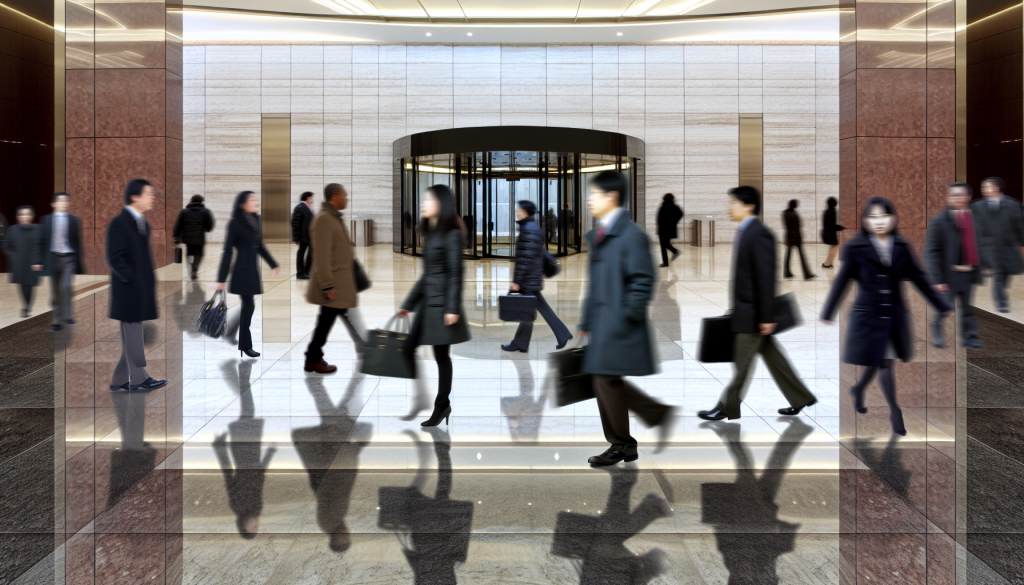
When winter arrives, thousands of Torontonians who live and work downtown retreat into the PATH, a vast 30-kilometer network of pedestrian tunnels linking office towers, shopping centers, restaurants, residences, subway stations and major attractions.
Online, locals jokingly describe downtown office workers as “mole people” or gophers who rarely resurface during the colder months. Others tease that once someone enters the maze-like corridors, they may never quite find their way back out.
In the Financial District, home to the country’s major banks, it’s easy to tell regulars from visitors. The absence of heavy winter gear is a giveaway. Instead of parkas and snow boots, professionals stroll through the tunnels in fleece vests and light jackets. Immaculately dressed office workers move briskly through the halls in polished shoes and tailored outfits untouched by salt or slush.
“The PATH isn’t just underground retail,” says Amy Harrell, executive director of the Toronto Financial District Business Improvement Area. “It’s an essential part of how downtown operates. It’s a climate-protected city within a city, connecting people to where they work, dine, commute and explore.”
Toronto is not alone in building climate-controlled pedestrian systems to shield residents from harsh winters and humid summers. Montreal has its RÉSO network. Edmonton and Winnipeg combine tunnels and elevated walkways, while Calgary’s Plus 15 system links buildings through raised bridges.
These networks have even inspired pop culture, reflecting how integral they are to urban life in Canada’s coldest cities.
The bustling passageways are a defining feature of modern city living here — intriguing for visitors and occasionally disorienting.
‘It’s just hard to navigate’
For many residents, these protected routes make going outside almost optional.
When Jadiel Teófilo moved from Brazil to Toronto three years ago, he encountered snow and sub-zero temperatures for the first time. Yet the transition, he says, was easier than expected.
“Because of the PATH, I didn’t spend much time out in the cold,” the 28-year-old software engineer explains.
Teófilo lives near Scotiabank Arena and works at Scotia Plaza. Aside from briefly crossing the street from his apartment, his 15-minute commute unfolds entirely indoors via the PATH. In winter, he typically wears a light rain jacket, T-shirt and sneakers — he still hasn’t needed snow boots.
He also uses the network for grocery shopping, pharmacy runs and even physiotherapy appointments.
“At first, I was impressed. It has everything you need,” he says. “It’s clean and well maintained. The only issue is that it’s hard to navigate.”
The system’s wayfinding is famously confusing — a fact even businesses acknowledge.
Toronto’s first underground pedestrian connection dates back to 1900, when a major department store built a tunnel linking its main location to an annex building. Not long after, a passage connected Union Station to a grand hotel, allowing elite guests to move discreetly between the two.
According to Laura Miller, an associate professor of architecture at the University of Toronto, these early tunnels were less about public convenience and more about commercial strategy and exclusivity.
Over time, private development continued to shape the network. Each section is owned separately, resulting in a patchwork system that can feel inconsistent, with unexpected turns and occasional dead ends.
After struggling to find his way for months, Teófilo decided to build his own navigation app for the PATH.
“I wanted to make it easier for people like me to use it fully and avoid going outside,” he says.
For eight months, he spent weekends mapping corridors using 3D scanning and modeling tools on his phone.
“It turned out to be much bigger than I imagined,” he adds.
The tunnels also connect many of downtown’s major attractions. A visitor staying at a hotel with PATH access could explore large parts of the city without braving extreme weather.
An entirely indoor itinerary might include shopping at CF Toronto Eaton Centre, visiting the Hockey Hall of Fame, dining in food halls near Richmond and Adelaide, or grabbing a pre-game meal before a basketball or hockey game at Scotiabank Arena.
For a more refined experience, visitors could enjoy fine dining in the financial core, take in skyline views from an upper-floor restaurant and end the evening with a concert at Roy Thomson Hall — all without stepping outdoors.
An even bigger underground network
For years, Toronto claimed to have the largest underground pedestrian network in the world. Many travel guides still describe it that way. However, in late 2023, Guinness World Records awarded the title to Montreal, whose RÉSO network now measures 32 kilometers.
Montreal’s system connects not only commercial buildings but also universities, museums and cultural venues, giving it a broader mix of uses.
Among its highlights are major arts institutions and public spaces, and it hosts an annual underground art festival designed to bring contemporary art directly into commuters’ daily routines.
Festival founder Frédéric Loury says the goal has always been to make art more accessible and less intimidating by placing it along familiar pathways.
While Montreal may hold the official record, the friendly rivalry between the two cities reflects differing civic personalities more than anything else.
A local refuge
Although it no longer carries the world-record title, Toronto’s PATH continues to expand and evolve.
During weekday lunch hours, food courts fill with office workers, signaling a strong rebound after pandemic shutdowns left the tunnels eerily empty.
Harrell notes that dozens of new businesses and amenities have opened recently, including fitness studios, recreational spaces and creative event venues. These additions reflect the PATH’s growing role as a “third space” — somewhere between work and home — during the long winter months.
Toronto resident Adam Chen saw this potential and began organizing free weekly walks through the PATH last winter. Each Saturday morning, about 20 participants gather at CF Toronto Eaton Centre and follow a loop past landmarks such as the Metro Toronto Convention Centre and Roy Thomson Hall.
The walks are not formal tours but opportunities for conversation and connection in a warm, sheltered environment.
By mid-morning, participants have logged thousands of steps. One rule applies: no work talk.
“Winter downtown can feel isolating,” Chen says. “People need places to gather, especially when the weather keeps them inside. The PATH offers space where people can sit, walk and connect.”