Researchers lose vital climate archive as ocean monitoring station faces shutdown amid Trump budget cuts
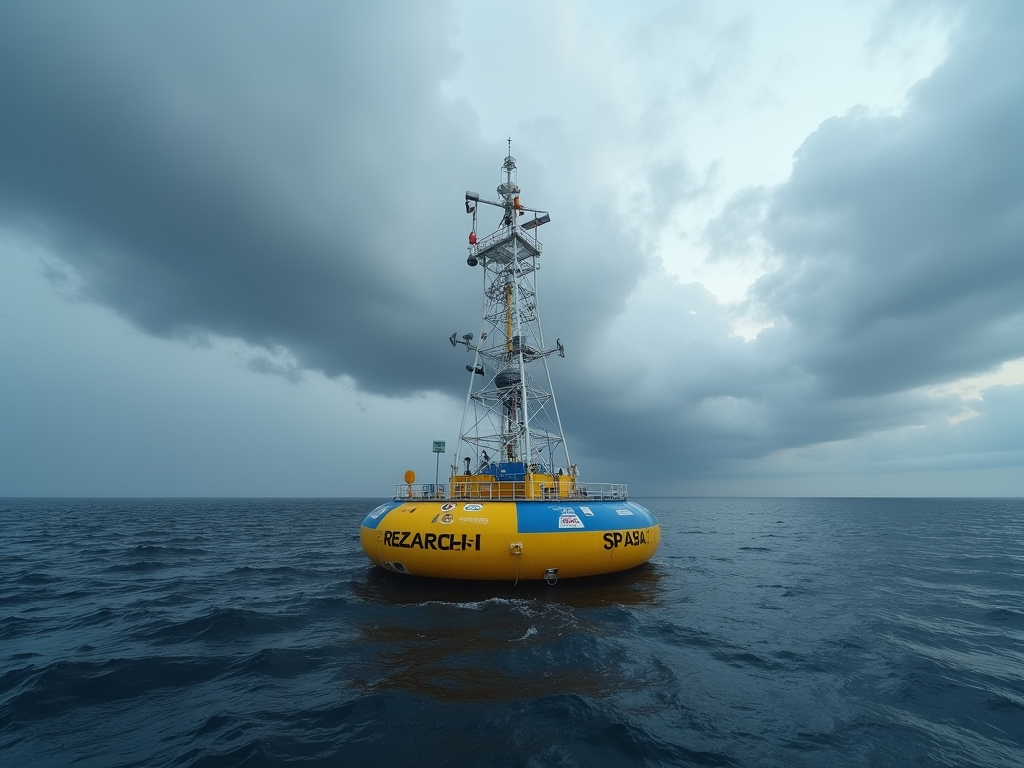
SEATTLE (AP) — Part of one of the most far-reaching ocean monitoring systems ever constructed will be taken offline this month as researchers sail off the coast of Oregon to retrieve a scientific buoy anchored deep in the Pacific Ocean.
The buoy, positioned about 80 meters (260 feet) beneath the surface, is scheduled for removal on June 16 from the Ocean Observatories Initiative. This vast network, made up of more than 900 ocean sensors and built at a cost of $386 million, has delivered continuous, real-time measurements for over a decade. However, the National Science Foundation announced last month that it plans to scale back most of the system, withdrawing equipment from waters near Oregon, Washington, Alaska, North Carolina, and Greenland by 2027.
Supported by the foundation, the observatories have monitored ocean circulation, marine ecosystems, climate trends, and severe weather patterns. The data has been openly accessible and has contributed to more than 500 scientific studies. Originally, the initiative was expected to operate for another 15 to 20 years.
In a written statement, the foundation described the move not as a cancellation but as a “descoping,” saying it aligns with a broader strategy to adopt a more flexible approach that prioritizes emerging scientific needs, new technologies, and careful management of research infrastructure. The agency noted that its decision was informed in part by a 2025 National Academies report addressing the future of ocean science.
For the scientists who designed and maintained the network — along with the researchers, educators, and students who depend on its information — the decision feels especially difficult.
An El Niño event, known for disrupting global weather systems and intensifying marine heat waves, is expected to develop along the Pacific coast this summer. Meanwhile, a marine heat wave is already driving unusually warm waters off California.
Researchers say that without the moorings off Oregon and Washington and the fleet of underwater gliders that operated in the area, their ability to observe subsurface ocean conditions will be significantly reduced. These deeper layers are where many of the most critical oceanographic changes occur.
“It’s a crippling loss of information,” said Ed Dever, an Oregon State University professor who helped oversee Pacific Northwest operations for the initiative. While satellites can measure certain surface conditions such as temperature and chlorophyll levels — indicators of photosynthesis — they cannot capture deeper phenomena like low-oxygen zones and other subsurface changes.
In this 2021 image provided by Woods Hole Oceanographic Institution, workers walk near buoys used to collect data at the Pioneer New England shelf off the coast of Martha’s Vineyard, Mass.
The initiative officially began operations in 2015 following more than ten years of planning and construction by the scientific community. It was conceived as a 25- to 30-year endeavor, based on the widely accepted understanding that identifying meaningful climate trends requires at least three decades of uninterrupted data collection. “We’ve just reached the 10-year mark,” Dever said, noting that while the existing record offers insights, it falls short of the long-term perspective researchers had hoped to achieve.
One key component will remain operational: a seafloor cable system managed by the University of Washington off the Pacific Northwest coast. That network will continue to monitor volcanic and seismic activity beneath the ocean floor.
Scientists had anticipated possible reductions after the administration’s proposed 2026 budget called for a 55% cut to the National Science Foundation. Formal notice to begin winding down operations arrived in early May.
The initiative has been coordinated by the Woods Hole Oceanographic Institution in partnership with the University of Washington and Oregon State University, along with previous collaborators such as Rutgers University and the Scripps Institution of Oceanography.
Annual operating costs totaled about $48 million, excluding the significant expense of research vessels required for deployment and maintenance. Before funding reductions began in 2025, roughly 60 to 70 staff members across participating institutions worked directly on the project, according to Dever.
“What’s happening with the Ocean Observatories Initiative isn’t an isolated case,” he said. “It’s one of several scientific facilities currently being dismantled. For many of us, it signals a shift away from the long-standing federal investment in basic scientific research that has benefited the country for decades.”
___
Alexa St. John contributed reporting.