Bold rescue mission begins to save a 3,200-pound NASA observatory from an untimely demise
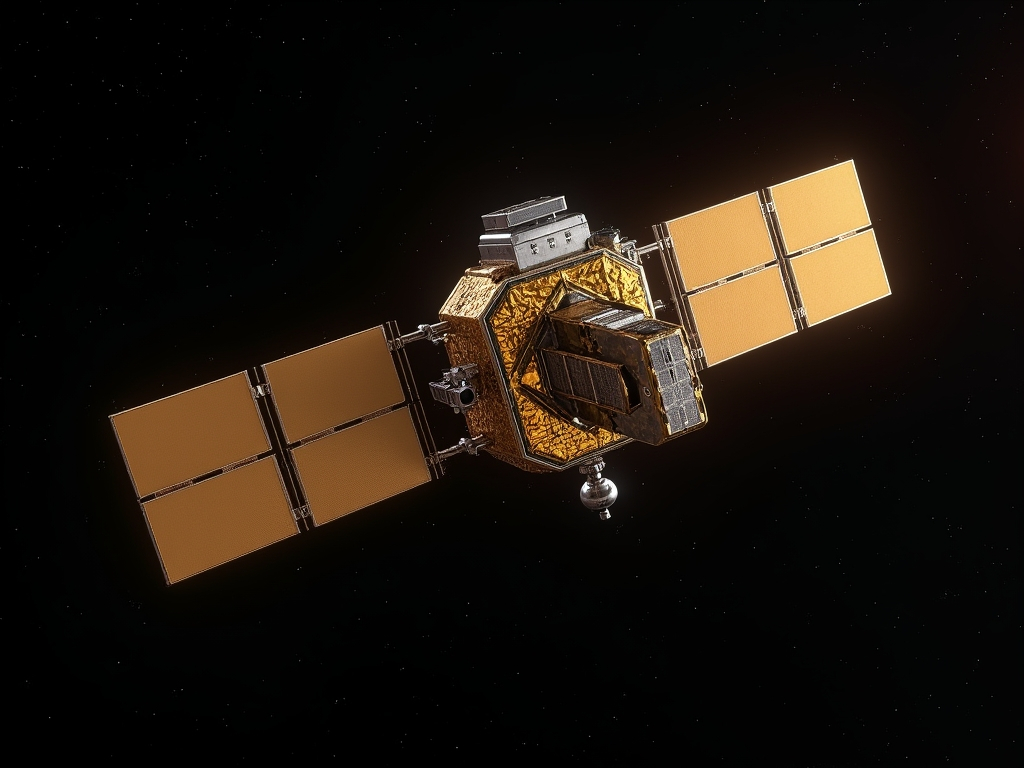
A bold new effort to prevent one of NASA’s renowned space observatories from falling back to Earth is now underway.
If it succeeds, the mission will become the first commercial robotic operation to capture and service an uncrewed NASA spacecraft that was never designed for in-orbit maintenance, according to the agency.
Without action, the Neil Gehrels Swift Observatory would slip below a critical orbital altitude this month due to atmospheric drag intensified by recent solar activity. For nearly 22 years, Swift has examined a wide variety of cosmic phenomena across multiple wavelengths of light.
NASA on a mission to save a falling space telescope
The Swift operations team at Penn State University’s Eberly College of Science has already reduced the spacecraft’s power consumption and adjusted its orientation to minimize drag. However, once the observatory drops below roughly 185 miles (300 kilometers) above Earth, projections show it would likely reenter the atmosphere this fall.
Recognizing that Swift’s mission could end far earlier than expected, NASA requested proposals for a possible rescue plan.
“We don’t want to create the expectation that every satellite must be boosted once it begins to descend,” said Shawn Domagal-Goldman, director of astrophysics at NASA, during a June 17 news conference. “But Swift is not just another spacecraft. It offers unique capabilities to the astrophysics community.”
The agency chose Arizona-based Katalyst Space Technologies in September and gave the company nine months to design, build, test and launch a spacecraft capable of meeting Swift in orbit and lifting it higher.
The robotic vehicle, called LINK, launched aboard a Northrop Grumman Pegasus XL rocket. The rocket was released midair from the company’s modified L-1011 aircraft, Stargazer.
Stargazer climbed to 40,000 feet (about 12,000 meters) above the Kwajalein Atoll in the Marshall Islands before releasing the rocket. At 4:36 a.m. ET Friday, the rocket ignited, sending LINK directly into Swift’s orbital path. The launch followed several weather delays and a software issue that halted a previous attempt but was resolved with an update.
Ground teams later confirmed successful communication with the LINK satellite once it reached orbit.
Over the coming months, engineers will determine whether the ambitious plan succeeds. LINK must execute a complex series of maneuvers to capture the 3,200-pound (1,452-kilogram) observatory and gradually raise its orbit to approximately 370 miles (600 kilometers) above Earth.
“Few believed we would get this far,” Domagal-Goldman said. “There are still significant risks ahead. But I’m grateful for the team’s work and cautiously optimistic that we can overcome the challenges.”
How to save a falling observatory
All spacecraft in low-Earth orbit encounter atmospheric drag, which steadily reduces altitude over time—especially for satellites without strong propulsion systems.
In Swift’s case, heightened solar activity over the past few years has amplified that drag as the sun approached the peak of its 11-year cycle.
When the sun reached solar maximum in 2024, it unleashed powerful flares and coronal mass ejections. These events caused Earth’s atmosphere to expand, increasing resistance against satellites like Swift. Although the observatory’s mission could have ended naturally, NASA sought to extend its scientific contributions, particularly because no direct replacement currently exists.
“Swift wasn’t built with servicing in mind,” said Katalyst Space CEO Ghonhee Lee. “If we can extend its life quickly and affordably, we demonstrate that even older spacecraft can be maintained in orbit. Long-term exploration will require robotic systems capable of repositioning, repairing, refueling and upgrading satellites after launch.”
LINK is roughly one-third the size of Swift, weighing 880 pounds (399 kilograms) and standing about 5 feet (1.5 meters) tall. It carries nearly 20 feet (6 meters) of solar panels and is equipped with three robotic arms designed to grasp the observatory.
After several weeks of in-space testing to verify its navigation and sensor systems, LINK will closely inspect Swift to identify the safest and most secure attachment points.
Although engineers have identified potential grappling areas from Swift’s original design, its multilayer insulation may have degraded or shifted after more than two decades in orbit.
During servicing missions to the Hubble Space Telescope, astronauts encountered similar insulation that had become brittle and fragile over time.
“It transformed into something delicate and almost glass-like,” said Kieran Wilson, principal investigator for LINK at Katalyst Space. “Instead of flexible plastic blankets, it would shatter when touched.”
Once LINK securely captures Swift, it will activate three ion thrusters to slowly raise the observatory’s orbit over a period of two to three months.
After completing the boost, LINK will detach and reenter Earth’s atmosphere.
The mission requires multiple complex operations to succeed in sequence. Scientists also hope solar conditions remain stable, as additional bursts of activity could complicate the delicate maneuvering process.
“This is inherently risky,” Wilson said. “Even missions with longer timelines and far larger budgets have failed for ordinary reasons.”
If successful, Swift is expected to resume its full scientific program by fall, said S. Bradley Cenko, the observatory’s principal investigator at NASA’s Goddard Space Flight Center in Greenbelt, Maryland.
What makes Swift worth saving
Launched in 2004, Swift was designed to investigate gamma-ray bursts—the universe’s most powerful explosions. Over its lifetime, it has identified more than 2,000 such events, which are linked to the creation of heavy elements like gold and platinum.
Over time, Swift expanded its scientific reach, observing a broad range of cosmic phenomena in visible, ultraviolet, X-ray and gamma-ray wavelengths.
The telescope was named after swift birds because of its ability to pivot rapidly toward sudden cosmic events and their afterglows. This agility allows it to track comets, gravitational-wave sources and black holes over extended periods.
While the Hubble Space Telescope offers sharper images and greater sensitivity, it can take a day or more to reposition toward a new target. Swift can redirect its gaze within minutes, effectively serving as NASA’s rapid-response observatory when dramatic events unfold in the universe.
If the rescue mission succeeds, Cenko expects Swift’s observations to continue complementing data from other major space telescopes, including Hubble, the James Webb Space Telescope and future missions such as the Nancy Grace Roman Space Telescope. Together, these observatories address scientific questions too complex for any single instrument to answer alone.
“Swift has been NASA’s versatile tool for studying the universe,” Cenko said. “For two decades, it has helped us understand how the cosmos operates. We’re eager to see it return to full strength once the orbital boost is complete.”