Is NASA falling behind in the lunar race? Monday’s giant rocket launch could hold the key
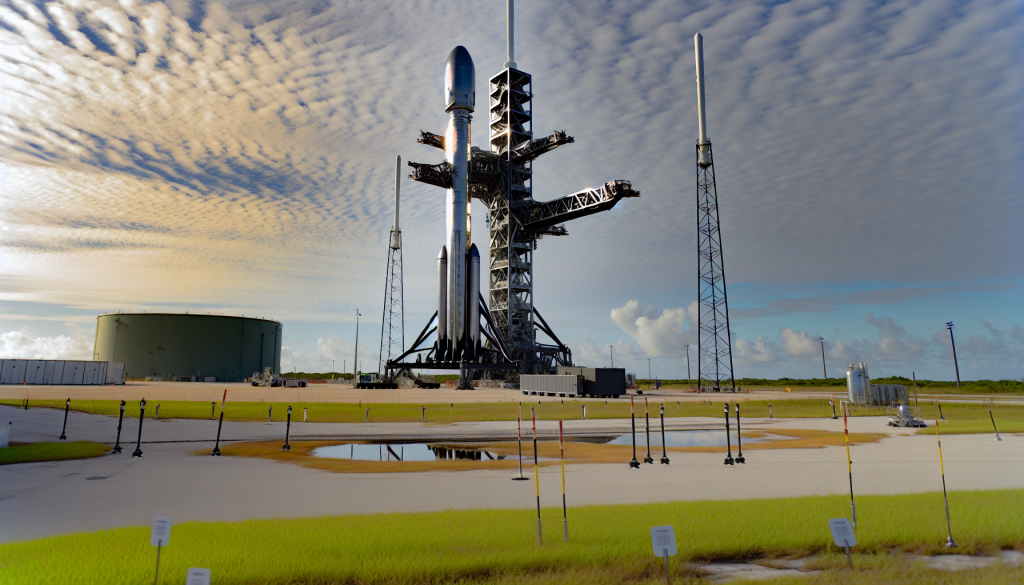
There has been growing pressure on the United States to send astronauts back to the moon by the end of this decade, with advocacy coming from both political parties and the scientific community. However, beneath this national ambition lies a complex array of obstacles.
NASA intends to rely on SpaceX’s Starship — the largest and most powerful rocket ever built — for part of its lunar mission. But with the vehicle still in the experimental phase, questions remain about its readiness. Meanwhile, China continues to advance rapidly in its space program.
“China will likely land astronauts on the moon within five years,” said Bill Nye, CEO of The Planetary Society. “This is a key moment in the history of space exploration.”
Starship has faced a rocky development process. In ten test flights, six have resulted in dramatic failures, including a recent explosion during a ground test. Another test, known as Flight 11, could launch as early as Monday evening from SpaceX’s Texas site.
Several critical technical hurdles remain. For instance, engineers need to devise a method to refuel Starship while it floats in low Earth orbit — a feat that's never been done before. This step is essential because of the rocket's size and fuel needs.
There’s also uncertainty about how many tanker launches will be necessary to fully fuel Starship for a lunar landing. One SpaceX executive estimated around 10 refueling launches, but NASA engineers later projected the number could exceed 40, depending on the spacecraft version in use.
The current version, known as V2, may be replaced soon by upgrades referred to as V3 and V4, which are expected to be larger and more capable. These future models could significantly influence mission design.
Even if the number of tanker flights is closer to 10, the complexity of NASA’s chosen approach to lunar exploration has drawn criticism. Former NASA Administrator Jim Bridenstine remarked, “This is a deeply complicated system. It’s not a process any previous NASA leader would have chosen if given full control.” That key decision — to use Starship as the lunar lander — was made in 2021 during a transitional period in agency leadership.
Acting NASA Administrator Sean Duffy responded to criticisms at a staff town hall, saying, “We won’t let that narrative define us. We will reach the moon before China.”
Due to the government shutdown, a spokesperson for current NASA management declined to comment on this issue.
Why NASA Isn't Repeating Apollo
NASA’s Artemis III mission, which involves Starship and multiple refueling trips, is far more intricate than the Apollo missions of the 1960s and 70s, where a single Saturn V rocket carried everything needed for the voyage.
This complexity exists partly because the original Apollo-era technologies, infrastructure, and production capabilities have long since vanished. Furthermore, NASA's current ambitions exceed those of Apollo.
The Artemis program aims for human exploration of the moon’s south pole — a region believed to contain water ice beneath the surface. The uneven terrain and specialized flight paths make it a far more demanding target than past missions.
Nurturing a sustainable presence on the moon, including living quarters and long-term research, is a core goal of Artemis. That vision requires powerful and flexible lunar landers, explained former NASA Administrator Bill Nelson.
“Landing at the south pole demands a larger, more capable craft,” Nelson said. “You can’t just take everything with you like the Apollo missions.”
Artemis III: A Complicated Mission Profile
Despite these ambitions, many say NASA could pursue a less complex approach than Starship. Under Artemis III’s blueprint, a basic Starship vehicle will launch and become an orbital fuel depot. Several additional Starship tankers will follow, delivering the necessary fuel in quick succession to combat threats like fuel evaporation.
Managing such logistics is especially difficult because Starship uses cryogenic fuel that boils off at warmer temperatures. “It's hard to quantify how much fuel loss will occur during transfer,” said Doug Loverro, a former NASA official familiar with mission architecture.
Once filled, this depot will support the launch of the Starship Human Landing System (HLS), which is designed to carry astronauts. Simultaneously, NASA’s SLS rocket will launch the Orion spacecraft carrying the astronaut crew.
Orion will travel to lunar orbit where it will dock with the Starship lander. Two astronauts will then board the Starship HLS for the descent to the moon’s south pole. After spending about a week on the surface, they will return to lunar orbit aboard Starship, reconnect with Orion, and return to Earth via splashdown.
NASA hopes to execute this complex mission by mid-2027 — potentially before China achieves its projected 2030 moon landing.
The Politics Behind Starship
Despite ambitious goals, experts caution that the timeline is unrealistic. “This mission structure is elaborate and may be a decade away from execution,” said Loverro. He argues that selecting Starship for Artemis III may have been a misstep.
Although SpaceX’s proposal appeared impressive, Loverro believes the vehicle won't be ready before China’s manned lunar landing. NASA has historically been impressed with SpaceX’s record but may have overestimated the timeline.
One former NASA insider noted that the selection was driven by detailed technical evaluations and budget constraints. Ideally, NASA would have chosen multiple companies to develop lunar modules, but financial limits forced a single award.
Blue Origin, one of Starship’s competitors, sued over the decision, arguing unfairness, but the court upheld NASA’s choice. In 2023, after more funding was secured, NASA invited Blue Origin to join later Artemis missions as well.
Starship boasts innovative potential not just for the moon, but for space travel in general. Yet critics warn that NASA may have selected it based more on its promise than its current readiness. “If speed is your goal to beat China, this makes less sense,” said Bridenstine.
Despite this, acting NASA chief Duffy has shown confidence in the plan. “We’ll raise concerns if and when they arise,” he said in an August interview, affirming SpaceX’s reliability thus far.
Recognizing Challenges Ahead
Although unease is growing about tying the moon mission’s success to one unproven system, few in leadership are ready to suggest major changes. Senator Ted Cruz echoed this in a September hearing, warning that altering plans now could jeopardize U.S. space leadership.
Privately, some industry insiders remain doubtful. “We’ve only just started to acknowledge the scale of the problem,” said Loverro.
However, many point to SpaceX’s consistent delivery on projects such as its partnerships with the International Space Station. During a NASA safety panel meeting in September, member Paul Hill called Starship’s schedule “pressured” and doubted a 2027 launch.
In response, NASA spokesperson Bethany Stevens emphasized that feedback from these committees is vital for safe and successful mission execution.
Nevertheless, Hill praised SpaceX for its unique ability to meet its goals. “The combination of resources, efficiency, and innovation at SpaceX is unmatched in the government or private sectors,” he said.