The US generates millions of tonnes of rice waste yearly. Now it is being used to build homes
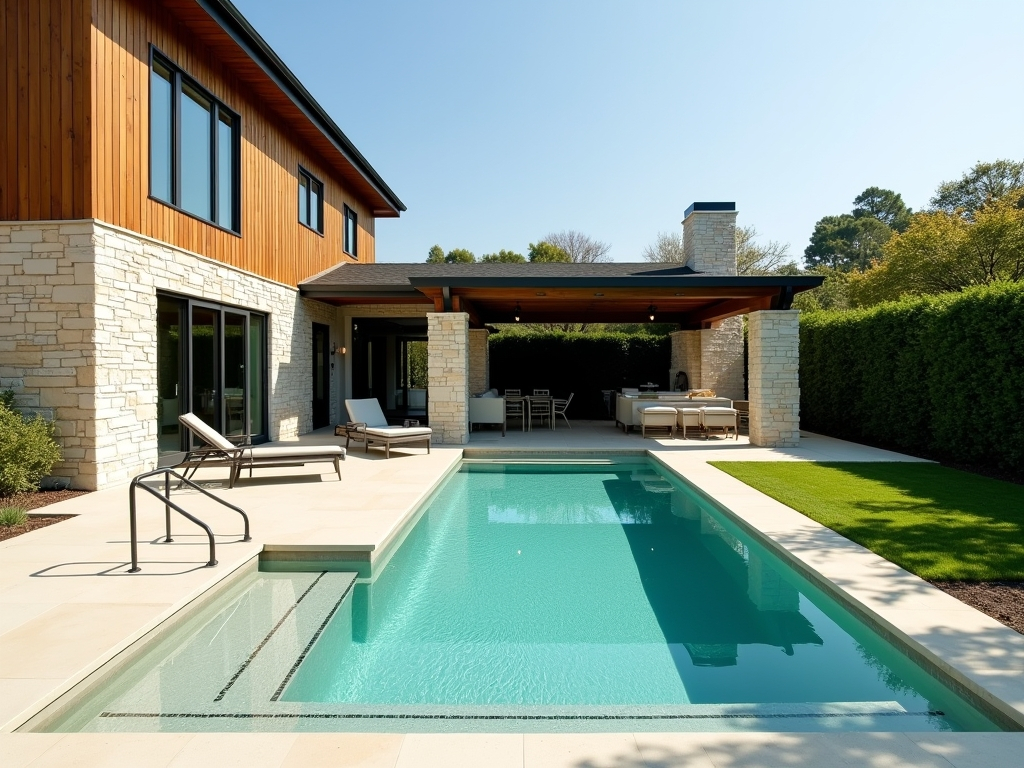
Once regarded as an awkward agricultural leftover, rice husk is increasingly being turned into a tough, long-lasting material for buildings.
In 2023, contractor David Fine faced a difficult assignment. He had been brought in to renovate an upscale ski condominium complex in Park City, Utah. The site’s design requirements were unusually demanding.
The older condos had started to deteriorate beneath the town’s deep, powdery snow, which can remain on the ground for much of the lengthy winter. The homeowners’ association had spent a year seeking a material that could cope with moisture while also standing up to the growing wildfire danger that arrives during summer.
They looked at options such as extruded aluminium, which offered strong fire protection but had an artificial appearance. Timber cladding, including cedar, provided the warm look they wanted, yet came with a lower fire-performance rating.
Eventually, they settled on a seemingly unconventional answer: boards manufactured from rice husks, the outer coating removed during rice production. “They wanted something with the appearance of wood, something attractive, but with better fire performance than conventional timber siding,” Fine says. Rice husk boards, he found, met those requirements.
Once treated as waste and, in some cases, as an environmental nuisance, rice husks are gaining attention as a flexible and lower-impact construction resource. Hundreds of US homes now feature rice husk cladding, while products ranging from decking to playground equipment are also being made from the material. So why are builders turning to this farm byproduct instead of more familiar choices?
Before harvest, rice husks shield the grain from damp conditions and insects. Once the rice is collected, however, the husks become one of the more difficult agricultural residues to manage.
About 150 million tonnes (331 billion lb) of rice husk are generated globally every year. Much of it is burned in fields or along roads, creating pollution that can harm people and ecosystems. In the US, where roughly nine million tonnes (20 billion lb) of rice are produced each year, husks may be used for biomass energy, although the ash created in the process does not always have an obvious destination.
Using this discarded material in construction could address two problems at once: reducing agricultural waste while supplying durable building products.
Beyond wall panels and other building components, studies indicate that ash from rice husks may serve as a substitute for some cement. Cement production is responsible for around 8% of global carbon emissions.
Christopher Guimond became interested in rice waste after learning that some US growers allow it to break down in the soil, where it can release methane, a powerful greenhouse gas. While studying engineering, Guimond began to see rice husks as a material with potential for large-scale use in the built environment.
“The appeal was taking something people throw away and making use of the qualities it already has,” he says.
Guimond is now chief executive of Modern Mill, a US company producing construction products from rice husks on a commercial scale. Since launching in 2018, the company says it has redirected more than nine million kg (20.5 million lb) of rice husks from landfill. Its panels were used on Fine’s Park City condominium project.
Elsewhere, businesses such as Germany’s Resysta and Italy’s Ricehouse are manufacturing or incorporating rice-husk-based materials in products including decking, coatings and insulation. Modern Mill has also applied the material to playground structures.
Rice husks naturally protect grains against rain, wind and pests. Their large silica content helps them resist water and deterioration, giving them characteristics useful in many construction applications. “A rice husk exists to protect the grain as it grows,” Guimond says. “It is protecting it from moisture, insects, decay and related threats.”
That same silica-rich composition can also improve fire resistance, according to Fine. Modern Mill’s product has been classified as compliant with Wildland Urban Interface standards, meaning it has passed California fire-safety tests.
Wood has long been seen as a comparatively sustainable building option. It is widely available in many temperate regions and generally produces fewer emissions than concrete or steel.
Yet timber can bring environmental and economic challenges as well, including exposure to market price swings, pressure on old-growth forests, and the loss of carbon stored in those ecosystems.
Rice husk is not the only unconventional construction resource under consideration. In many parts of the Global South, bamboo is being promoted as an alternative to concrete and to costly, slow-growing tropical hardwoods. Rice husk has a particular advantage, however, because it is plentiful, inexpensive and already considered a waste stream.
A recent study concluded that using fibrous crop leftovers from rice, wheat and maize in buildings instead of burning them could create a meaningful carbon store. Carbon held within the plant materials could remain locked into structures for decades.
Sabbie Miller, a sustainable construction materials specialist and professor of civil and environmental engineering at the University of California, Davis, says the carbon impact of a material can be complicated. Determining whether a product is genuinely low-carbon requires a careful life-cycle assessment.
Research suggests rice husk panels can match conventional materials in thermal insulation and sound control. In Italy, Ricehouse used rice-based panels in Casa LH, a recently finished project designed to improve both acoustic and thermal performance.
The home, which replaced an earlier structure, includes broad south-facing windows and an open-plan kitchen that welcome daylight and ventilation but can also bring seasonal heat and reverberation. “We needed another method to increase insulation and ensure acoustic comfort,” says Ricehouse communications officer Valentina Savioli. Choosing rice insulation was straightforward, she says, because of the material’s abundant volume and biomass.
Still, broader use may be difficult. Italian contractors are often cautious about building materials that have not yet become common, Savioli says.
Similar doubts exist in the US, along with practical obstacles such as pricing, Miller says.
“People can be reluctant to use a material if an engineer’s licence or future employment could be affected by a failure,” she says.
Rice husk products that do not carry structural loads, such as Modern Mill’s cladding panels, are likely to be easier to introduce than products intended for beams or other load-bearing roles, she adds. “It is generally much easier to adopt a new flooring product than a new beam material.”
Some US states already permit alternative structural materials, including earth blocks made from soil, water and stabilising additives, as well as hemp-based products.
Researchers have also investigated rice husk ash as a cement replacement. It can be blended into cement mixes or, in some applications, replace cement completely, particularly as a binder for earth blocks. That could cut cement use in construction, reducing both emissions and costs while allowing rice waste to contribute to structural materials.
A 2025 study suggested that rice husk ash, wood ash and rice straw could be combined to create a low-cost, carbon-negative material that would avoid the need for cement.
If these products can be developed and scaled, they may be especially valuable in parts of the Global South where large amounts of rice residue are burned and where billions of people still lack suitable housing.
In Africa, for instance, new homes are often built with concrete, sometimes with poor-quality results. “It can become the worst of both worlds,” says Ariana Karamallis, director of global engagement at housing non-profit Build Change in Colorado. When introducing materials such as rice husk, she says, developers need to find a balance between cost, scale and local suitability, without experimenting on communities that are already vulnerable.
Rice husk may have its greatest long-term opportunity in rice-growing regions of the Global South, but it is already appearing in US construction projects.
Since completing the Park City condominium work, Fine has installed rice husk panels on five more projects and has additional jobs planned. Installation costs are slightly higher than cedar, he says, but maintenance expenses can be lower over time because the panels resist moisture, sunlight and fire. He expects the products to become more price-competitive as more installers gain experience with them.
“I am always trying to use products that will endure for a very long time, hopefully longer than I will,” he says. Rice husk-based materials, he believes, could be among those lasting options.