"A 'wild town aiming for fossil freedom': Sweden's timber city that embraced green long before Greta"
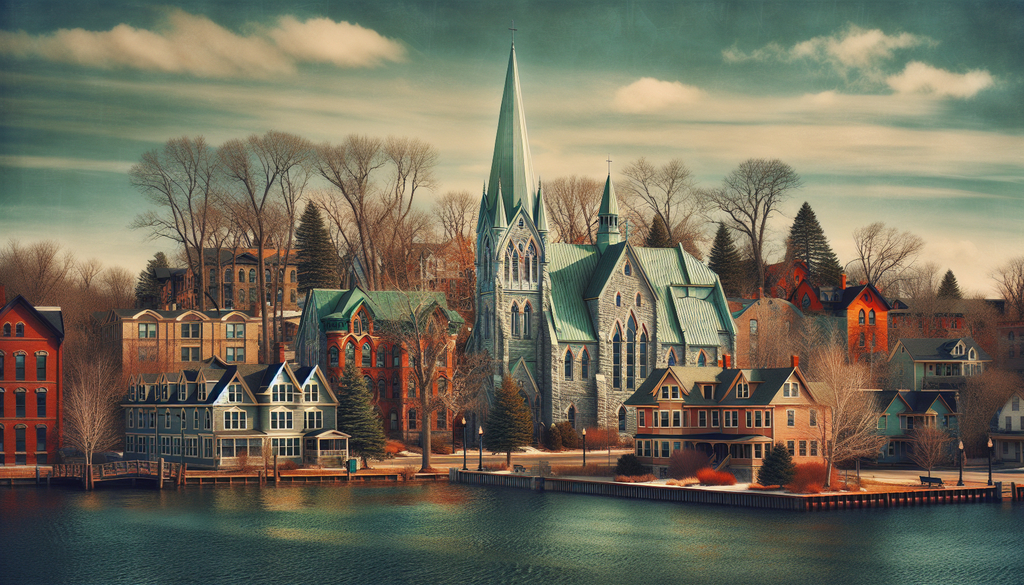
Long before Greta Thunberg emerged as a symbol of climate activism, the small city of Växjö was pioneering a green vision for urban living.
Nestled in southern Sweden, about 450km from Stockholm, Växjö lies in the Småland region, a verdant area surrounded by forests and tranquil lakes. This historic city, around 1,000 years old, is part of Glasriket, or the "Kingdom of Crystal", home to legendary glassmakers like Kosta Boda and Orrefors, artisans who have been creating dazzling glassworks with fire since the mid-18th century.
Yet, nowadays, that rich glass tradition is matched by Växjö’s environmental leadership. Despite its small size, with a population shy of 100,000, the city has become a remarkable model in the fight against climate change. Long before Greta Thunberg was born, Växjö set out on a path that caught the world’s attention with its groundbreaking commitment to sustainable living.
“In 1996, there was a seminar led by our mayor,” recalls Henrik Johansson, who serves as Växjö’s environmental strategist. “The question posed was: ‘What if we aimed to live in a city free of fossil fuels?’” By the end of that meeting, a decision was made. Växjö boldly became the world’s first city to strive for eliminating fossil fuels from its energy mix. Today, the city's ambition has grown even more audacious with a target to achieve climate neutrality by 2030, 15 years ahead of Sweden’s national goal.
The city’s trailblazing green commitment first garnered international media attention in the 1990s, with curious reporters from as far away as Japan taking long-haul flights just to witness what Johansson jokes was seen as a “crazy town trying to go fossil free”. The effort paid off. Since that time, Växjö’s carbon emissions per capita have dropped by over 70% from what they were in the 1990s, all while the city thrived, growing by a third in population and doubling its GDP per capita.
The city actively uses biofuels made from organic waste to power its buses and city vehicles. Furthermore, more than 90% of Växjö’s energy comes from biomass, largely sourced from the vast surrounding forests. This includes materials like sawdust or branches discarded by timber industries, such as those providing wood for IKEA, based just a short train ride away in Älmhult.
Yet, not all emissions have disappeared. Personal vehicles still contribute to CO2 levels as some drivers remain reluctant to switch to the widely available electric car charging stations or bioethanol fuel options Sweden offers. But the city highlights that buses and municipal vehicles are already running on biofuels derived from local households’ organic waste.
Arguably, Växjö's most stunning transformation has been its push towards timber constructions. Today, half of all new buildings are wooden, with the timber supplied by the same forests that have sustained the region for centuries.
When I first arrive by train, I’m immediately struck by the remarkable amount of wood integrated into the city’s architecture, even at the Central Station. The seven-storey structure, which also houses the City Hall, uses timber throughout its design. The warm, spacious interior doubles as a public hub where locals and visitors alike can explore the tourist office, peruse artwork, or just relax. Locals refer to it affectionately as their city’s "living room".
Nearby sits Växjö’s cultural core, a collection of museums including the Swedish Glass Museum, as well as the House of Emigrants, where the stories of Swedish emigration to North America come to life. The area also boasts an array of heritage buildings including a traditional windmill painted in Sweden’s iconic red hue – a testament to the country’s historic use of renewable energy sources.
Walking down to the banks of Lake Trummen, I come across trails lined with contemporary sculptures chosen by locals via public vote. The nearby Växjösjön lake is similarly decorated, reflecting the city’s appreciation for art and aesthetics. Not far from the lakeshore is the striking Kvarteret Geologen, a cluster of award-winning wooden apartment buildings that make for an impressive skyline – all part of Växjö’s pioneering residential wood architecture.
Accompanying me on my tour is Olivia Thim, a sustainability expert from the real estate company Vöfab. She proudly explains, “For a long time, we had the tallest wood building in Sweden. Our philosophy is that we should build everything in wood first, from apartment blocks to schools to sports arenas.”
Architect Karin Hård Af Segerstad from Arkitektbolaget further highlights the cutting-edge techniques used in these constructions, such as cross-laminated timber (CLT), reinforced with cedar finishes and natural wood interiors that not only delight the eye but foster a sense of well-being among residents. “People just feel better surrounded by timber,” she says.
What Växjö has achieved isn’t limited to architecture alone. Engineers and architects have used local university resources to research and improve upon wooden building practices, even embedding sensors to monitor structures over time. “Researchers now come to study this from all over, places as close as Germany and as far as Congo,” Segerstad shares. The city's reputation as a leader in wood-building design now attracts global attention.
Beyond its buildings, Växjö's eco-friendly ethos extends into its energy infrastructure. Strolling through the heart of the city, old clapboard buildings have been converted into trendy shops, while restaurants like Kafe de Luxe serve farm-to-table dishes sourced locally. Meanwhile, PM & Vanner, a chic local hotel, offers organic and seasonal menus, with food waste being transformed into biofuel and textiles recycled to minimize waste.
Before my time here ends, I meet Erik Tellgren, the CEO of the local energy provider VEAB. He walks me through their intricate system of powering Växjö almost exclusively on "waste" wood from nearby forests. “Left to rot, this wood would release CO2 into the atmosphere,” he says. “By using it, we prevent that, and we also return the ash to the forest floor, which makes an excellent fertilizer.”
Smiling, he reflects on how the city's journey with wood has come full circle. Växjö’s first power plant in the 1880s relied on wood, and now, over a century later, the city’s return to wood-powered energy is helping chart the world’s course away from fossil fuels.
“We’ve come back to wood,” he says, “just in a different way.”
--
If this story resonated with you, why not subscribe to The Essential List newsletter? Receive handpicked stories, videos, and top news straight to your inbox twice a week.
For more travel stories like this, follow BBC Travel on Facebook, X, or Instagram.