The Ardèche: France's breathtaking open-air adventure haven
A land of rocky ravines, postcard-perfect villages, more than 6,000km of cycling routes and wonderfully sparse crowds awaits.
My bike sweeps downhill as a rush of wind surges past my ears. To my right, a waterfall spills down a vivid green hillside. Ahead, honey-coloured stone houses edge the road. Within minutes, the medieval village of Chambonas comes into view, its dark-turreted castle rising above the valley. I push onward, veer left after a narrow bridge and finally coast into Les Vans, tired but exhilarated.
For three days, I’ve been pedalling through the western Ardèche – across rolling mountains, beside rock-filled gorges and into forests and timeworn villages where roadside signs tempt passersby with homemade goat cheese, chestnuts and honey.
Despite its striking scenery, the Ardèche remains overlooked by many international visitors. Tucked between Lyon and Provence, it is one of France’s most rural regions, and that isolation is part of its charm. Forested peaks, lively rivers and steep limestone valleys form a vast playground for outdoor lovers, offering a peaceful alternative to the bustle of Paris or the packed Mediterranean coast in summer.
The Ardèche’s rugged terrain and sparse population mean it is the only one of France’s 101 departments without passenger rail service, an airport or a motorway. Instead, travellers find a heritage steam train, ancient vineyards, medieval hamlets and prehistoric caves that preserve a sense of an older France.
The region boasts more than 6,000km of cycling trails and a powerful river threading through its landscape, making it ideal for exploring by bike or paddle. After refuelling with a hearty plate of Dauphiné ravioli and wandering the cobbled lanes of Les Vans, I set off east to discover more of this untamed territory.
From Les Vans, it’s a 35km journey along section six of the Grande Traversée de l’Ardèche to Vallon Pont d’Arc. The route passes sculpted rock formations, forests and sweeping vineyards. Drawn by the shimmering Ardèche River that winds alongside the road, I join a 7km guided kayaking excursion to experience the waterway up close.
“You can travel two hours here and feel as if you’ve crossed several countries,” my guide remarks as we paddle downstream. Changes in altitude create shifting ecosystems, resulting in remarkable diversity across short distances.
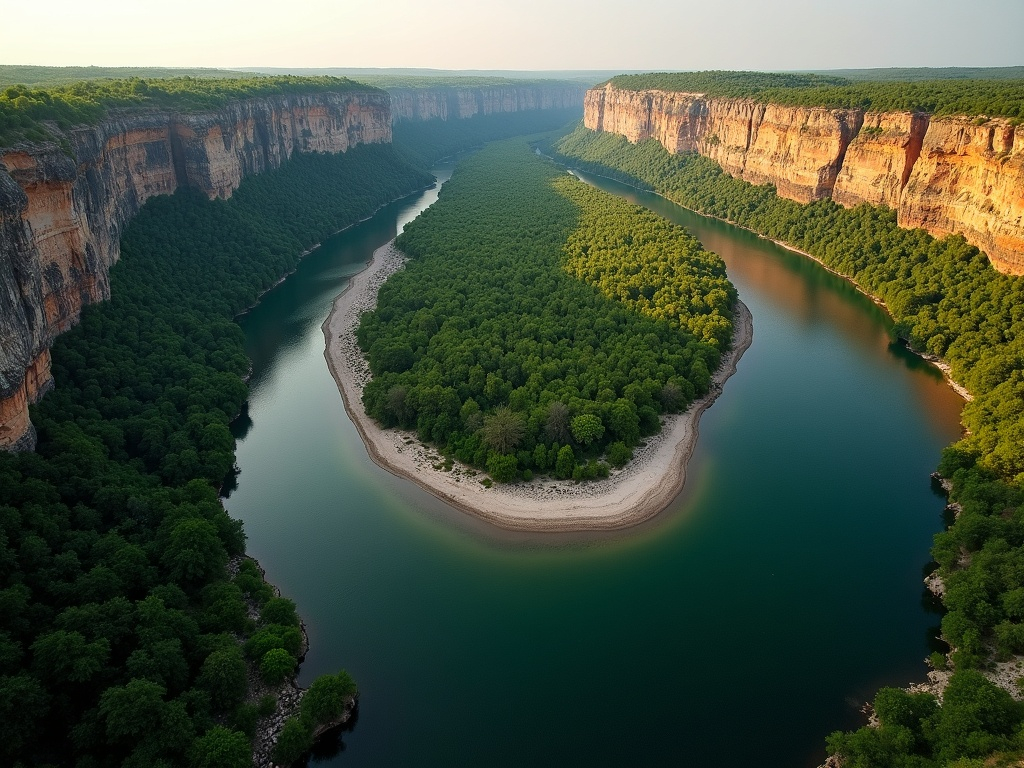
Over millions of years, this sinuous river carved a dramatic canyon through limestone, forming what is now the 1,575-hectare Ardèche Gorges Nature Reserve – one of France’s most breathtaking landscapes. The reserve shelters hundreds of plant and animal species and offers opportunities for hiking, climbing, canyoning and cave exploration.
We glide beneath holm oaks and Aleppo pines, below towering cliffs and past sandy banks where hardy swimmers embrace the cool water. Soon the Pont d’Arc appears: a 54m-high natural stone arch sculpted by the river’s persistent flow. In peak summer, the scene fills with boats, but in late spring only a few kayakers and climbers share the view.
Nearby lies Chauvet Cave, discovered in 1994 and home to paintings dating back 36,000 years – far older than those at Lascaux. The original cave is too delicate for visitors, but a detailed replica allows guests to wander among lifelike renderings of cave lions and woolly rhinoceroses, offering a powerful glimpse into Paleolithic artistry.
Back in Vallon Pont d’Arc, seasoned cyclists often tackle the D290, the “Route des Gorges”, known for its sweeping viewpoints over the river’s dramatic bends. Wild goats sometimes appear along the narrow mountain road. Instead, I head south.
After 20km on the D217, I reach the Aven d’Orgnac, the only cave designated a Grand Site de France in recognition of its significance and careful stewardship. Though uneasy with heights and confined spaces, I find myself harnessed and descending 50m into darkness.
Lowering ourselves steadily, my partner and I emerge from the shadow into a vast chamber reminiscent of an underground cathedral. Carefully positioned lights reveal immense stalagmites rising like sculpted towers from the cave floor.
Visitors can choose gentler ways to explore: guided walks, wine tastings in the cavern’s cool depths or an aerial climbing route suspended near the ceiling.
Throughout the Ardèche, signs advertise chestnuts and chestnut delicacies. Curious, I sample chestnut sorbet, pastries and even chestnut-infused drinks before visiting the medieval town of Joyeuse to learn more at a local museum dedicated to the crop.
The exhibits reveal how generations relied on chestnuts for sustenance and timber. Today, roughly half of France’s chestnut harvest comes from this region, and an annual autumn festival celebrates the prized nut. As one display notes, the chestnut stands as a testament to the labour and resilience of the local people.
Lavender is another emblem of southern Ardèche. At a 23-hectare estate in Saint-Remèze, neat rows of low bushes stretch across the fields. Though not yet in full bloom, hints of violet colour the landscape. My guide explains that eliminating pesticides slows production but preserves traditional methods and ensures high-quality results rooted in craftsmanship.
Winemakers here also contend with the region’s steep slopes. Large-scale farming has never been easy, so growers built terraced gardens known as faïsses to cultivate vines by hand. The demanding terrain, one vintner tells me, has shaped both livelihoods and character.
Perhaps the most intimate way to experience this dynamic land is on foot. In addition to its cycling network, the Ardèche offers another 6,000km of hiking trails. After days of riding and paddling, I lace up my boots and follow a stream up a rocky incline toward the Tour du Tanargue.
At a bend in the path, I pause and look back. Layers of green mountains ripple toward the horizon while a light breeze stirs chestnut and pine trees. Two cyclists in bright jerseys flash along the road below. Otherwise, this quiet corner of France feels entirely my own.