Fears of stagflation loom over US markets despite Trump's growth-focused agenda
Feb 20 (Reuters) - Persistent inflation combined with President Donald Trump's aggressive trade policies have reignited concerns of stagflation—a troubling mix of slow economic growth and high inflation, reminiscent of the 1970s. Despite these concerns, markets remain largely optimistic about his pro-growth initiatives.
Although stagflation has frequently been discussed as a potential risk over the past 50 years, it has yet to materialize as a serious threat. Still, in recent weeks, it has resurfaced as a key worry for investors, largely due to the possibility of escalating trade disputes and punitive tariffs that could stifle U.S. economic expansion.
"Stagflation is back on the radar because certain policies could dampen consumer demand, while persistent inflation limits the Federal Reserve's options," said Jack McIntyre, portfolio manager at Brandywine Global. "The likelihood is certainly not zero anymore."
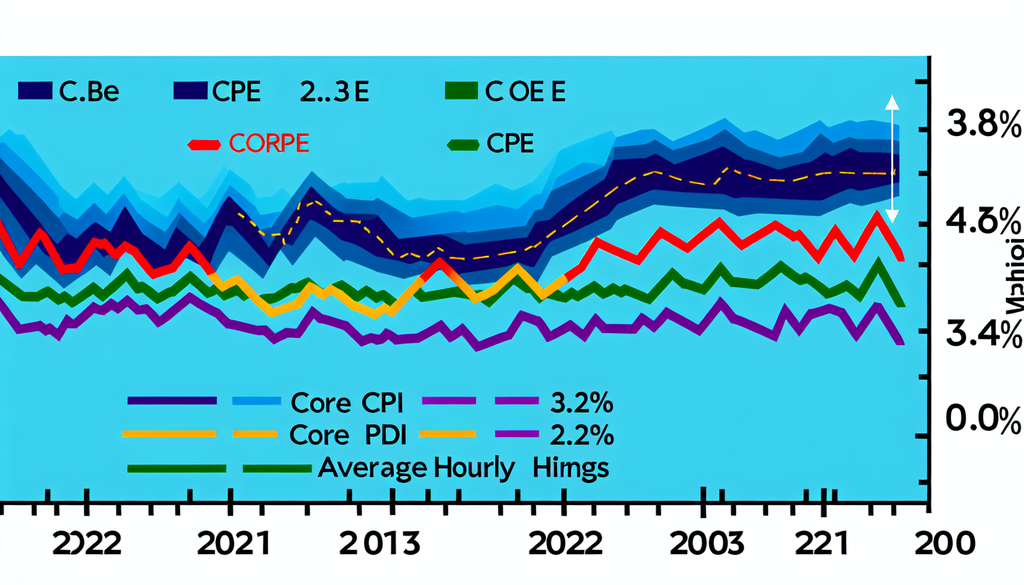
A critical element of stagflation—stubborn inflation—became more apparent earlier this month when government data revealed consumer prices in January saw their sharpest monthly increase since August 2023, pushing annual inflation to 3%.
Meanwhile, economic growth in the U.S. faces uncertainty, with Trump's tariff policies potentially amplifying inflationary pressures.
"More than just inflation, stagflation is our bigger concern," said Tim Urbanowicz, chief investment strategist at Innovator Capital Management. "Inflation is already sticky, and tariffs risk slowing the economy further by effectively taxing consumers and straining corporate profits and overall growth."
A Bank of America survey released Tuesday revealed a rising number of global fund managers expect stagflation—defined as below-trend growth paired with above-trend inflation—over the next year, reaching its highest level in seven months. Despite this, investor sentiment toward stocks remained generally optimistic, with trade wars seen as a lower probability risk, the survey found.
At the start of February, Trump delayed imposing new tariffs on Canada and Mexico for a month. However, he has proceeded with a new 10% duty on all Chinese imports and announced tariffs on global steel and aluminum.
He has also instructed his economic team to devise reciprocal tariffs on countries that tax U.S. imports. Additionally, he recently signaled plans to implement 25% tariffs on automobiles, semiconductors, and pharmaceutical products.
Some investors believe any economic slowdown caused by tariffs will be short-lived.
In the long run, tariffs could even stimulate growth, argued Maddi Dessner, head of asset class services at Capital Group, by nurturing industries that benefit from reduced overseas competition. However, she acknowledged that tariffs could initially contribute to price pressures.
"We’ll probably end up somewhere between these two scenarios," she said, noting that heightened tariff concerns played a role in Capital Group's revised forecast for 10-year Treasury yields—now projected at 3.9% over a 20-year horizon, compared to 3.7% previously.
Worries about stagflation also surfaced in 2022, when inflation soared, and both stock and bond prices tumbled. However, those fears eased as inflation slowed and economic growth persisted.
Some experts believe the U.S. economy will once again sidestep stagflation.
Core inflation remains at approximately 3%, far below the 7% annual average seen in the 1970s. Unlike back then, long-term inflation expectations remain "anchored," meaning economic data releases are not causing significant swings in inflation forecasts, Evercore ISI noted in a recent report.
Still, Mark Zandi, chief economist at Moody’s Analytics, cautioned that markets may be underestimating the stagflation threat. He pointed to Trump's pledge to deport undocumented workers, arguing that large-scale deportations could drive up labor costs and inflation.
"Tariffs and deportations are both negative supply shocks that can contribute to inflation while restricting growth," he said, referencing similar shocks—such as soaring oil prices—that fueled stagflation in the 1970s.
Guneet Dhingra, head of U.S. rates strategy at BNP Paribas, believes markets have been overly complacent, focusing on Trump's growth-friendly policies. Investors wary of stagflation, he suggested, might sell two-year Treasury bonds—expected to depreciate due to higher inflation—and instead buy 10-year bonds, which would be more favorable in a slow-growth environment.
The recent surge in gold prices, which hit another record high Wednesday, signals that some investors are preparing for stagflation, said Matthew Bartolini, head of SPDR Americas Research at State Street Global Advisors, noting that gold retains its value even in such conditions.
Another potential beneficiary would be cash, said Brandywine’s McIntyre. However, he emphasized that he is not yet making major shifts toward cash-like fixed-income investments.
"I'm holding off for now," McIntyre said.