Addressing Your Questions on President Trump’s Tariff Policies
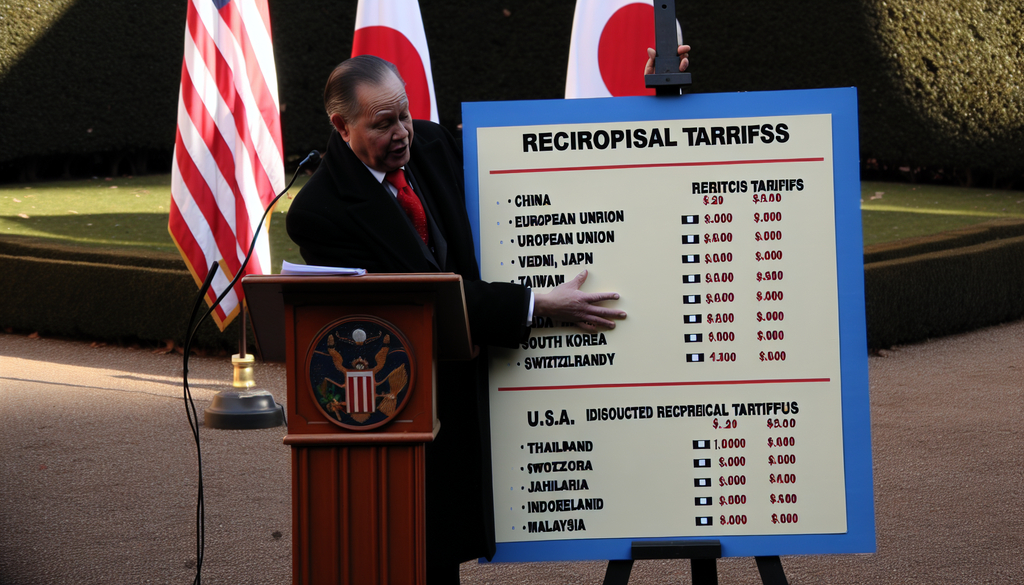
WASHINGTON (AP) — When President Donald Trump resumed office in January, he came back with a mission: to shift decades of U.S. trade policy by constructing a tariff shield around the American economy, historically open to foreign imports.
His effort to bring this vision to life has thrown financial markets into flux and left many consumers uneasy, thanks to a rotating set of tariff announcements. The approach has often followed a now-familiar cycle: unveil new tariffs, delay their enforcement, and then introduce different ones. This unpredictability has left many businesses hesitant to move forward, and economists warn that the rising costs from tariffs could stifle economic expansion.
Trump argues that tariffs are a tool to revitalize U.S. manufacturing, draw production back home, and generate federal revenue.
But a recent court ruling is questioning how far he can stretch his authority to impose such taxes on imported goods.
The Associated Press responded to reader queries surrounding the president’s tariff strategy. Here are several questions, along with our explanations:
Is Trump permitted to enact tariffs without Congress?
The Constitution grants Congress the authority to set taxes, which includes tariffs — taxes applied to imported goods. However, over time, legislative powers regarding trade policy have been delegated to the executive branch through various legal measures.
One such statute, Section 232 of the Trade Expansion Act of 1962, enables the president to impose tariffs on imports deemed a threat to national security. Trump utilized this clause to levy tariffs on steel and aluminum during his first administration and later targeted cars and auto parts. Nevertheless, Section 232 demands an extensive Commerce Department review before any action can be taken.
Get continuous updates like this by joining our WhatsApp broadcast.
Another legal route is Section 301 of the Trade Act of 1974, which allows the president to act against nations found to engage in unfair trade behavior following a review by the U.S. Trade Representative’s office. During his initial term, Trump used Section 301 to target China, citing its aggressive tactics such as subsidizing domestic firms and extracting proprietary technology from U.S. companies.
Wanting to act more swiftly upon returning to power this year, Trump bypassed traditional review processes and invoked the International Emergency Economic Powers Act (IEEPA) of 1977. He argued that this law permitted him to declare a national emergency and issue tariffs in response.
In February, he declared the cross-border flow of illicit drugs and migrants an emergency, implementing tariffs on Canada, Mexico, and China. A month later, he labeled chronic U.S. trade deficits a national emergency and expanded duties nearly worldwide.
So far, at least seven legal challenges have been mounted against these tariffs. On Wednesday, the U.S. Court of International Trade ruled against him, finding that the use of IEEPA for broad tariff authority overreached presidential power.
The court’s three-judge panel concluded that the emergency statute doesn’t allow for comprehensive import taxes and called out the disconnect between the declared emergencies and the tariffs’ actual function. The Trump administration submitted an appeal, and on Thursday, an appellate court ruled that the government may continue collecting the disputed tariffs while the legal battle proceeds.
Some in Congress are pushing back. Republican Senator Chuck Grassley of Iowa and Democrat Senator Maria Cantwell of Washington proposed legislation that would make presidential tariffs subject to a 60-day congressional review. Without approval, the duties would lapse.
Still, that bill faces long odds, given the political dynamics, including Trump’s influence within his party and the option to veto legislation.
Are there alternative legal paths for Trump to levy tariffs?
Indeed, Trump retains access to other legal mechanisms, and his team has suggested they are prepared to pursue them. However, taking the lawful route could take more time and may not allow him to reinstate every levy that was previously active or planned.
In fact, the court decision even hinted at an appropriate path: if Trump’s goal is to reduce trade deficits, he might turn to Section 122 of the 1974 Trade Act, which allows limited tariffs — up to 15% — for a temporary 150-day period.
The broader interpretation of the ruling emphasized that while Congress can delegate trade powers, such delegation must be through laws with clear requirements that the president must follow precisely.
One recurring tool is Section 301 of the 1974 act, which requires a formal review of another country’s conduct to determine violations of trade agreements or the use of unfair practices before any measures can be imposed.
Another provision, Section 338 of the Tariff Act of 1930, permits up to 50% tariffs on goods from nations that discriminate against American exports — and it doesn't require an interagency probe. Section 201 of the 1974 law is another option, suitable for taxing imports linked to harm caused to a U.S. industry. This measure was invoked in 2018 to place restrictions on some solar technologies.
Where does the government allocate the money from tariffs?
If courts ultimately reaffirm Wednesday’s decision and invalidate the contested tariffs, any collected duties would be refunded to the companies that paid them.
If upheld, tariff revenues are funneled into the U.S. Treasury alongside income taxes from individuals and corporations and are used to fund government operations. Collected tariff funds have surged recently, with levels projected to hit around $22 billion as of May — up substantially from $6 billion in February, before major tariffs were enacted. Nomura Securities economists estimate the now-disputed tariffs have brought in between $40 billion and $60 billion so far.