
Newly found fungus transforms cave-dwelling spiders into 'zombies'
Subscribe to CNN’s Wonder Theory science newsletter to journey through space and time with the latest scientific discoveries, breakthroughs, and more.
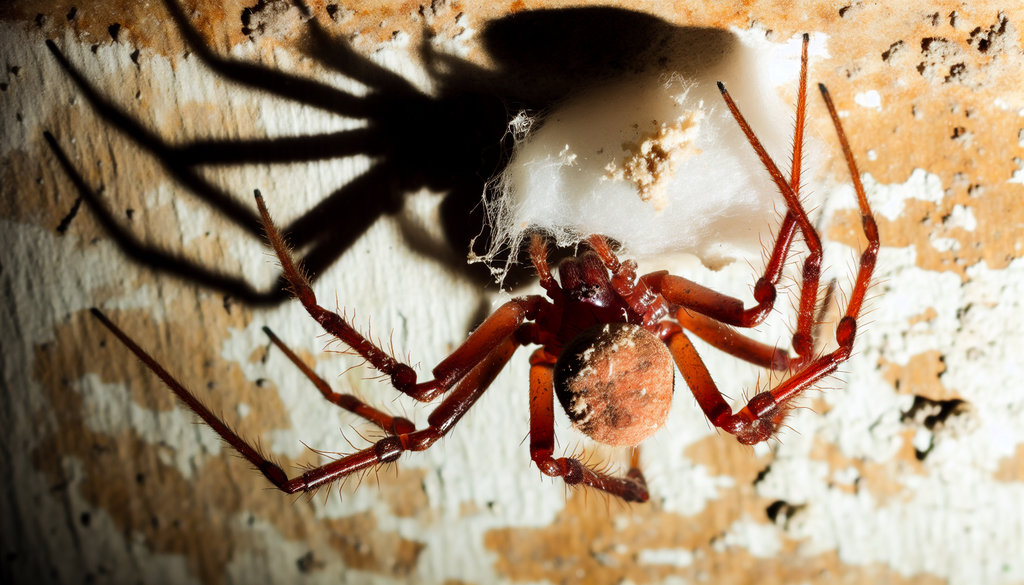
European scientists have uncovered a previously unknown fungus species that turns cave spiders into “zombies.” This fungus compels spiders to abandon their webs, leading to their premature demise, and then utilizes their lifeless bodies to disperse its spores.
The new species, dubbed Gibellula attenboroughii, exhibits behavior similar to the well-known zombie ant fungus, seemingly influencing its host to relocate to an ideal spot for fungal propagation, according to research published on January 24 in the journal Fungal Systematics and Evolution.
However, how exactly the fungus influences the spider’s nervous system remains unclear, and many questions linger regarding its evolutionary development and ecological significance.
“We are familiar with fungi manipulating ants and wasps, but this occurrence in spiders introduces a new origin for behavioral manipulation,” explained study coauthor Dr. João Araújo, a mycologist at the Natural History Museum of Denmark and assistant professor at the University of Copenhagen. “It’s a fascinating phenomenon that’s relatively rare in the parasitic world.”
This discovery opens the door for deeper research into fungi that exert control over animals, shedding light on the incredible biodiversity of fungi yet to be uncovered.
Discovery of the Zombie Spider Fungus
This fungus belongs to a specialized group that exclusively targets spiders.
Scientists previously observed a different Gibellula species (G. aurea in Brazil) potentially influencing spiders to migrate beneath leaves before dying, as detailed in a November 2022 study coauthored by Araújo. However, the behavioral manipulation in that instance was not as strikingly evident as with G. attenboroughii and its effect on cave-dwelling spiders.
To date, G. attenboroughii has only been detected in two orb-weaving cave spider species, Metellina merianae and Meta menardi, both found in various regions of Europe.
Related Article: When a colossal asteroid wiped out the dinosaurs, ants started cultivating fungi.
The fungus was first noticed under curious circumstances: While filming a documentary in 2021 inside an abandoned gunpowder storeroom at Castle Espie Wetland Centre in Northern Ireland’s County Down, a TV crew stumbled upon an infected orb-weaver spider.
The spider’s unnatural placement—out in the open, away from its web—suggested the fungus had induced abnormal behavior.
Subsequent investigations found more infected spiders in cave environments in Northern Ireland and Ireland, often positioned in exposed areas along cave walls or ceilings, according to the study.
“Web-building spiders typically stay within their webs, as their anatomy is adapted for such a habitat. They're not particularly adept at navigating across open terrain,” said Dr. Jay Stafstrom, an arachnid sensory ecology specialist and postdoctoral researcher at Cornell University.
“The idea that a fungus can infect a spider and influence its behavior in a way that benefits the fungus is truly remarkable,” Stafstrom noted. He was not involved in the research.
Scientists are still uncertain about the specific mechanisms at play. However, the team theorizes that the fungus entices spiders out of the protection of their webs, exposing them to air currents that facilitate spore dispersal, said Araújo, who is also an honorary research associate at the Royal Botanic Gardens, Kew, in the UK.
Researchers have yet to identify which metabolites—compounds produced by fungi that interact with their hosts—are being released into the spiders' brains. While further research is needed to assess the broader ecological impact of G. attenboroughii, Araújo believes it does not pose a major threat to the affected spider populations.
Related Article: Scientists say a spider forces male fireflies to flash like females, luring them into a deadly trap.
“Fungi have existed for over 100 million years, coevolving with spiders, insects, and other fungi over time,” Araújo noted.
“We can hypothesize that they help maintain ecological balance,” he continued, pointing out how zombie ant fungi have been observed regulating insect populations.
Unveiling More About Fungi
While roughly 150,000 fungal species have been documented, researchers estimate this represents only about 5% of fungal diversity, said Dr. Matthew Nelsen, an evolutionary biologist and research scientist at the Field Museum of Natural History in Chicago. Nelsen, who was not involved in the study, emphasized that such findings highlight the need for more research.
“This study underscores the challenge of mapping fungal diversity and will undoubtedly encourage further exploration,” Nelsen remarked via email.
The study also observed mycoparasites—fungi that consume other fungi—feeding on G. attenboroughii, indicating that infected spiders serve as vital food sources for other fungi and contribute to the intricate web of life.
Fungal parasites often spark sci-fi-inspired nightmares, as seen in HBO’s series The Last of Us, which was reportedly inspired by the zombie ant fungus. (HBO is a subsidiary of Warner Bros. Discovery, CNN’s parent company.) However, humans need not fear G. attenboroughii, Nelsen reassured.
“While some cave-dwelling fungi pose risks to humans, this particular species only infects spiders,” he explained. “For it to threaten humans, it would need to evolve the ability to withstand our body temperature and bypass our immune defenses—both significant barriers.”
Related Article: A bizarre fungus might turn emerging cicadas into ‘saltshakers of death,’ researchers suggest.
Looking ahead, Araújo and his team plan to continue investigating these spider-infecting fungi, studying their evolutionary paths, interrelationships, and potential applications.
“Imagine the compounds these fungi are producing that allow them to manipulate spider behavior,” Araújo mused. “Such discoveries could offer groundbreaking insights into treatments for neurological diseases like Alzheimer’s. There’s a lot of untapped potential.”



