Can Mexico restore the endangered axolotl population?
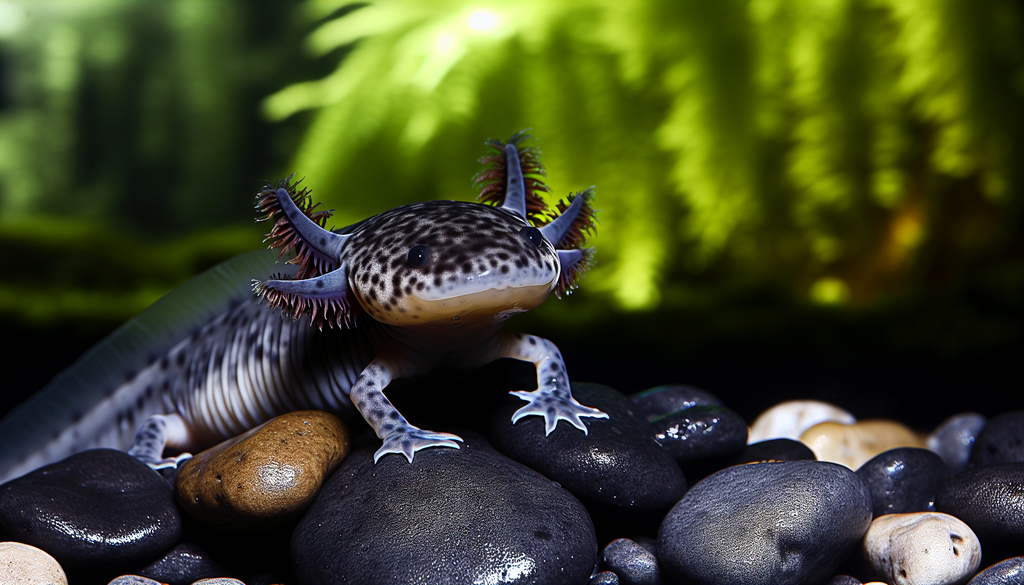
One of the world’s rarest amphibians — the ancient, aquatic axolotl — has shown signs of adapting successfully to a new setting after scientists introduced it into man-made wetlands in Mexico.
Offering a ray of optimism for the endangered species known as Ambystoma mexicanum, a group of researchers recently placed 18 axolotls bred in captivity into two specially constructed wetland habitats near Mexico City, an initiative aimed at reversing the trend of population decline caused by pollution and urbanization.
Recommended Stories
Are dire wolves truly back? What science tells us
Experts recreate wolves resembling long-gone species through gene editing
Record-breaking March heat highlights mounting climate risks
A global biodiversity emergency driven by our food system | All Hail
The team fitted the amphibians, known for their perpetual grin, with tracking devices and observed them feeding in both locations. Lead scientist Alejandra Ramos from the Autonomous University of Baja California described the outcome as “incredible” when speaking to the BBC.
The research, published in the journal PLoS One, suggests this amphibian may still have a future in its ancestral environment with the right interventions.
What exactly is an axolotl?
Cultural mythology holds that the axolotl was once a deity – the Aztec god Xolotl, associated with fire and lightning. Over time, that legend transformed into the real-life creature now cherished across Mexico.
Although exact population numbers remain uncertain, the uniquely Mexican species was officially listed as “critically endangered” by the International Union for Conservation of Nature in its 2019 Red List.
These amphibians breathe through both their skin and gills, and they possess remarkable regenerative abilities, capable of healing parts of their heart, spinal column, and brain tissue.
Typically dark-skinned, with albino versions bred in controlled environments, axolotls are known for staying motionless for hours, often buried in lake sediment, biding their time until prey is nearby.
In their last stronghold, Lake Xochimilco in southern Mexico City, their population has plummeted. In 1998, researchers recorded approximately 6,000 axolotls per square kilometer. By 2014, that number had fallen to only 36.
Why is the axolotl so vulnerable?
Mexico’s ecosystems, ranging from misty cloud forests to arid deserts, support incredible amphibian diversity. But many species, including the axolotl, are under growing pressure.
Once fed by mountain springs and used in ancient agricultural methods, the canals of Xochimilco were ideal for axolotls. But urban expansion has polluted these waters, making them increasingly uninhabitable.
Non-native fish like rainbow trout, which escaped from aquaculture farms, now outcompete axolotls for food and space, altering the delicate ecosystem they rely on to survive.
Adding to their plight is the chytrid fungus, a deadly skin infection that has devastated frog populations globally. Although detected in Mexico, its impact on axolotls remains limited — for now.
Even slight changes in temperature and rainfall patterns, symptoms of a shifting global climate, can disrupt ecosystems and threaten amphibians deeply adapted to specific environments.
Concerns were raised in 2013 that axolotls might vanish by 2025 if conservation efforts failed.
Other Mexican fauna under threat include the pine forest stream frog, the clarion night snake, and the Mexican alligator lizard — all listed as critically endangered.
What did conservation efforts involve?
Researchers began by closely studying axolotl biology to better understand the environmental conditions they require to thrive.
Collaborating with local agricultural communities and volunteers, they developed artificial “refuges” within Xochimilco — wetlands engineered with natural biological filters to cleanse the water.
Axolotls were then introduced into two kinds of ecosystems: rehabilitated natural wetlands and purpose-built artificial ones, both crafted to encourage long-term sustainability.
These wetland types vary in water composition, structure, and temperatures — all of which heavily influence amphibian survival patterns.
Tagged with small radio transmitters, the axolotls were tracked after being set loose, revealing their capacity to adjust to both conservation zones effectively.
Even as dedicated professionals led these interventions, an unexpected cultural renaissance has helped raise awareness. In 2021, the popular video game Minecraft added the axolotl as a playable creature, sparking global fascination. That same year, Mexico’s 50-peso banknote featured the animal in its design.
Now, axolotls grace public art, appear on clothing, and inspire pastries across the country. Specialty cakes and cookies shaped like the amphibian have become trendy in local bakeries.
“Losing this species would mean losing a piece of Mexico’s cultural soul,” said Luis Zambrano, project co-lead and scholar with the National University of Mexico, in a BBC interview.
Is there hope for other species?
Across the globe, amphibian populations are under siege by warming temperatures, habitat fragmentation, and rising disease prevalence. Around half are declining, and nearly one-third face the looming threat of extinction.
The researchers behind the axolotl's reintroduction stress that adequate public investment is essential to halt the loss of these delicate species.
However, during his administration from 2018 to 2024, President Andres Manuel Lopez Obrador reduced the national environmental budget by 35 percent, hampering conservation efforts.
While the axolotl study offers a model for ecological revival, scientists emphasize that a joint response involving policymakers, businesses, and citizens is necessary to maintain momentum.
“Species are disappearing as their habitats degrade around the globe,” said Ramos. “Restoration isn't simple — but with collaboration, it's entirely possible.”