Study Reveals Top 10% Wealthiest Responsible for Majority of Global Warming
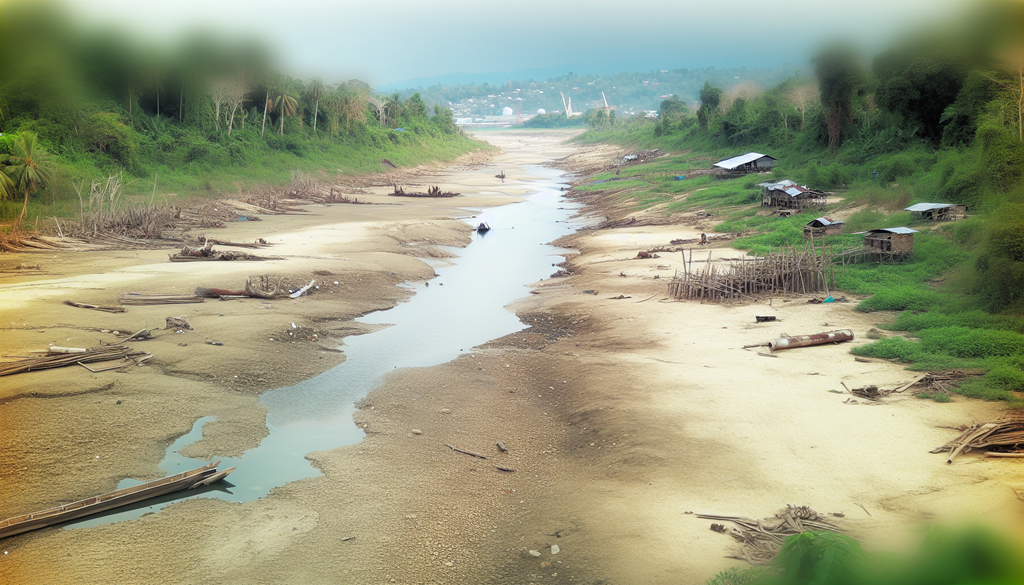
Researchers have found that the top 10 percent of global earners are responsible for about two-thirds of the planet’s warming since 1990.
According to a new study published Wednesday in the journal Nature Climate Change, the consumption habits and investment choices of the wealthy have significantly elevated the threat of extreme weather events like heatwaves and droughts.
Recommended Stories
Harvesting Rain
How performative feminism abandoned environmental justice
On May Day, workers demand accountability for climate pollution
This marks the first time researchers have quantified how concentrated private wealth contributes to climate-related disasters.
“We have established a direct connection between the carbon output of the highest earners and tangible climate consequences,” explained Sarah Schoengart, the lead author and scientist at ETH Zurich, in a statement to AFP. “It represents a transition from tracking emissions to holding people accountable for their climate impact.”
For instance, the report highlighted that the most affluent 1 percent were responsible for 26 times more contributions to once-in-a-century heatwaves and 17 times more links to Amazonian droughts compared to the global average.
In countries like China and the United States — which together represent close to half of the world’s carbon footprint — emissions generated by the wealthiest 10 percent have doubled or even tripled climate extremes.
“Had global emissions mirrored those of the poorest 50 percent, Earth would have experienced very little additional warming since 1990,” co-author Carl-Friedrich Schleussner pointed out. “Rectifying this disparity is key to equitable and impactful climate solutions.”
The combustion of fossil fuels and large-scale deforestation have raised global surface temperatures by about 1.3 degrees Celsius (2.3 degrees Fahrenheit) over the last three decades.
‘Affluent carbon emitters significantly influence climate extremes’
Schoengart’s team integrated global income data with climate modeling to trace carbon emissions across income groups and evaluate their roles in intensifying various weather phenomena.
Beyond personal spending, the research underlined the climate toll embedded in the investment behavior of affluent individuals. Its effects are especially destructive in tropical regions like Southeast Asia, Southern Africa, and the Amazon basin — regions historically least responsible for emissions yet most affected by extreme conditions.
“Our work reveals that the most severe climate effects are linked not just to generalized emissions, but specifically to lifestyle choices and wealth-driven investments,” Schoengart stressed. “We’ve found that wealthy emitters are playing a pivotal role in magnifying climate disasters, which strengthens the case for targeted emission-reduction policies.”
The researchers advocated for policies that directly address the financial assets and investment practices of the ultra-wealthy to drive meaningful progress.
“Climate strategies that ignore the excessive emissions burden of the rich fail to utilize one of our greatest opportunities to mitigate future risks,” Schleussner added.
Wealth holders, he suggested, could be held responsible through progressive taxes on wealth and carbon-heavy investments, generating essential funds for climate adaptation and recovery efforts in at-risk nations.
Previous studies have indicated that taxing emissions from assets is more just than general carbon taxes, which often disproportionately affect low-income communities.
Nonetheless, global attempts to raise taxes on billionaires and large corporations have largely stalled — particularly following President Donald Trump’s return to the White House in January.
Almost 140 nations pledged in 2021 to pursue a corporate tax accord for multinationals, with around half endorsing a 15 percent minimum rate. However, that initiative has also lost momentum.
Data from Oxfam, an international anti-poverty organization, showed that the top 1 percent globally amassed $42 trillion in new wealth over the past decade.
The group further reported that this elite fraction now controls more wealth than the combined total of the bottom 95 percent of the world's population.