Sri Lanka's tea laborers face deep poverty as floods claim numerous lives
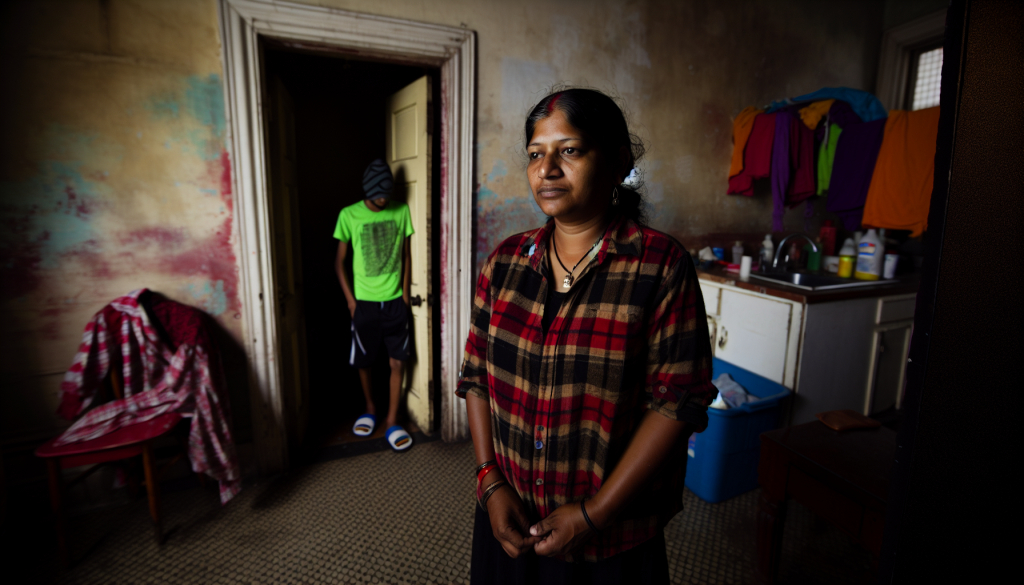
CRAIGHEAD ESTATE, Sri Lanka (AP) — Arumugam Manikavalli woke to deafening rain and quaking ground and ran from her home to a nearby temple on the tea estate where she works. That same November night, a landslide crushed Kumaran Elumugam’s modest dwelling, taking the lives of six of his relatives.
Elumugam only survived because he and one of his daughters were away at work when the disaster struck.
“I’ve lost my wife, daughter, son-in-law, mother-in-law, and two grandsons,” he said in grief. “My little granddaughter is still buried beneath the debris.”
Both Elumugam and Manikavalli were among the lucky few who found refuge as Cyclone Ditwah brought severe flooding and landslides to the South Asian island, claiming over 640 lives and leaving more than 100 people missing. Several villages were buried under mud and debris, with remnants of homes – clothing, toys, and even trophies – scattered among the wreckage.
The worst devastation occurred in Sri Lanka’s central highlands, home to many of the country’s tea plantation workers. These communities lived in basic, aging homes that were swept away. According to aid workers, their already vulnerable living conditions have now turned into a humanitarian crisis.
Arumugam Manikavalli stands by what remains of her home after the cyclone caused chaos at Craighead Estate in Nawalapitiya, Sri Lanka, on Friday, Dec. 12, 2025. (AP Photo/Eranga Jayawardena)
Sri Lankan army personnel inspect the ruins of homes that belonged to tea workers destroyed in the landslides caused by Cyclone Ditwah at Craighead Estate on Thursday, Dec. 11, 2025. (AP Photo/Eranga Jayawardena)
Poorly Paid Tea Workers Bear the Heaviest Toll
The majority of tea estate laborers in Sri Lanka are part of the Malaiyaha Tamil community, descendants of bonded laborers brought from southern India by British colonizers over two centuries ago. This group is the fourth-largest ethnic community in the nation, numbering over 1 million.
Despite producing some of the world's finest tea and bringing vast revenue to the country, these workers, particularly those in the hills, make below the standard daily wage of 1,200 rupees ($4) and have limited access to basic services like healthcare, education, or stable jobs.
Vehicles pass through a section of a tea plantation that was destroyed by landslides at Craighead Estate on Dec. 12, 2025. (AP Photo/Eranga Jayawardena)
The American Institute for Sri Lankan Studies noted that most plantation workers do not own land or houses. They reside in overcrowded, colonial-era buildings often measuring less than 100 square feet, with shared or no proper sanitation facilities.
While the main tea plantation areas were largely spared due to flatter terrain, workers’ homes nestled near slopes were wiped out. Environmental researcher Melanie Gunathilaka says this demonstrates how little protection has been afforded to these communities.
“The workers live in the most disaster-prone zones,” she said. “Their lives have been systematically undervalued.”
The Planters Association of Ceylon, representing tea companies, has yet to comment on the situation.
A tea picker continues work amid destruction at Galamuduna Estate in Dolosbage, Sri Lanka, following Cyclone Ditwah on Dec. 12, 2025. (AP Photo/Eranga Jayawardena)
Workers head toward a relief camp after their shift at an estate affected by floods and landslides in Dolosbage on the same day. (AP Photo/Eranga Jayawardena)
Authorities estimate that over 100,000 homes across the country have been damaged or demolished. The government has promised to assist with rebuilding, whether by reconstructing on-site or relocating residents to safer areas.
Deputy Minister Sundaralingam Pradeep said discussions are ongoing with tea estate owners to find space for new homes, especially for elderly and retired workers still residing in company-owned structures. The initial phase of rebuilding, backed by Indian funding, will include 7,000 new homes.
“We need help urgently,” said one tea worker, Sellamuttu Darshani Devi, who is now living at a shelter with her children after being evacuated. (AP Photo/Eranga Jayawardena)
Another worker, Karuppiah Kamani, pointed to a massive boulder beside her damaged home and expressed fear of future disasters. Meanwhile, Devi said such evacuations have become routine, and tea companies have pressured workers to return as soon as the sun comes out.
“Even when terrified, we’re expected to work,” Devi shared. “We are desperate for safer homes.”
Marasamy Suresh solemnly observed the spot where a child’s body lies under landslide debris at Craighead Estate. (AP Photo/Eranga Jayawardena)
Displaced families queue for relief supplies at a temporary shelter in Craighead Estate following the cyclone. (AP Photo/Eranga Jayawardena)
Climate Challenges Intensify and Preparedness Lags Behind
Sri Lanka contributes a tiny fraction to global emissions, yet it ranks as one of the most climate-vulnerable nations. The United Nations states that the country suffers over $300 million in annual damages due to climate-related disasters, impacting three-quarters of a million people yearly. Roughly 19 million out of the 23 million population live in areas at high risk of landslides, floods, or other such dangers.
Efforts to improve climate resilience face serious financial hurdles. Sri Lanka is burdened with significant debt to the IMF and international lenders. With its tourism-dependent economy still recovering from past crises, the country struggles to hire workers or invest in vital infrastructure. This instability has fueled mass protests and political upheaval.
“Disasters don’t break fragile systems — they reveal them,” said Sandun Thudugala of the Law and Society Trust. He stressed that Sri Lanka must rethink urban planning to withstand an increasingly volatile climate.
Tea workers and their children remained sheltered in makeshift camps after the cyclone tore through their community. (AP Photo/Eranga Jayawardena)
Activist Gunathilaka emphasized that Sri Lanka is forced to focus on economic growth at the expense of climate preparedness due to its heavy debt load. She argued that if the country weren’t tied down by costly repayments, it could invest more in early warnings, emergency response, and safer housing.
International leaders agree that trillions of dollars are needed globally to prepare for climate disruptions. But for those in Sri Lanka’s hill country, the need is immediate and dire.
“We’re scared all the time now,” said Chellaya Pathmanathan, a father taking refuge in a school after his home was damaged. “We’re barely eating, and I just hope someone steps in to help us build a safer future.”
Displaced villagers receiving aid at a relief center expressed gratitude for the community support after the cyclone’s devastation. (AP Photo/Eranga Jayawardena)