New study reshapes the story of the battle that sealed the fate of the last Anglo-Saxon king
The dramatic story of Harold, the king who lost England to William the Conqueror in one of history’s most famous clashes, has long held a firm place in British memory. Yet fresh research suggests that this familiar narrative may need to be reconsidered.
The Battle of Hastings in 1066 brought an end to Harold’s brief reign as the last Anglo-Saxon king and marked the beginning of William, Duke of Normandy’s rule over England. This turning point is often portrayed as a decisive moment that reshaped the nation’s future, a version repeated in documentaries, classrooms, and popular history. However, a new examination of medieval manuscripts offers a different perspective on the circumstances surrounding Harold’s defeat.
According to Tom Licence, professor of medieval history and literature at the University of East Anglia, the widely accepted account of Harold’s forces marching roughly 200 miles (322 kilometers) before confronting William may be mistaken. The traditional story claims that this exhausting journey left the English army weakened and unprepared. Licence argues instead that the troops traveled south by ship, not on foot.
“1066 remains one of the rare dates that almost everyone recognizes,” said Rory Naismith, professor of early medieval English history at the University of Cambridge, who was not involved in the study. “It marks a decisive shift in English history, when one ruling order fell and was swiftly replaced by another, bringing profound changes to the kingdom’s cultural and institutional identity. Understanding 1066 is essential to understanding what followed.”
Reexamining the record
The notion that Harold’s men marched nearly 200 miles in just 10 days—after already fighting a fierce battle at Stamford Bridge near York against the Viking contender Harald Hardrada—has long seemed unlikely to Licence and other scholars. The logistical demands of such a journey raise serious doubts.
Licence explained that the dramatic overland march largely stems from a Victorian-era interpretation of the Anglo-Saxon Chronicle, a record of key events written in Old English by clerics. In that account, a reference to Harold’s fleet being “sent home” was interpreted to mean that the ships were dismissed and returned to their original ports. On closer reading, however, Licence found that “home” consistently referred to London, Harold’s base of power.
“It became clear to me that when the chronicle says, ‘The fleet came home,’ it doesn’t mean the ships dispersed to different harbors. It means they returned to their home port, which was London,” Licence explained.
In this revised reconstruction, Harold first sailed north with his fleet to confront Harald Hardrada and the Norwegian forces, defeating them on September 26, 1066. He then returned by sea to London. Rather than draining his troops with a punishing march south, this route would have allowed them time to recover before the next confrontation.
After regrouping, Harold and part of his army traveled overland toward Hastings to meet William’s advancing forces. At the same time, Licence suggests, Harold dispatched ships to the south coast in an attempt to outmaneuver the Normans and launch a coordinated attack. The fleet, however, arrived too late to influence the outcome of the decisive battle on October 14.
Naismith finds this interpretation persuasive. “England possessed a substantial seafaring fleet, and there is ample evidence of ships operating along the east coast around the time of the Norman Conquest,” he said. “Recognizing a greater naval role in 1066 highlights Harold’s ability to deploy the resources at his disposal effectively.”
The image of the weary army marching south has long shaped Harold’s legacy, noted Duncan Wright, senior lecturer in medieval archaeology at Newcastle University. Harold is often remembered as the final Anglo-Saxon king who bravely resisted invasion but ultimately failed. The legendary march has even inspired modern reenactments, including a large-scale event in 2016 marking the 950th anniversary of the battle.
“The English have always had a certain admiration for the courageous loser,” Wright observed.
He added that this reinterpretation demonstrates how deeply Victorian-era assumptions have influenced modern historical understanding. When such inherited narratives are reassessed, new and more nuanced insights can emerge.
Licence believes the revised account presents Harold as a capable and strategic commander rather than a reckless one. “In many ways, the outcome could have gone either way,” he said. “It was not inevitable. William might have fallen instead of Harold.”
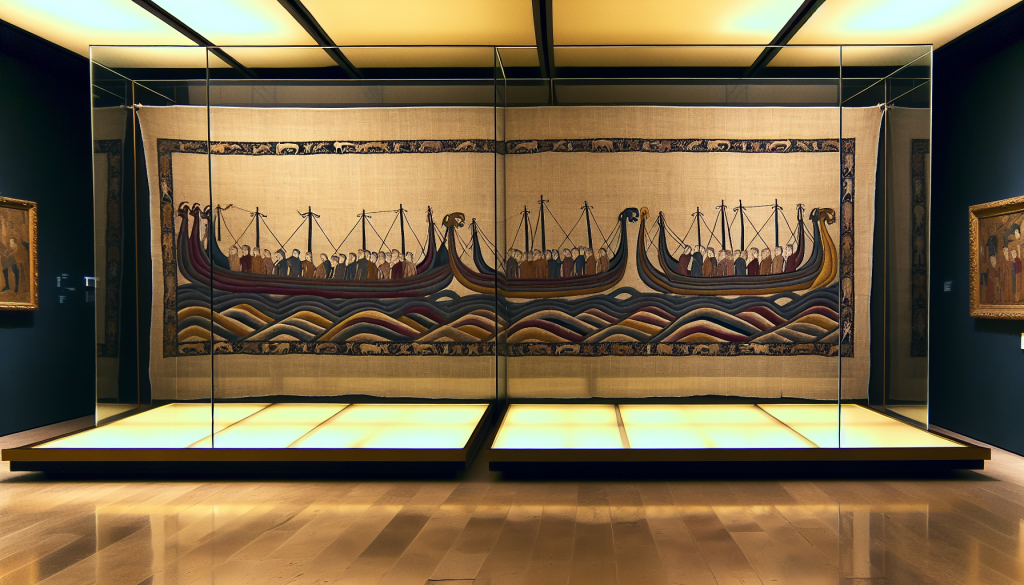
Other long-held beliefs about the Battle of Hastings have also been questioned. The famous image from the Bayeux Tapestry showing Harold struck in the eye by an arrow may not be accurate. Earlier written sources instead describe him being killed in close combat by Norman knights.
The Bayeux Tapestry is scheduled to be displayed in Britain later this year at the British Museum in London.
Licence will present his findings at a conference at the University of Oxford on March 24, and the research will also appear in his forthcoming biography of King Harold.